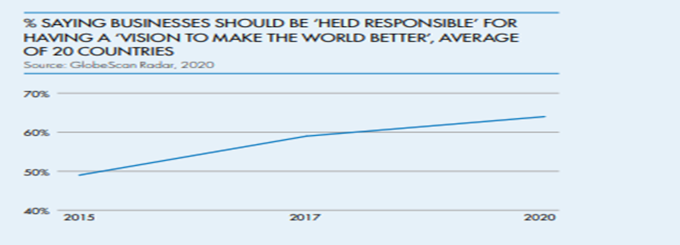
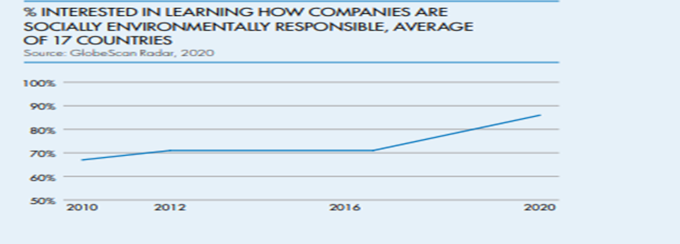
De Beers recently released its 2021 diamond insight report, which highlighted that sustainability has risen to the top of many stakeholders’ priorities in the last few years and it was ranked by 30% of consumers as their most important consideration – above price and design – when choosing a diamond.
De Beers chief executive Bruce Cleaver said people expect more of businesses and brands than ever before when it comes to responding to societal and environmental challenges such as climate change, poverty and various forms of inequality.
He said beyond consumers knowing that their purchase has caused no harm, people also want to know what a brand or product stands for, and how it has contributed to a better future for people and the planet.
Based on a global study of more than 8,400 people across seven key consumer markets for diamonds, the report found that sustainability considerations were influencing consumer purchase decisions across all sectors.
Source: De Beers
The study found that given a choice between a sustainable natural diamond from a well-known brand that has been produced in line with environmental, social and governance (ESG) goals, and one that comes with no sustainability assurance from a well-known brand, nearly 60% of consumers would select the sustainable option.
Source: De Beers
“This choice is made in the full knowledge that they would most likely need to pay more for it – 85% of those willing to select the sustainable options are open to paying an average premium of 15%,” reads the report.
“The more symbolic and emotive the occasion and the larger the carat weight, the more sensitive consumers are to a brand’s ESG values. Protection of the environment, fair worker treatment and conflict-free sourcing are the top three ESG considerations for diamond consumers.”
Young-driven
The report noted that younger consumers are driving the demand for more transparency and integrity, with 68% of Millennials and 65% of Gen Z having purchased products with stronger ESG credentials, compared with 42% of Baby Boomers.
Sustainability considerations are higher among consumers with higher education (67%) and those from affluent backgrounds (70%).
“When it comes to diamonds, given a choice between a sustainable natural diamond and one with no sustainability assurance, 59% of older Millennials will choose the sustainable option,” said De Beers.
“This looks set to continue with the next generation, as 21% of Gen Z already consider sustainability factors in their jewellery purchases.”
The report further noted that the diamond industry has been on a journey of continuous improvement in ethical and responsible sourcing throughout the value chain for two decades.
Driven by new technology, groundbreaking provenance and traceability programmes are now available to industry participants at all stages of the value chain, placing the industry at the forefront of ESG innovations in responsible sourcing.
“Critically, these innovations enable the industry to communicate to consumers not only the provenance of their diamond but also its social purpose and positive impact,” it said.
Shared direction
De Beers’ report highlighted that shared, decisive action from all industry participants to set standards and measure progress will make the most impact and ensure ESG criteria become standard practice for the diamond industry.
It said corporate actions matter more to consumers than words, and sustainability considerations must be effectively communicated to the consumer.
“How quickly and effectively meaningful change can be implemented depends on the strength of the industry’s resolve and the ability of companies to continue to incorporate ESG into core business strategies,” said De Beers.
“There are various partners and programmes supporting trade participants in this aim, including the Responsible Jewellery Council (RJC).”
It said there is a huge opportunity for the diamond industry to communicate how it aligns with current consumer expectations around ethics and sustainability, and to build on its track record of creating positive socio-economic and environmental benefits throughout the value chain.
Success depends on sustainability being part of both short and long-term operations.
De Beers said progress is already underway and momentum is building, therefore the industry must continue to place sustainability at the heart of its value proposition to make a truly positive impact on people and the planet, and to underpin consumer trust in and desire for diamonds.
“The diamond industry has a significant opportunity to demonstrate its sustainability credentials to a new generation of consumers who value actions and evidence over rhetoric,” said Cleaver.
“The industry must urgently connect consumers more directly with the story of their diamonds and the positive impacts they create for people and the planet, right along the value chain.”
Mathew Nyaungwa, Editor in Chief of the African Bureau, Rough&Polished
