One hundred years ago, in the spring of 1922, Leonid Krasin, the People’s Commissar (Minister) of Foreign Trade of the RSFSR, wrote a letter to the Bolsheviks’ leader Vladimir Lenin about the Soviet Russia’ situation in the diamond market, in which, in particular, he stated that “... De Beers visited me in the spring and reproached us for completely spoiling the market because of the Comintern sales and forcing it to shut down the mines in Africa. The company offered to arrange a syndicate, not to sell in small quantities, but to sell all stock through it, and promised to grant a loan against security. Not knowing whether we had a large stock in the Gokhran or whether everything had already been sold out, I did not give a definite answer and dragged out the negotiations... As soon as I definitely know that there are a lot of valuables and that they will not “leak away” and will not be sold by non-professionals, a syndicate can be organized ... However, it is not safe to immediately export the entire quantity abroad: in case of cancellation of the trade agreements, they can lay their hands on the valuables. I think to keep the quantity of stones for no more than 30-50 million and replenish as they are sold”1.
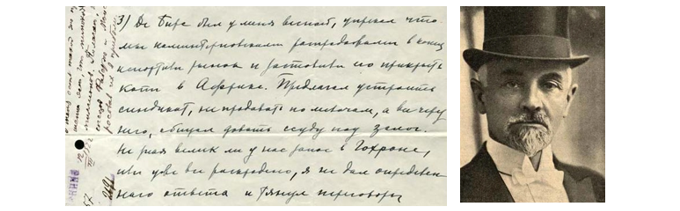
Being an esthete, talented publicist, excellently educated engineer and financier, Krasin had an amazing biography and he managed to combine a brilliant business career (including the highest management positions at Siemens AG) with an illegal arms trade, terrorist attacks, bank robberies and political assassinations. Without a doubt, he was the best conspirator and negotiator in the inner circle of the communist leaders Lenin and Trotsky, and besides, he had a European gloss. In a word, he was a gentleman and it was a pleasure for European diamond dealers led by De Beers management to deal with him, especially in the conditions when the Russia’s communist regime was not only under some kind of sanctions, but was in a complete blockade: there were no business contacts, and even diplomatic ones.
The result of Krasin’s work in the diamond market is known today: over 11 million carats of polished diamonds2 were sold through his closest employees in Europe (mainly in the UK) only2. The number is huge, considering that the average annual diamond production in 1921-1930 was slightly over 5 million carats. And these quantities were far from simple sales of valuables confiscated from wealthy Russian people, aristocratic families and the churches. The revenues were invested in political lobbying and - through third parties - in the capital of the giants of the European industry and the banks, which later largely ensured the success of Stalin’s industrialization in the 1930s.
The participation of the diamond market regulator and its satellites in this process was largely a forced one and was dictated not so much by the desire to make a profit, but to save the market from a fatal collapse caused by the dumping already partially made by the Bolsheviks (the so called “Comintern deliveries”) that threatened to be like an avalanche in the very near future. Nevertheless, a quite meaningful picture emerges that a market player having a share comparable to the size of the market is able to impose its own conditions, regardless of the ideological and political contradictions, sanctions, blockade, etc.
Despite the fact that the diamond market has come a long way during over a hundred years of its development, we quite unexpectedly found ourselves in the situation very similar to that in the 1920s. The barrage of sanctions against Russia is already unprecedented, and the likelihood is very high that the political and business isolation of our country will approach the political and business isolation observed at the dawn of the USSR existence. Thus, a player who controls over a third of the diamond market runs the risk of facing a complete ban on its participation in this market in a civilized way. The discriminatory decisions of the US regulator, Tiffany and Signet’s refusal of the Russian diamond goods, ALROSA’s withdrawal from the NDC, GIA’s position on Russian diamonds, as well as the inclusion of ALROSA’s CEO in the Specially Designated Nationals (SND) list and other unpleasant events of the recent days - all this bears evidence to the rapid development of a negative trend for Russian manufacturers, the danger of a complete blockade loomed on the horizon. What will happen in such an extreme (still extreme) scenario?
Rough and polished diamonds are not oil or gas, pipelines are not needed for their sale. The organization of “gray” (or, as they used to say in the days of the USSR, “parallel”) sales channels is a completely feasible and rather easy task. But dumping will be an integral element of the process, perhaps, even worse than in the 1920s. Angola will most likely survive, but Canada and Botswana will not. The Kimberley Process, NDC, WDC, etc. will be irreversibly destroyed. Even now, these “superstructures” are practically “half-dead”, and in the event of a Russian diamonds’ blockade, they will stop existing within a year. The “useful idiots”, fans of investment diamonds and diamond cryptocurrencies, will go into oblivion as unnecessary; and a special farewell can be sent to the proponents of diamond tracing. But on the other hand, manufacturers of diamond synthetics will get a unique chance as it will be just the greatest high day, the peak, for them - for obvious reasons.
And in the cramped conservative world of the today’s diamond market, new people like Leonid Krasin may appear; comparing with him, the Nicolas Cage’s hero from Lord of War, or his prototype Victor Bout, are just naive romantic young men. And a historian of the future will one day study - with understandable awe - the correspondence of the critical year 2022 … “De Beers visited me in the spring…”.
Sergey Goryainov, Rough&Polished
1. RGASPI (Russian State Archive of Social and Political History). F. 2. L. 2. D. 1166. P. 1–2.
2. Osokina E. A. Alchemy of the Soviet Industrialization: The Time of Torgsin. Moscow: New Literary Review, 2019. P. 65.
