As of today, the Lab-Grown Diamond (LGD) business has surged ahead, offering consumers an ethical and sustainable choice. It is no longer looked at as a threat to the natural diamond business. The LGD sector looks promising, filled with huge growth potential with global awareness of the ethical advantages of LGDs. Moreover, with production techniques and advanced technology, LGDs are becoming more attractive to consumers. Though most Chinese consumers prefer natural diamonds because the natural stone has a history, the LGD industry is still very young. In due course, and with help of generic marketing and effective leadership, LGDs sector is sure to make a mark and both the category of products can surely co-exist eventually. Being the indisputable leader currently in LGD production and manufacturing (cutting & polishing) China is leading the world in the development of the lab-grown diamond industry in all aspects, consistently improving the LGD industry's production chain.
Not to be left behind, India is spearheading the growth in LGDs, and the country is taking a shot at the global diamond trade with its lab-grown variety, whose exports were estimated at around $1.5 billion in 2022-23. Fuelling its expectations is the US Federal Trade Commission (FTC) recognising it as 'cultured', instead of artificial or synthetic, giving India more reason to go ahead with great vigour. India too has a prominent presence in the diamond industry and LGDs are no exception. In recent times, lab-grown diamonds have gained immense popularity due to their technological advancements, increasing consumer awareness and most importantly they are eco-friendly and pocket-friendly too! With rising gold and natural diamond prices, consumers are looking for affordable alternatives in precious jewellery and lab-grown diamond studded jewellery perfectly fulfills this demand. In 2020, the penetration rate of LGDs in the jewelry market was only 6 percent around the world, and 94 percent of jewelers still used natural diamonds as their primary material, indicating significant room for further growth of synthetic diamonds.
It's a known fact that the cultivation of lab-grown diamonds is not a 'rocket science' anymore. Thanks to the application of relevant technologies, LGD production can be completed within a few weeks, while natural diamonds take an exceptionally long time to form. LGDs are created using either the high pressure and high temperature (HPHT) process or the microwave plasma-assisted chemical vapour deposition (MPCVD) process. Besides, the quality of these cultivated diamonds rivals that of mined ones. LGDs are manufactured by subjecting carbon to high temperatures and pressure, mimicking how they are formed naturally and have the same physical, chemical and optical attributes as their mined counterparts. The seed used in the manufacture is a single crystal diamond slice about the width of human hair. So, with know-how available, it's now considered a marvellous business proposition for all interested in LGDs.
Therefore, it is not surprising that countries like China and India jumped at the opportunity to mass produce and manufacture LGDs with great enthusiasm. Today, China stands out to be the largest producer of LGDs, accounting for a 56 per cent manufacturing share. The second and third largest producers are India and America with a percentage share of 15 and 13 per cent respectively. In addition, LGDs are more environmentally friendly and cheaper than naturally mined ones. According to Guo Sheng, founder of CARAXY, a Chinese jewellery brand, LGDs can be mass produced. Founded in 2015, CARAXY became one of China's earliest synthetic diamond brands. CARAXY has already opened four stores across China, with plans to expand into more first- and second-tier cities this year.
Of late, due to improvements in production technologies, China's output of LGDs has continuously risen. The country produced over 4 million carats of synthetic diamonds, representing nearly half of the world's total in 2021. At the China International Laboratory-Grown Diamond Industry Development & Innovation Congress 2023, Zhang Xiongzhi, Chairman of the Guangzhou Diamond Exchange said that China produces approximately 50 percent of the world's synthetic diamonds. Besides, the production of LGDs in China is undergoing some interesting changes. China's major producer, Zhengzhou Sino-Crystal Diamond Co Ltd, a manufacturer of stones for industrial purposes, has plans to produce LGDs for jewellery design and manufacture. Incidentally, Henan Province, a hub for R&D and talent in super-hard materials, is now home to over 200 manufacturers that cover the complete industrial chain, including raw materials, industrial diamonds, single crystal diamonds, and LGD products.
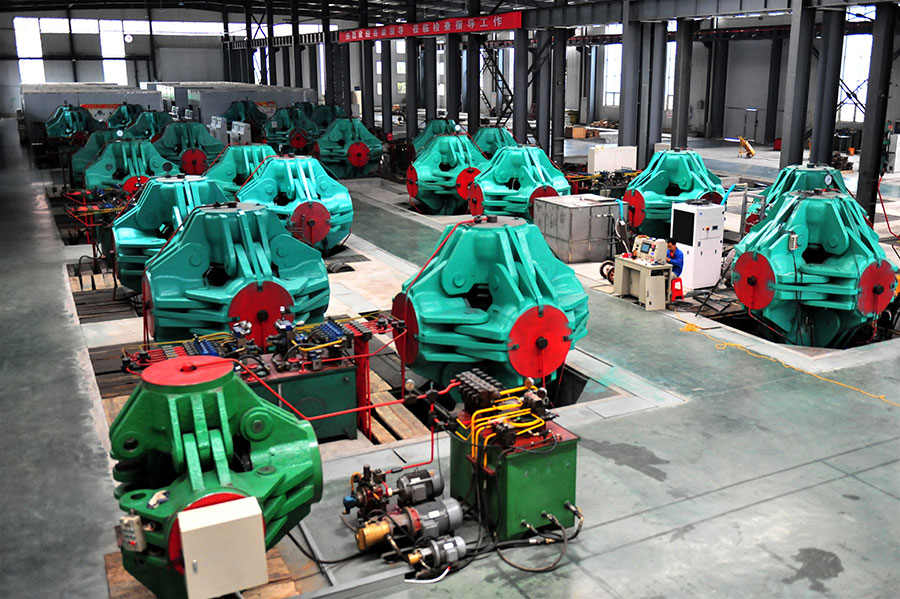
HPHT diamond growing factory.
In addition, Zhecheng Huifeng Diamond Technology Co., Ltd., a company that develops, produces and sells diamond micron powder in Zhecheng county, Henan, has now expanded into LGDs. It now mass-produces high-grade rough LGDs exclusively for overseas markets. For more than 40 years, the processing of super-hard materials has been a traditional pillar industry in Zhecheng. In recent years, the city has further developed its LGD manufacturing sector, fueled by a strong demand for diamond jewelry from Chinese consumers. So, it's not for nothing that LGD is called a growth industry. According to consultancy company Bain & Co., the annual worldwide output of jewelry-grade rough diamonds from labs is about 6 million carats to 7 million carats. Of that, China's production capacity is around 3 million carats annually, which is about half of the total. In China, 80 percent of lab-grown diamonds are made in Henan province.
According to the China Geological Survey, the world's current proven natural diamond reserves are just about 2.5 billion carats, which are difficult to mine. In 2017, the world's output of natural rough diamonds globally reached 152 million carats, but dropped about 5 percent annually. In 2020, the global output came in at 111 million carats, according to Antwerp World Diamond Center. So, with the scenario of natural diamonds not too encouraging due to the declining volume of natural diamonds, LGDs are shaking up the world of fine jewelry. Not only are LGDs cheaper to produce, they are proving an attractive choice for millennial consumers. In addition, experts say that LGD manufacturing produces fewer carbon emissions than the mining of natural diamonds, making them more environmentally friendly.
In recent times, diamond rings are in high demand among Chinese couples' engagements. Diamond jewelry such as necklaces and bracelets also remains popular, especially as a greater variety of stylish designs has emerged. But given the scarcity of natural diamond deposits in China, the country has been relying almost completely on importing natural rough diamonds. Therefore, Henan is providing an alternative option with artificially produced diamonds. LGDs possess all of the essential qualities of natural diamonds, only their origin is a laboratory instead of earth.The formation cycle of natural diamonds can require hundreds of millions of years, while it only takes a week or a few weeks to cultivate lab-grown diamonds, giving the products a huge advantage in cost. The average retail price of synthetic diamonds is about one-third that of natural diamonds.
China's Henan has more than 200 companies that manufacture products using super-hard materials, according to corporate information provider Tianyancha. Among them are some major manufacturers listed on stock exchanges, including Henan Huanghe Whirlwind Co Ltd, Zhongnan Diamond Co Ltd, Sino Crystal and Henan Liliang Diamond Co Ltd. Henan Liliang Diamond, a manufacturer of premium synthetic diamonds in China, invested 3.8 billion yuan in building its factory in Zhecheng. The company went public on the Shenzhen Stock Exchange in September, becoming the fourth listed lab-grown diamond maker in Henan. It has seen its business boom, market watchers said.
On the first day of trading of Liliang Diamond, its shares opened with an issue price of 20.62 yuan per share, and closed at 229.38 yuan per share, some 11 times higher than the opening price. In the first three quarters of 2021, the company achieved sales revenue of 340 million yuan, up 107 percent year-on-year. During the same period, its net profit reached 160 million yuan, surging 271 percent year-on-year, according to its earnings report. The technological development of LGD manufacturing has made big strides in terms of equipment and methodology. Diamonds were first grown in laboratories using High Pressure High Temperature systems that used extreme heat and high pressure and a small bit of diamond "seed" to grow graphite into diamonds. A new way to grow diamonds is chemical vapor deposition, in which a seed is sealed in a chamber with carbon-rich gas and heated to high temperatures.
Liliang Diamond said the weight of a single portion of the lab-grown diamonds it produces could exceed 30 carats, which is a sign of the innovation ability of the company. The manufacturer, together with others, has also been working with colleges and scientific institutions such as Zhengzhou University, Jilin University, Henan University of Technology and the Chinese Mechanical Engineering Society. "The company possesses five core technologies it has developed, which have helped it to form a strong market-leading advantage. The market potential of synthetic diamonds is remarkable, and the penetration rate of the product in China is expected to grow rapidly," said a research report by Soochow Securities. Domestic diamond suppliers and brands have seen growing demand for synthetic diamonds. In the case of natural diamonds, overseas suppliers and brands have had greater advantages in the market, and domestic brands have run into fierce competition, Soochow Securities said.
Chinese synthetic diamond manufacturers, however, can produce large quantities of semi-finished diamonds of between three and six carats, which can then be made into diamonds for jewelry of one to two carats. By 2025, the output of semi-finished, lab-grown diamonds worldwide is expected to reach 18 million carats, representing a market of 38 billion yuan, according to a research report by Guosen Securities impact. While they are not grown in the typical, old-fashioned way, they possess the same physical structure and chemical composition as that of a natural diamond. The only difference, however, is that they are formulated in a lab rather than a mine. Unlike the natural process, diamonds manufactured in a lab can be produced in a much faster and safer method. Although lab-grown diamonds look like natural diamonds, emanating the same sparkle and shine, they are less valuable. These diamonds are ethically produced by skilled technicians and sophisticated machines. Maintaining transparency, creativity, and sustainability, there are myriads of diamond manufacturing companies all across the globe. In this article, we will uncover the top 7 largest lab-grown diamond manufacturers in the world.
Lab diamonds are manufactured by artificially re-creating similar conditions under the earth that form diamonds. It is done by applying the exact amount of pressure, temperature, and carbon. The most important steps in re-creating the lab diamonds are HPHT (High Pressure-High Temperature) conditioning and CVD (Chemical Vapor Deposition). The following steps are, however, followed under expert supervision. Naturally, diamonds take years to grow. As for manufacturing them in a lab, it takes approx 8-10 working days to formulate a 1-carat lab diamond. Moreover, it takes about a month to grow a 3-carat lab diamond. These are the apt estimates. In case one tries to grow the diamonds any faster, its crystalline structure will disrupt, causing the jewel to break into pieces. It is a sophisticated process that requires a physical speed limit analysis as to how fast it can be grown.
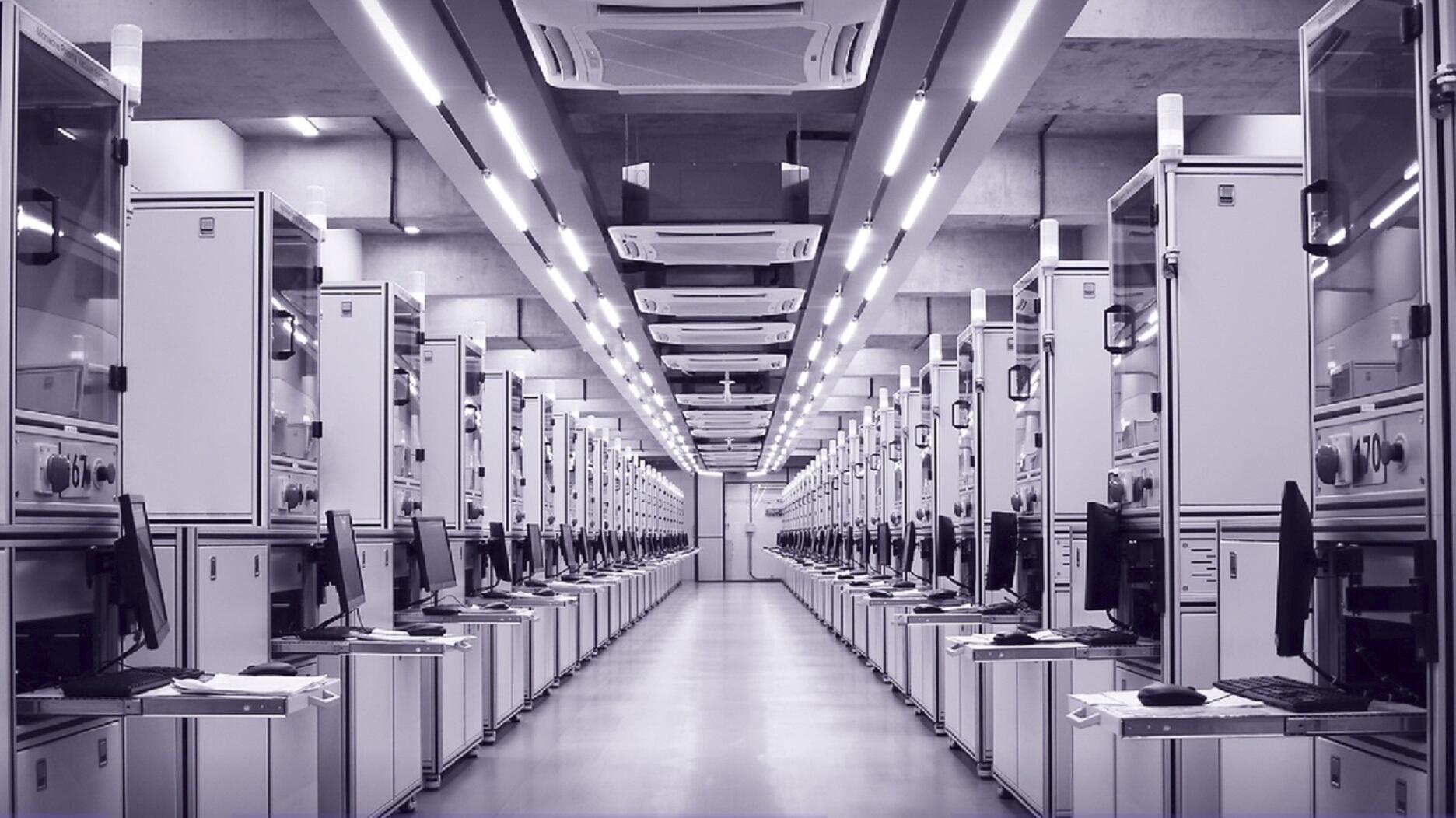
CVD diamond growing factory.
Lab diamonds are created in an artificial space, by reforming the natural conditions. Thus, they can’t always be flawless and perfect. While they possess the same color, sparkle, and variations as that of a natural diamond, their quality can still vary. Lab diamonds are produced in 4 C’s – similar to that of mined diamonds. However, manufactured even in those conditions, lab diamonds may lack the quality. Hence, you should always inspect your diamond thoroughly before purchasing. Without the employment of complex tools (loupes or microscope), it’s not humanly possible to tell the difference between a mined and lab-grown diamond. Because they look visually identical, even proficient jewelers can’t reckon the difference.
Lab-grown diamonds are ethically sourced , and are budget-friendly. Although they are less valuable as compared to mined diamonds, lab-grown diamonds are far more affordable and toxic-free. These are physically, chemically, and visually similar to those of natural diamonds. And, they look gorgeous when you wear them! China’s market has, in recent months, been volatile. In such a situation, the country's diamond industry has taken this step to make the supply of lab-created diamonds more steady and consistent. The Diamond Administration of China states that China is one of the largest diamond-buying nations, second only to the USA. Experts have estimated 15% growth in the diamond market in China in the coming years. When it comes to luxury goods, experts have predicted that China will surpass Japan in consumption.
The diamond market is being considered a good business opportunity for small and large traders to diversify their business profiles as the demand for diamonds has increased manifold in the last few years. Customers are looking for quality at reasonable prices, both parameters that laboratory-grown diamonds satisfy. The two parties reached an agreement at the 2019 China International Gold Jewellery & Gem Fair in Shenzhen. The reasons for this agreement are: The high-tech quality of man-made diamonds; Lower costs and superior quality, the same as mined diamonds; The ability to have a stable supply of real diamonds; Application in creative design as well as other industries; The synthetic diamond dealers will use a new GZDE logo that references them as lab diamond sellers.
Reports suggest that China’s lab-grown industry might reshape the global gemstone industry. However, analysts want to wait and watch how the perception of consumers pans out. It is that which will decide China’s chances of turning into a major supplier of lab-grown diamonds. When it comes to lab-grown diamonds, Huanghe Whirlwind can be regarded as the biggest market leader at present. The single-crystal diamond produced by Huanghe Whirlwind is the basic product of the superhard material industry chain and the company is one of the most important superhard material enterprises in Henan Province. The quantity of lab-created diamonds produced by Huanghe Whirlwind in 2020 accounted for about 20 percent of the global lab-created diamond market, of which Gaitonde believes the high-end quality will account for more than 50 per cent.
In recent times, the domestic market of China has been growing rapidly and the shortage of demand in the international market has resulted in the growth of the Chinese market. The lab-created diamond market is forecast to amount to 10 percent of the diamond market worldwide by 2030. In 2019, China was by far the world’s largest producer, accounting for a 56 per cent share of lab-created diamond production while India accounted for 15 per cent share with the US producing around 13 per cent. The Henan-based Zhengzhou Sino-Crystal Diamond increased its investment in R&D by 14.4 percent to $US75.2 billion last year. The company’s technological advancements in diamond making, refining, and polishing, as well as its equipment, have allowed it to produce gem-quality diamonds in white, pink and blue. The Chinese domestic market has rapidly increased because of the demand shortage in the international market.
In China, diamonds grown for the consumer market take up 3 per cent of the total diamond market. Huanghe Whirlwind, a listed company, specialises in researching, developing, producing and the sale of super-hard material and related products. Huanghe Whirlwind can now provide customers with product categories, complete specifications and stable performance of all kinds of superhard materials and products, including superhard materials monocrystalline and products, cubic boron nitride and products, diamond polycrystalline and products, as well as auxiliary super hard materials.
LGDs are 100% real diamonds that are grown in labs by exactly replicating the diamond creation process which occurs below the surface of the earth. As a result, LGDs have the same chemical, thermal, optical and physical characteristics as a mined diamond. But, because lab diamonds are not mined they do not involve the social and environmental damage that occurs in mining. As a result, all LGDs save the planet and are eco-friendly. In addition to this, they also save up on all the heavy mining costs and that saving is passed on as a benefit to the customer due to which a lab grown diamond is 50% cheaper than a naturally mined diamond.
Globally, LGDs are produced in two main methods – CVD (Chemical Vapor Deposition) & HPHT (High Pressure High Temperature). Interestingly, India is the largest producer of LGDs through the CVD technology and contributes to nearly 25% of global LGD production. This technology offers consumers the purest type of diamond certified as Type IIA by all leading diamond certifying bodies. Type IIA quality diamonds are a rarity to find even in mined diamonds as only 2% of mined diamonds ever have been the purest type of diamonds. It is said that LGDs produced through the HPHT method are grown through a different technique in China and do not have the same hardness as a mined diamond or a CVD grown diamond and also contain metal impurities. Meanwhile, India being the largest diamond cutting & polishing hub for diamonds, the rising demand for LGDs globally has translated into a rapid growth in export collections for India. Moreover, of the roughly 8,000 diamond polishing units in India, over 30 per cent have begun polishing LGDs and over 15 per cent polish only LGDs exclusively.
In India, as an export oriented and import substitute product, LGDs are sparking the real dream of Atma Nirbhar Bharat. Noticing the trend, the Indian government has announced several programs and incentives in the recent Union Budget to encourage and establish India as the leader and main hub of lab grown diamonds. In addition, the government for the first time addressed LGDs not as artificial or synthetic, but eco-friendly and bearing the same properties as natural diamonds. This awareness created by the government in itself has instilled huge amounts of consumer confidence in LGDs and will witness a huge shift in consumer preference towards LGDs in India. However, globally, there are concerns of a drop in LGD prices as it is technology driven and can be produced in abundance. However, LGD technology, especially for producing consistent gemstone quality diamond is extremely capital intensive and time consuming. As a result, the last decade has only seen development of 10,000 machines with annual production of only 1/4th to that of natural diamond production.
But again, due to the depletion of mines globally, supply of natural diamonds is expected to decline to 60 million carats by 2030 from current levels of 116 million carats. And this deficit shall be accomplished by LGDs. So, there is a consistent increase in demand for diamonds rising at 2% each year, likely to rise to 220 million carats, creating a demand deficit of nearly 160 million carats. In addition, studies and reports also suggest that demand for LGD will outpace supply in the coming years and possibly push LGD prices upwards from current levels. Currently valued at $10bn, the LGD jewellery industry is estimated to touch $50bn by 2030.
Additional demand is also going to be driven by consumers who have aspired to buy a diamond but can’t afford them. In this, India is going to play a huge role as today, less than 5% of Indian women wear and adorn diamonds. Lab grown diamonds will be an opportunity for even the remaining 95% of women to wear and afford diamonds. With increasing awareness on the environmental and economic benefits of LGDs, particularly CVD diamonds in India and since it is a fully Made in India product, the youth of our country is rapidly shifting their preferences towards LGDs made through the CVD technology in India.
Overall, the LGD industry in India is self-assured for a continued growth and expansion determined by both domestic and international demands and poised to capture a huge market share of this $50bn industry potential. India is home to 90 percent of the world’s diamond cutting and polishing units, making it the largest exporter of diamonds. The country ships diamonds worth $25 billion every year to countries such as China, the U.S. and the United Arab Emirates. Taking note of India’s thriving gems and jewellery sector, finance minister Nirmala Sitharaman declared lab-grown diamonds (LGDs) as a focus area for export promotion while reducing basic customs duty on seeds used in their manufacture. This move aims to help boost exports and make India a world leader in the LGD market, which can become a key alternative to natural diamonds as diamond mines deplete.
India's LGD market share within the entire diamond industry is estimated to grow steadily and command 10 percent of the diamond market worldwide by 2030. And, this sector has the potential to contribute significantly to the country’s GDP in the form of $7-8 billion towards exports. Therefore, the Government of India also announced the setting up of a research and development grant at IIT Madras, to encourage indigenous production of LGD seeds and machines and to reduce import dependency. Further, the custom duty on seeds used in manufacturing rough lab-grown diamonds has been reduced from 5 percent to zero, which will promote export competitiveness and boost domestic manufacturing. Research in technology, homegrown seeds and documented process parameters will encourage new entrepreneurs to enter the LGD business, making it easier and more cost-effective to boost exports and establish market dominance.
The gems and jewellery sector plays a significant role in the Indian economy, with a contribution of around 7 percent to GDP and 10-12 percent to the country’s total merchandise export, according to the Ministry of Commerce and Industry. It is one of the leading sectors in terms of job creation, providing employment to approximately 5 million skilled and semi-skilled workers, the ministry added. As per Economic Survey 2023, the sector was among the leading contributors to export in India in FY22. India is already the world’s largest producer of CVD diamonds, despite its limits in the sector, and holds the potential to become the largest LGD supplier with the recent announcements.
As of 2019, China was by far the world’s largest producer, producing 56 percent of the global LGD production volume that year. India was the world’s second-largest producer, with a distant 15 percent share of LGD production, followed by the US at 13 percent and Singapore at 10 percent. Globally estimated at $1 billion in 2020, the LGD jewellery market is estimated to rise to $5 billion by 2025 and may exceed $15 billion by 2035. According to Allied Market Research, the global lab-grown diamonds market size is projected to reach $49.9 billion by 2030 at a CAGR of 9.4% from 2021 to 2030. Still at a nascent stage, LGD demand is expected to gradually scale up in India, while in other parts of the world like the U.S., the commercial marketing of LGDs is already going on in full force for the past few years. With the mining cost gone, the price of a diamond decreases significantly, making it much more affordable.
The Indian market, though currently small, will suddenly open up and grow as India is a price-conscious market. The huge gap in the market will be filled by the LGDs in the near future. Diamond acquisition in India is hardly 4 percent. So, in India, 96 percent of the potential target audience is still not buying diamonds. That is because the sweet spot for consumers in India is price affordability. They thus end up buying plain gold as that is what is available in that price range. But with LGD, adding another 25 per cent more will get the consumer a solitaire (0.5 carat) ring. That is a huge aspiration for the balance 96 percent, a market analyst added. There has been an impressive 80 percent growth in exports of LGDs in recent years. With the world's largest youth population, analysts are hopeful that India will become one of the largest LGD consumer markets.
Aruna Gaitonde, Editor in Chief of the Asian Bureau, Rough & Polished
