In 2013, Chinese consumers purchased nearly half (47%) of all luxury goods in the world, according to a study by the Fortune Character Institute.
Despite the government measures taken last year against excessive spending on luxury and high-end brands, consumption of goods fr om this category nevertheless grew by 11% and set a new record - $ 217 billion in 2013, as it was reported by the China Daily.
However, it is much slower than the 18-percent annual growth until 2015 predicted earlier by McKinsey consultants and other experts.
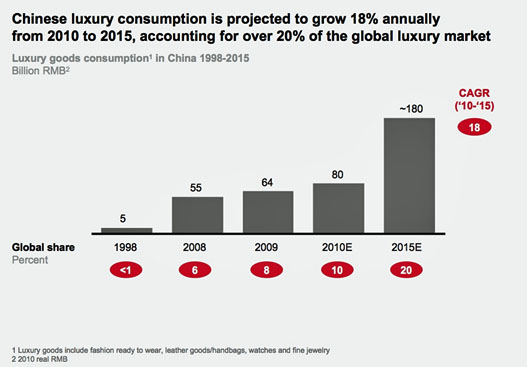
McKinsey Insights China Report
Reuters says that affluents in China are once again most likely to cut on their luxury spending this year after the most dramatic drop in incomes in the last 5 years. Without doubt, this will introduce some correction into the plans cherished by pace-setting luxury retailers like, for instance, Louis Vuitton, which earlier put their bet on China’s further development.
The Richemont Group, which owns several high-end jewelry and watch brands, posted lower sales in China in its financial reporting in the fourth quarter of 2013, although other Asia-Pacific markets, wh ere Richemont is operating, yielded growth.
Meanwhile, Coach reported a 25-percent rise in sales in China for the same period. The company’s sales in China, including Hong Kong, Macao and Taiwan, reached $ 430 million, up 40%.
Tiffany, too, is doing well in China. The company's sales in Asia Pacific increased by 19% in the first quarter ended April 30, 2014. The company noted that this was largely due to "noteworthy growth throughout Greater China."
Major Chinese festivals appear to be “footprints” of current consumer sentiment in China. Gold jewelry sales during the Golden Week in May went down in stores located in Hong Kong as Chinese buyers made fewer purchases, Chinese Gold & Silver Exchange Society said.
Demand for jewelry during the Golden Week fell by 30%, according to Haywood Cheung, president of the bullion bourse, who said in an interview with Bloomberg that "the holiday this year was shorter and there were fewer visitors as luxury spending fell and gift-giving slowed."
"Before, when they walk into a jewellery shop, they spend about HK$10,000 and now it's about HK$5,000 to HK$6,000," Cheung said, citing estimates by the society's members, which include Chow Tai Fook Jewellery Group.
Another problem for local demand is that international tourism has turned much more common and affordable in China, so waiting for the Golden Week to go shopping is not of current concern for Chinese people any more.
"The golden week effect has faded in the recent years. Nowadays, mainland tourists tend to visit regularly. From May 1 to 4 this year, sales in our chain were similar to that of ordinary weekends. And it is in line with what we expected," Chow Tai Fook’s spokesperson told the China Daily.
"In the recent years, we have witnessed more and more mainlanders turning to Europe and the US to buy luxury goods, because money-wise, our edge is declining. People can get branded handbags and shoes at bigger discounts in the countries of origin," said Joseph Tung Yao-chung, executive director of the Travel Industry Council of Hong Kong.
According to Fitch Ratings, during the first three days of the Golden Week holiday at the start of May 2014, mainland tourist arrivals in Hong Kong unexpectedly fell 1.6% year-on-year, declining for the first time since 2003 when individual tourists from China were allowed to visit.
Wong Wai Sheung, CEO of Luk Fook Holdings, which owns well-known Hong Kong jewelry chain Luk Fook, also notes that consumer traffic and jewellery sales both declined this year and sales of high-end jewellery were particularly slow.
In this regard, Tiffany’s marketing strategy aimed at wealthy Chinese traveling abroad appears to be a very smart move. In the opinion of Mark Aaron, Investor Relations Vice President at Tiffany, the company did not open any stores in Asia Pacific in the first quarter, “however, to reiterate what’s been said in the past, expanding brand awareness of Tiffany & Co. in China through our store base and marketing activities is important to generate local sales growth, but also the influence Chinese tourists when they travel to our other markets.”
Growing affluence and irrepressible craving of Chinese buyers for branded goods and luxuries is difficult to contain even under a reproachful look from China’s government intent to promote modesty and moderation in the Chinese society, incidentally reckoned as Confucian virtues.
Dasha Platonova, Editor in Chief of the Asian Bureau, Rough&Polished
