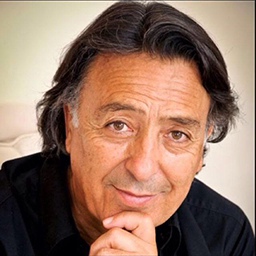
 Andre Messika was already an established diamantaire in Paris, known as a topnotch distributor of polished diamonds, when he migrated to Israel in 2003.
In Israel, he opened the company’s - Andre Messika Diamonds Ltd - main office in The Israel Diamond Exchange in Ramat Gan and has not looked back since. Today, the company has grown into one of the largest manufacturer and distributor of rough and polished diamonds.
In an interview with Rough&Polished, Andre Messika talks about his company; and in a different note, cautions that it’s safer not to go to war with lab grown diamonds, as they are here to stay.
What grades of high end diamonds are manufactured by Andre Messika Diamonds Ltd? And, which country is the biggest market for the company’s diamonds currently?
At Andre Messika Ltd we manufacture diamonds from 3 ct to 25 ct, color from D to H. We manufacture all shapes but in particular fancy shapes. We also produce Yellow Fancy color diamonds from 5 ct to 50 ct.
Today, our biggest market is the European one.
Globally, it is said that rough prices do not correlate with polished prices anymore. What are your views on this? Do miners need to rethink their pricing strategies to bring back the global diamond industry on track?
The relationship of power is not enough balanced between producers, manufacturers and distributors. Unfortunately, it is already too late to correct damages which affected all our industry.
The four foundations on which we used to stand are completely weakened. By foundations I mean profitability, bank’s funding, cash flow and demand.
We will definitely need time to fix damages and rebuild foundations.
Also, the market between traders remains essential for the good health of our industry!
The Diamond Producers Association has announced that it will be working with an advertising agency to make diamonds appealing to the younger generation. How effective do you think that such efforts in generic marketing be helpful, given that the millennials’ consuming patterns have undergone a radical change recently?
I think that it is really urgent to rejuvenate our clientele. It is so important to take the young people into account, not as a target today but as future clients. I know that it will take time but for sure it is urgent to sow the seeds... the sooner the better.
The lab grown diamonds vs natural diamonds… how do you see this panning out in the future? Do you see lab grown stones as a major competitor? Lab grown stones, which are being marketed as a conflict-free diamonds that reduces human and environmental toll, may appeal to the younger generation more vis-a-vis mined stones. What’s your take on this?
In my opinion, the lab grown diamonds are already on the market. They will be more and more marketed. That’s why the lab grown diamonds and natural diamonds cannot go on war. On the contrary they are reaching two different targets!
Has the global slowdown in the diamond industry affected the financial workings of your company? How has the company fared in its export performance this fiscal year?
The global slowdown in the diamond industry affected Andre Messika Ltd in a way that I am back to take the control of the company to go through this period of important changes.
Andre Messika Ltd turnover has been reduced from 25% to 30% in 2015. This lost reflects the figures of our industry in general. Two factors have to be taken into account in the prices decline: a rising Dollar and a reduced demand.
How is the diamond cutting and polishing school Andre Messika Diamonds Ltd opened in Lesotho, South Africa doing now? Besides the factory in Botswana in partnership with MotiGanz Diamond Group, any more initiatives in the offing?
Today, regarding the situation of our industry, everything is questioned.
Before taking any choices we have to take into consideration the situation and don’t ignore the significant and important changes. It is still too soon to choose one direction in a formal way.
With 50 years of history behind it, how important is it to the company Andre Messika Diamonds Ltd to continuously upgrade its technology in manufacturing to be on top of the game? What are major changes in technology that was undertaken in all these years?
We definitely belong to those who use the new technologies… those new technologies that mainly concern the rough diamond.
We use new color machines for rough diamond but also new tools to help us to define the plan of a rough diamond to a polished one. For example, we use the Sarine solution, the biggest innovation nowadays. It gives us an internal and external scan of the stone in order to help us to decide how to sow and polished it. We also use OGI technology for external scan.
I think that the new technologies are not an option to remain among the main actors of our industry. The ones who can used them have a chance to remain on the top compared to those who can’t.
Moreover, knowing that the competition is based on really small differences, being at the top of the technology allows us to be extremely efficient!
Indeed, thanks to technological innovation, we are able to reduce a part of our risk, but also to reduce a part of the security safety and so we have more flexibility vs 10 years ago. We can compare this difference with the one between sportsmen. There are three on the podium, and the gap between the three of them is really slight … We need to have the best results.
Diamonds per se as investment vehicles… do you think this concept is applicable not just to high-end stones, but also to melees and stars that are manufactured in India? Your thoughts please…
According to me, a natural diamond will be more and rarer so it will keep its value. However, it does not mean that you can consider every diamond as an investment.
Again, in my opinion, a good investment will concern jewels, the ones which belong to strong brand. They will have a high value for a long time thanks to the capacity of a brand to create pieces with real design, pieces that will be recognizable.
What are your plans for the future of the company, Andre Messika Diamonds Ltd? Where would we see the company, say 5 years down the line?
I cannot answer this question in a market that is confused and difficult. In a storm, we have to keep the boat on the course, and not to decide to change direction.
Aruna Gaitonde, Editor-in-Chief of Asian Bureau, Rough & Polished
