 De Beers said it disagrees with the Rapaport group chairperson, Martin Rapaport, who late last month out at the diamond group for destroying long-term client trust while bankrupting the diamond trade for the sake of short-term balance sheet profits.
In an opinion, Rapaport, also claimed that De Beers and other diamond producers should cut prices of rough diamonds by 30 percent to 50 percent.
He said mining companies would continue to ignore the needs of the trade and cautioned that more cutters would likely stop cutting as demand plummets.
However, De Beers spokesperson Lynette Gould told Rough & Polished’s Mathew Nyaungwa that they had made price adjustments this year in addition to “decisive action” taken to “address the inventory indigestion issue in the midstream and to support demand pull-through”.
De Beers was said to have lowered prices by about 10 percent last August.
Meanwhile, the group noted that it was hopeful that a good Christmas and Chinese New Year would improve current market conditions.
Below are the excerpts:
Rapaport Group chairperson, Martin Rapaport, recently demanded that De Beers and others drop prices for rough diamonds by up to 50% to save the struggling industry. What is your group reaction to this call? He also urged De Beers CEO Philippe Mellier to go as his “brand of trade exploitation and cannibalisation is no longer tolerable”. As a group, do you share the same sentiments with Rapaport?
Suffice it to say that we disagree with the content of the Rapaport article. From a De Beers perspective, alongside the price adjustments we’ve made this year, we’ve taken a range of decisive action to help address the inventory indigestion issue in the midstream (which has been at the heart of the recent challenges) and to support demand pull-through.
These actions include substantial additional supply flexibility for our customers, as well as a major additional Q4 marketing investment in the US and China, the world’s two leading diamond Jewellery markets.
We will continue to take the appropriate actions to help support a sustainable recovery in the industry, rather than adopting short-term, knee-jerk reactions that would at best provide only temporary relief.
The diamond market had been in a bad state throughout the year. Are you expecting any changes over the Christmas period?
Around a third of all US diamond Jewellery sales take place between Thanksgiving and Christmas so this is a critical time for the diamond industry.
In recognition of this, De Beers has made significant additional investments in further stimulating consumer demand for diamond jewellery: in addition to our largest-ever investment in Forevermark’s A Diamond is Forever Christmas campaign in the US, we have implemented a marketing programme in the US and China called Seize The Day to stimulate broad-based consumer demand for diamonds during this important end of year selling season in these two key consumer markets.
We are hopeful that a good Christmas and Chinese New Year will improve current market conditions.
What is De Beers’ projection for the diamond market in 2016?
We need to take a step back here. 2014 was a record year with global diamond jewellery sales exceeding $80 billion, with 3% growth.
While there may be growth in local currency in some markets this year, continued strengthening of the US dollar against all major currencies coupled with a slowdown in economic growth in China, is likely to lead to global diamond jewellery demand (in US$ terms) contracting slightly (by 1-2%) in 2015.
Obviously much depends on the demand that we see over the all-important end of year holiday season in the US and China but, assuming positive demand we would expect that the current inventory indigestion in the midstream should work itself through.
In terms of consumer demand for diamond Jewellery, absent any further material macro-economic challenges, we expect modest growth in 2016.
Your sales contract with Botswana for diamonds coming from Debswana expires in about four years. Some analysts were of the opinion that Gaborone might adjust terms of agreement, possibly bringing in another party to sell Debswana’s diamonds. Will you be comfortable with such an arrangement, should it become a reality?
Throughout our 50-year partnership with Botswana, our focus has been as partners with the people of Botswana, not just the government. With 80 cents of every dollar of Debswana revenue going to the people, we would hope this powerful economic contribution would be recognised and maintained. Also Botswana as a country respects the rule of law – we have mining licences to 2020 and all our past experience of Botswana as a country leads us to have no reason to think these wouldn’t be fulfilled.
The group’s relationship with the current government and ruling party in Botswana came under scrutiny recently, with some commentators arguing that the current system might change if an opposition party were to win. What is your take on that?
With the economic contribution we make and the strong rule of law, we are positive about our relationship regardless of who is in power – so long as we continue to make the same kind of contribution to the country.
De Beers sold its tailings operation in South Africa and also placed its Snap Lake mine in Canada onto care and maintenance. What motivated these moves?
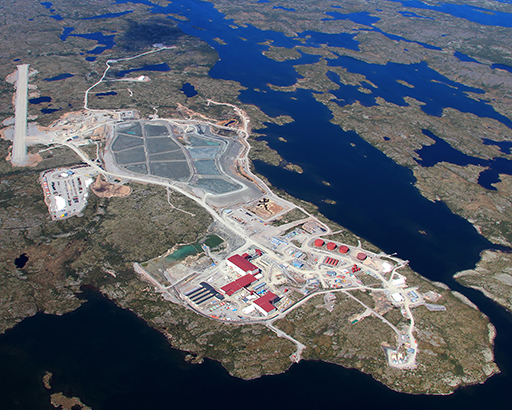
Given the challenging market conditions we are facing as a business, our ongoing focus on cost control and the results of a review of the mine which told us that Snap Lake wouldn’t be able to reach and sustain a positive cash flow position in the foreseeable future, De Beers has placed Snap Lake mine onto care and maintenance.
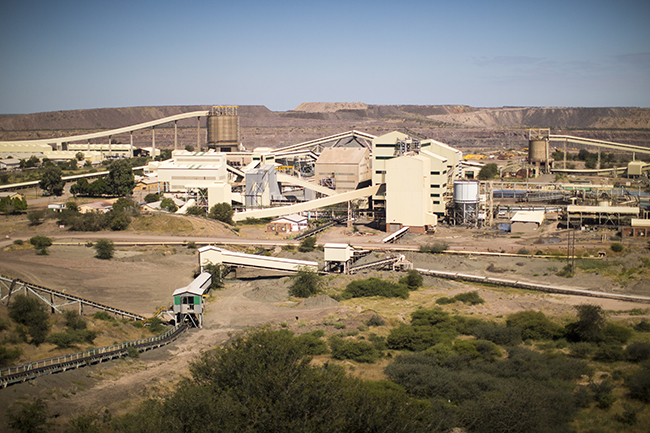
In response to these market conditions the Debswana Board has also agreed to place Damtshaa Mine on care and maintenance and to reduce production from Orapa No.1 Plant.
Over the last few years, De Beers has explored a variety of options to extend the life of its Kimberley Mines beyond 2018. De Beers concluded that the best way to secure a future for Kimberley Mines was to find an operator better suited to process the remaining tailings resources in a long-term, sustainable way, ensuring continuation of employment and economic activity in the Northern Cape region. Earlier this month we announced an agreement to sell Kimberley Mines as a going concern to Ekapa Minerals (Pty) Limited - an investor consortium.
Market watchers have projected that De Beers’ diamond sales will drop this year to about $4 billion from last year’s $6.8 billion. Do you concur?
We won’t comment on our sales totals until our full year 2015 results are presented as part of Anglo American in February.
Mathew Nyaungwa, Editor in Chief of the African Bureau, Rough&Polished
