By Albert Robinson
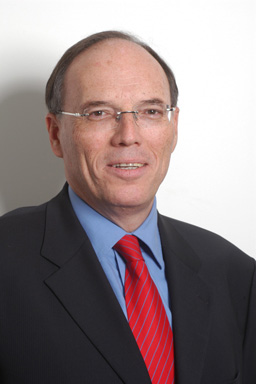 A month or so after stepping down from the presidency of the Israel Diamond Exchange (IDE) for the second time – making a total of eight years at the helm of one of the world's biggest bourses – Shmuel Schnitzer is able to provide valuable insights both into one of the most difficult periods to have affected the Israeli and global industry, and as to what future years may bring. Schnitzer was elected President of the Israel Diamond Exchange in 1998 and served three straight terms before leaving in 2004. He was elected for a fourth term in October 2013. In addition, he was President of the World Federation of Diamond Bourses from 2002 to 2006.
Shmuel has long been a well-known figure on the stage of the international diamond trade, following on from his father, the almost legendary Moshe Schnitzer who served as IDE President for 26 consecutive years as well as four terms as World Federation of Diamond Bourses President. Despite stepping down from the leadership of the IDE, there will still be a Schnitzer presence on the IDE's Board of Directors, however, as Shmuel's son Shai was elected to the board in the elections held in December.
Shmuel, what are your feelings now more than a month after leaving the presidency and what were the main issues in general?
I believe I have contributed to the development of the Israel Diamond Exchange, both during this term and previously when I was president.
The past two years have been far from easy as everyone involved in the diamond industry knows.
We are still dealing with the effects of the financial crisis and of the recession of 7-8 years ago. The Chinese market has declined and there is an ongoing liquidity crisis in the midstream.
We have had to cope with extremely high prices of rough diamonds charged by mining firms. And on the other side, we saw that polished prices declined. As a result, it was barely profitable for many of diamantaires to manufacture goods.
What is the situation in the Israeli diamond sector and what were the main challenges that you had to deal with?
It was not an easy period for the worldwide diamond industry as well as for the Israeli sector. However, in my opinion, we find ourselves in an improved situation from the one in which we found ourselves two years ago.
At that time, in late 2013, the sector was quite torn apart. There were groups and bodies within the bourse fighting for different aims. My aim was to build a sense of a common purpose where we could combine forces to fight more effectively and to be more united.
Then there was the challenge of reaching an agreement with the Israel Tax Authority, especially after the raids by police and tax officers on our exchange which received a great deal of media coverage.
Taxation in the diamond industry is extremely complex, and it is not easy to win the trust of the government and the tax authorities. But we succeeded in persuading them that we wanted to reach a fair arrangement. I had hoped to have the agreement signed before leaving office but there was a delay due to some legal issues that needed to be resolved. However, I am sure it will be signed soon.
On the issue of the police raid on the so-called underground bank, I led a policy of zero tolerance for illicit activities and full support for the importance of a high level of industry ethics. There were a number of bankruptcies and some millions of dollars in debts and this affected many firms. It was vital that we showed that the IDE is working transparently and with great business morality.
The IDE will be holding the winter edition of the International Diamond Week from February 14 to 18, how has this event developed over the past two years?
The role of diamond exchanges has changed in recent years. They are no longer just buildings providing a place for business for their members. They now play a proactive marketing role, searching for foreign buyers to visit the facility and do business with members.
The Diamond Week was initially an idea the IDE developed with the Diamond Dealers Club of New York (DDC). At a later stage, we involved the Antwerp Diamond Bourse (Beurs voor Diamanthandel), and the Bharat Diamond Bourse of Mumbai. Its importance has grown and is now a regular part of the industry calendar with confirmed buyers encouraged to attend by being offered complimentary hotel accommodation.
The most recent Diamond Week, held at the end of August and start of September, attracted around 400 foreign buyers. The fact that 170 of them were visiting Israel for the first time shows the strength and attraction of the show.
We work closely with Israel Diamond Institute to market this event for the benefit of the whole Israeli diamond sector. IDE members who take part do not have any costs to pay. In addition, there is an annual Israel Diamond Week in New York, and there is a member-only polished diamond fair on the IDE’s rough trading hall. The aim was to strengthen the local community, attracting traders from their offices to connect with dealers on the trading floor since the bourse is so large that people working in the same building often do not know one another well.
During your term in office, a diamond manufacturing center was established near the diamond exchange complex, and plans laid for another polishing center for larger stones. What was the thinking behind this?
We saw a huge downsizing of the Israeli manufacturing capacity. There are just a few hundred workers today compared to 10,000 workers several decades ago. I believe that the Israeli diamond sector has to have an industrial base.
Israeli firms manufacture around the world – from Russia to India and China to Armenia to Vietnam while running everything from their offices at the IDE. Nonetheless, I believe we must have a manufacturing base and that's why we set one up near the bourse, especially for small and medium size companies. It's a 400-square-meter facility that allows a subsidized work environment for up to 100 polishers, and with access to advanced technological systems, including the Sarine Galaxy machine, laser-cutting and automatic round-polishing systems.
We saw the success of the project and started planning a second factory inside the bourse complex which will specialize in the cutting and polishing of diamonds of 10 carats and larger. A total of 70 work positions will be offered, and it has already been oversubscribed almost three times over.
With larger and more expensive goods, the labor element is not significant. The location of the new factory will also be vital because it will allow firms to closely monitor the cutting of expensive goods. The diamonds will be within the secure perimeters of the bourse complex.
What is your view of the future development of the diamond industry?
I am optimistic about prospects, both globally and in Israel. There have been changes in doing business without a doubt. This could mean further reductions in the number of workers involved in the sector but it does not follow that turnover will decline. Technology means we may need fewer people, but sales could well rise.
Last year was a very challenging one for the diamond industry everywhere. Was it also a pivotal one?
There is no doubt last year was tough. But I believe the industry took on board some lessons. One of those was that it found that it was, in fact, possible to leave rough diamonds on the table where it was clearly not possible to manufacture them profitably.
This is a big change in the industry's approach. We have changed, and the producers are understanding that.
