 Great Consolidated Diamonds (GCD), formerly known as Ghana Consolidated Diamonds, is the West African country’s only commercial diamond company.
It owns the Akwatia diamond mine, which produced more than 100-million carats of diamonds since the inception of commercial operations in 1924.
The mine was closed almost a decade ago when Sapper and Associates, who had won the rights to the mine, failed to inject necessary funds.
This saw the new government, which came into power in 2009, opening bids for Ghana Consolidated Diamonds.
The Ghanaian owned company won the bid in 2011 ahead of international firms that had shown interest in the mine.
It is yet to resume production due to lack of funding and the company was open to investments to push the project forward.
GCD, which conducted some exploration work until last year, was said to be in talks with South African and Irish companies, who had shown interest in the mine.
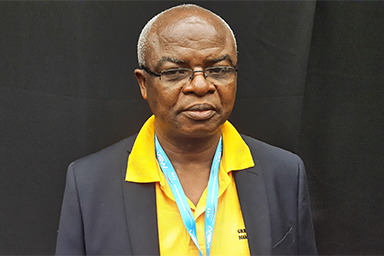
Company general manager, mines Delali Komla Kabe told Rough & Polished’s Mathew Nyaungwa in an exclusive interview that once production resumes the mine was expected to record an annual output of between 400 000 carats and 500 000 carats of diamonds.
This was expected to rise to 1.5 million carats per year after five years of production resumption.
Below are the excerpts.
Can you shed some light on your company, Great Consolidated Diamonds Ghana Limited?
This is a company that took over from the government-owned Ghana Consolidated Diamonds Limited. So when this new investor came he didn’t want to disturb (sic) the acronym (GCD), he removed Ghana and replaced it with Great. We took over in 2011 and we have been doing due diligence and exploration to see the extent of the deposits… so actually we are looking for partners, investors to come and invest, it can be debt or equity so we can start work to take the diamonds.
Who is this new owner you referred to?
It’s Dr Siaw Agyepong, he is a Ghanaian.
Is he the sole owner or the government still has a stake in the company?
The government owns 10 percent. It’s a statutory obligation in the mining industry for the government to have a 10 percent shareholding. The remaining 90 percent is a private equity.
You said you are looking for investors either in terms of debt or equity? How much are you looking at in terms of debt?
We are looking at an injection of between $40 million and $50 million to set the project in motion.
What about equity, how much are you willing to surrender?
That one we will have to sit down and negotiate, you know the Ghanaian identity is important for us, so we want to talk about 50/50 for a start.
In terms of mining history, can you tell me what the annual production level at the mine was prior to your takeover in 2011?
At its peak in the 1970s, the mine produced over 2.5 million carats a year. Then, as you know, we had some political turbulence so things went down and it was during that period that the government decided to give it out. It was put on divestiture and until 2007 production was 300 000 - 5000 000 carats a year which was actually too low and the company was closed in 2007. In 2011 it was then acquired by the new owner (Siaw Agyepong) and we have done exploration, we got the figures right now, so we are ready for production. However, what we have done (exploration) is just a little part, the whole concession is about 400 square kilometers made up of gold and diamonds.
The diamonds occupy about 240 square kilometers then the gold take about 120 square kilometers. Mining only forms the core business but we are ready to go into what the land will offer us. Agriculture is in there just for sustainability, then what we call life after mining, that is alternative livelihood, so that when the mining ends the footprints will still be there in the form of agriculture and whatever we can provide. Currently we even have a very big tailings dump, now we want to use it for aqua culture, we want to use it as a tourist attraction. So you see there are many things we can use the land for. If you look at our mission statement, we didn’t say we are here specifically to mine diamonds but we said to “maximize our land use”.
Can you provide some details on your diamond reserves?
The brownfield areas (Akwatia as well as lower and middle Birim) are estimated to host 14 million carats of both proven and indicated diamonds. Tailings are estimated to host 20 million cubic metres and 1.4 million carats of diamond.
When are you expected to commence production?
If you look at it we are bit late now, we actually wanted to start with a tailing, we have to do a lot of drilling to be sure. So the programme is late now and that is why we have jumped to the market to look for funding. If we can start producing 400 000 carats to 500 000 carats the better and then eventually our target is to mine 1.5 million carats annually.
When do you think you will reach your maximum production capacity?
Within five years, we should be able to get to that point depending on the level of funding that we put in.
Are you telling me that the delay was solely caused by lack of funding?
Yes, mainly funding issues.
When did you finish exploration?
We finished two years ago. We could have started mining in 2014, but the funding issue was our bottleneck, so we had to continue the exploration in 2015.
Have you received any offers from potential investors?
Yes, there had been offers and we are still talking with these people.
Do you have any names of the companies that you are talking to for a potential deal?
We have Limoz Resources of South Africa. They actually showed interest and we are still talking.
Any offers apart from Limoz?
There is a PW offer also, which is on the table and we are still talking?
PW? What does is stand for?
We just call them PW, I don’t know what that stands for.
Are they from Ghana?
No, it’s an Irish company they also have business in South Africa. We are talking to them also.
So generally what is the state of diamond mining in Ghana? Are you the only diamond mining company in the country?
Yes, we are the only diamond mining company in Ghana. There is no other diamond company really. What we have done is to give certain areas to the local communities, mainly the youth. We have given them areas to mine on a small scale basis so they can do their mining and sell their products to us.
Have they started mining diamonds already?
Yes, they are mining diamonds. In fact, we are currently asking them to go and sell their diamonds to the Precious Minerals Commission (PMC) in Ghana and last year they sold about 1 million carats of diamonds.
What did you benefit from this arrangement, did you get a commission?
The arrangement is that ‘sell 10 percent to us and then go and sell the rest at PMC’, but the main purpose for this arrangement is to engage the youths and to protect our reserves. The areas that we give to them are areas, which we think are not economic for us to mine, areas that were mined by the previous owners. We gave them those areas which we know machines cannot go there and mine economically. Assuming we were also mining, we could have been in a position to buy all their products. So that would have added to our production. So the 1 million carats that were sold to PMC would have been ours.
So the whole idea is to ensure security, you won’t have people mining your concessions illegally?
Yes, and apart from that you know there is lot of unemployment so u have to think of getting them engaged and where there is peace you will also have peace. The benefits are much, so why not? It is a good investment destination, we think that investors can come in and they will go to their banks smiling.
Mathew Nyaungwa, Editor in Chief of the African Bureau, Rough&Polished
