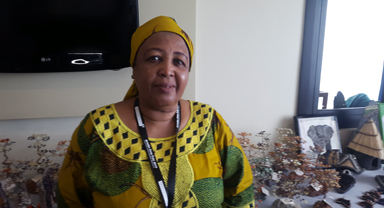
 Having found small-scale mining demanding due to its highly physical nature and use of rudimentary tools, a group of women in Tanzania decided to join hands and start an association that add value to the country’s abundant gemstones.
It’s just over a year since this idea was birthed and the gods seem to be smiling at this grouping known as Mineral Value Addition Association, as it exhibited for the first time at the country’s premier gem show in Arusha late April.
Thanks to their ingenuity, the group was producing, among other things, unique gemstone trees that some Indians have developed a strong appetite for.
Association leader Shamsa Diwani told Rough & Polished’s Mathew Nyaungwa that they still need to grow their export markets.
She also said that the association was looking for working capital and machinery to boost their fledgling operations.
Below are the excerpts.
What drove you into starting your all-women association?
Women who were doing mining found out that mining was difficult for them so they decided to add value to rough gemstones. They also noticed that they were getting a loss selling rough stones, so they decided to organise themselves and start adding value to minerals. We do cut and polishing of gemstones. We are also into handcrafts such as gemstone trees, we do beads and key holders from gemstones. We also want to train our youths because it will be hard for us in future to continue doing what we are doing, so our girls will take over.
How big is your association?
At the moment our organisation has about 50 women but it’s new. We registered last year and we believe we will increase the number in future. Already we are in Dar Salam, Arusha and Mwanza as well as the southern part of Tanzania in Tunduru.
Which type of gemstones are you working on?
In Tanzania we have more 25 different types of minerals, but we are working mainly on minerals such as tanzanite, rhodolite, garnet, quartz, aventurine, amethyst, zircon, topaz aquamarine and kyanite.
Do you also work on diamonds?
Yes, but only on jewelleries. We cannot work with diamonds on things handcrafts such as the gemstone trees. We only use gemstones that are of low quality for the trees not gem quality ones.
Where do you get the capital to purchase the gemstones?
We get assistance from our family members, but we believe if we do things like this the government will see us and if developing partners can also see us doing this with our own money I think they will have to help us because we need more technology.
Have you started exporting your jewelleries and hand crafts?
We are not exporting at the moment, but we have few customers abroad who are placing orders and we look forward to getting a huge export market.
Where are these few customers from?
They are from the United States, Sweden and India. The Indians like the gemstone trees. We also attended an exhibition in Dubai and we sold a lot of gemstone trees.
Let us turn to the local market. Is there any appetite for what you are manufacturing?
Yes because we are the only company which is dealing with gemstone trees in Tanzania and East Africa. The problem is that the wire that we are using is difficult to get. Now we are getting something from China, but it’s not what we really want.
What sort of wire do you normally use?
It’s a brass wire, non-tarnish, 24 gauge. We ordered it from China, but I think we will find someone who will guide us so we can get the right wire.
Are there any challenges that you are facing?
Yes, it’s mainly lack of technology and working capital. We need to get some training as well and machinery for cutting and polishing.
Mathew Nyaungwa, Editor in Chief of the African Bureau, Rough&Polished
