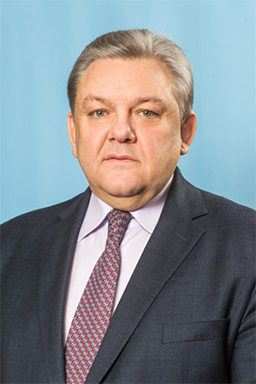
 Gennady Piven, First Deputy General Manager of AGD Diamonds JSC, talks about his work at the diamond fields in Yakutia and in the Arkhangelsk Province.
You headed the Severalmaz PJSC and worked as the First Vice President at ALROSA. Several large mines were built and started to operate in Yakutia under your guidance. Are the geological structure and hydrogeological conditions of the diamond deposits located in Yakutia and the Arkhangelsk Province comparable?
There are many significant differences. I will only note that the two diamond deposits in the Arkhangelsk Province are either completely overlaid by a sedimentary cover (the diamond pipe named after Vladimir Grib) or partially overlaid (the diamond deposit named after Mikhail Lomonosov). This greatly complicates the search for such deposits and delays their development. In Yakutia, the situation is radically different. Initially, in a very short period of time (10-15 years), there were discovered most of the existing diamond deposits that were not overlaid by a sedimentary cover, and then exploration shifted to areas overlaid by a cover, due to which new discoveries occurred only once every 15-20 years. The recent discoveries include the Yubileinaya diamond pipe found in 1975, the Nyurbinskaya and Markhinskaya diamond pipes - 1995, the Nyurbinskaya diamond placer and the Mayskaya diamond pipe - 2010. In addition, Yakutia hosts most of its diamond deposits in a fairly homogeneous environment of strong and stable carbonate rocks, which makes it possible to conduct open-pit mining to a great depth with maximum slope angles of open pits. In the Arkhangelsk Province, the upper enclosing rocks of the existing deposits are contrasting sandy-argillaceous strata quite unstable to mechanical stress, and the presence of clayey aquicludes predetermines the appearance of numerous aquifers.
AGD Diamonds takes environmental protection very seriously. In your opinion, to what extent does AGD Diamonds correspond to the modern standards of environmental and industrial safety?
Speaking objectively, today our company is one of the best mining businesses in this country and fully meets all the most rigorous requirements of environmental and industrial safety. I want to note that starting from the design decisions, from the construction of the Grib Mining and Processing Operation and the initial development of this diamond field, everything was done by AGD Diamonds most efficiently and thoughtfully. At one time, the Russian Platinum Group of Companies was closely working with Bateman, the world's leading designer of factories and integrated plants for the processing of platinum-palladium ores and other solid minerals, including diamonds. As the first vice-president of Russian Platinum, I used to visit the Grib diamond field supervising the construction of a concentration plant, so I know firsthand about the level attained by the AGD project. This year, after the change in the company’s management we did not have to change anything drastically. We only specified, corrected and strengthened some of the business areas. The company transferred the existing power complex into its own business structure, which made it possible to increase energy security, we also began to use the ore milling technology in the quarry and started a large-scale modernization of the concentration plant.
Could you evaluate the degree of environmental impact due to the development of a diamond deposit in comparison with the impact of other mineral mines at which you happened to work?
Against the background of most other mineral deposits, diamond deposits are very benign in relation to nature. The Grib diamond mine does not bring about any serious damage to the ecology of Russia’s White Sea Coastal Area. All the environmental examinations necessary for the work of the mining and processing plant have been approved at the regional, federal and international levels, and there is independent monitoring being regularly carried out in our territory.
Vladimir Malakhov, Rough&Polished
