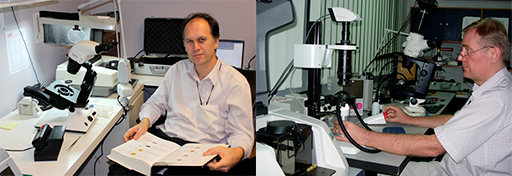
 Gem and jewelry industry experts Branko Deljanin and Dusan Simic have completed the 3rd edition of their best-selling book, Laboratory-Grown Diamonds - Information guide to HPHT and CVD-grown diamonds.
Deljanin and Simic are diamond researchers with over 50 years combined experience in the trade, are internationally recognized as authorities on diamonds. They specialize in the identification of natural, treated and laboratory-grown diamonds. Together, they have published more than 100 magazine articles and presented at scores of conferences around the globe.
Deljanin and Simic kindly agreed to answer Rough&Polished questions related to the publication of their book and the situation in the diamond industry.
Please tell us, what is the purpose of reedition of the "Bible" of laboratory diamonds?
We decided to revise and re-print the Second Edition, updated with new chapters zeroing in on the many changes, emerging trends and evolving dynamics of laboratory-grown diamonds over the last decade. In the 2020 UPDATE section, Dr. Boris Feigelson from the Naval Research Laboratory, USA, a pioneer of growing colorless synthetic diamonds in former Soviet Union, gives a scientific overview of HPHT diamond production.
There are many different types of HPHT presses and CVD growers who create better quality and larger diamonds now than 13 years ago. We had a chance to visit and consult many of these producers of synthetic diamonds in China, India, Russia, Europe, Israel and USA, and learn the complex process of growing high quality large coloured and colorless crystals.
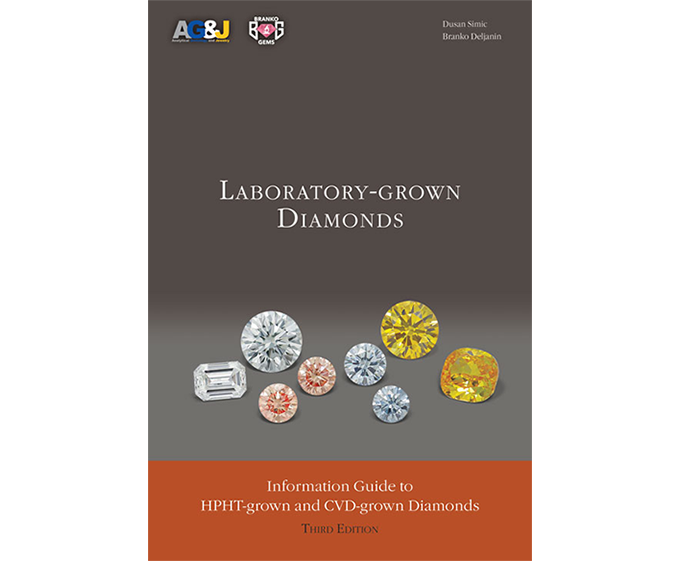
In our 2007 Edition, we had four major producers of gem-quality laboratory-grown HPHT and CVD diamonds (of which only Chatham Diamonds is still in the same business) creating diamonds, as large as 1.5 ct at that time. In this edition we talk of over 25 producers from three continents who can grow crystals close to 100 ct. We also featured 2 producers/distributors from Russia (“Ultra C” and “Wonder Technologies”). We also conducted studies on 10 ct polished diamonds, while 20 ct+ are cut.
Another reason is that in 2021 will be premiered documentary movie, 90 min for cinema, ShowTime production, from awarded director Jason Kohn with one of the authors of the book, Dusan Simic as the main character. Movie is the story about the diamonds, natural and laboratory – grown, from deferent perspectives. Steven Lousier from DeBeers and Martin Rapaport, Tehmasp Printer from IGI Mumbai and other less know professionals are talking in that unique movie.
To what extent do you think laboratory diamonds can threaten the natural stone market?
We do not think laboratory diamonds are threat to natural diamonds, these are 2 different products of diamond industry with different advantages and disadvantages, We hope readers appreciate our effort to shed some more light on this subject, and as we predicted in our 2007 edition, we also repeated in 2020 book last line “we hope we were able to help you view laboratory-grown diamonds as a unique part of our jewelry industry, rather than a threat to it.”
Do you see any signs of recovery in the global diamond market?
Not really for natural diamonds, but we see growing activity on Canadian and US market in trading of laboratory-grown diamonds, on wholesale and retail level. In time of global crisis consumers are more open to get affordable laboratory-grown diamonds, though good quality natural diamonds still have market, especially coloured rare diamonds.
What are the main drivers of market growth at the moment?
There is really no market growth this year for jewellery industry, only internet-based market is growing.
When can we talk about a full recovery of the diamond market?
Only after COVID 19 global situation stabilized and there is free transfers of people and goods.
How do you feel about the so-called Swarovski phenomenon, when fashion jewelry is sold at prices comparable to the cost of products made of precious metals and stones, while enjoying a huge demand?
We do not know about “Swarovski phenomenon”.
Do you see the need for marketers to develop a fundamentally new strategy aimed at popularizing diamonds among the "Internet generation"?
Yes, younger generation is less interested in natural diamonds, more in technology and marketers should find new strategy to attract them. Younger people are more open to laboratory-grown diamonds as “technological achievement” of men and less traditional product.
Is there an influx of "conflict" diamonds to the world diamond market during the crisis?
Not sure that is big problem anymore.
Alex Shishlo for Rough&Polished
