 Angola is one of the leading rough diamond producers in the world, according to the Kimberley Process.
It, however, has been exporting the bulk of its diamonds mainly to Dubai.
The Antwerp World Diamond Centre (AWDC) had of late been trying its best to get Luanda to ship its rough stones to Belgium.
Angola is now working on the establishment of a diamond exchange, which will be second on the African continent.
It first revealed plans to establish the diamond exchange in 2019 as part of the country’s ongoing reforms in the mining and energy sectors.
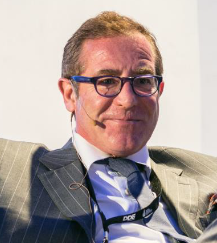
The man tasked to spearhead the setting up of the diamond exchange is none other than Peter Meeus, who did the same in Dubai.
He told Rough&Polished’s Mathew Nyaungwa, in an exclusive interview, that the diamond exchange will be located in Luanda and is expected to open later this year.
Below are excerpts of the interview.
You are a consultant helping the government of Angola to set up a diamond exchange, among other things. Why the diamond exchange?
Because we have seen a revolution in the market over the last five or six years where new sales policies have been tried out and I specifically refer to tenders and auctions. In 2014 that didn't exist and today, it has taken over. It is not only the traditional auction houses that sell rough diamonds in this way, but also many companies. As your magazine [covers South Africa], you know that South African tender companies are also very prominent players. Traditional producers have as well been very active in this market of selling their goods through tenders. Okavango (ODC) also is doing a serious percentage of the goods in Botswana through tenders. The question is what is a bourse today? A bourse is a place where you bring together market players who can buy and sell. So, we have seen the market rapidly changing in the last six to seven years and the trend is similar everywhere: tenders and auctions! So why couldn’t we do that closer to where the goods are produced?
Do you think buyers would be keen to travel to Angola to buy the rough diamonds or do they prefer to go to places like Antwerp or Dubai?
Well, you know, put yourself in the mind of somebody who lives in Surat (India). Going to Antwerp is no less complex than going to Angola, especially during the COVID-19 period. The connections to Luanda are quite good. So basically, the question is linked to volume. If we would not be able to have significant volume, then people would not immediately travel. Angola has had four tenders in the last two years (not more because of the impact of COVID-19 in 2020), but the June 2021 auction was a volume auction of more than $45 million. A lot of people came. Luanda is a nice place to visit so why not test the waters. I think if the volume is large, it will work. What will determine the volume going forward is related to exploration in Angola. We are beginning to see that ‘new’ big mining companies (Rio Tinto and De Beers) have an interest in the country. You have to start somewhere.
Apart from the volume that you are talking about, I noticed that since SODIAM started the tenders in 2019 they have done four tenders, including the one convened late November last year. So, does it mean that the frequency of convening tenders will improve with the establishment of a diamond exchange in the country?
Angola did not have more because of the impact of COVID-19 in 2020. Nevertheless, yes, indeed the idea is to increase the frequency of tenders and that is why the process of selecting international tender houses has been completed. We need to have more regular tenders and the market was tested in the last two years, but it is the wish of the government of Angola to [increase the tenders]. We progress cautiously and the idea is to increase that frequency and boost the volume.
In your presentation during the first Angola International Diamond Conference in Saurimo last November, you mentioned that the Angola Diamond Exchange would be second on the continent, as there was one already in South Africa. You, however, mentioned that there is a major difference between the one Angola is planning to set up with that in South Africa. What is that difference?
The difference here is that when the Diamond Dealers Club of South Africa was established, we had a traditional market with one diamond player, De Beers. Everything was controlled by that one player and a bourse was like a second-hand trading place. The difference is now we come closer to the source and there is no one dominant player anymore. Some techniques were not used in the past – there is the issue of traceability -- and there is this whole system of tenders and possibly auctions. That is basically new, not so new because they do it successfully in Antwerp and Dubai. It is new here in Angola and that is why something needs to be tried out.
So when will Angola open the diamond exchange?
It will likely be opened this year and for this, we are creating infrastructure inside the existing ENDIAMA/DE BEERS building in Luanda. We will have the use of an entire floor for tenders where people can come and visit and inspect the goods in a dedicated environment. We will likely have between 10 and 15 rooms. Everything should be finished this year.
You noted that the diamond exchange will be in Luanda. Why didn’t you set it up in Saurimo, the diamond capital of Angola?
I refer to your earlier question, everything has to do with easy access. People will travel to Angola, spend a night, look at the goods and then go back. If we put the Exchange in Saurimo then it will take much more time and time is money so we need to make it easy. That is why it is in Luanda.
Are you going to only sell the Angolan goods or will you also consider mopping up goods from the region?
Let us start with what we have on our hands so we will start with the Angolan goods. It is not our style to make promises that we will not be able to keep.
We saw last year AWDC paying a visit to Angola and we have also seen how Dubai has been trying to make inroads with this diamond exchange.Does it mean that Angola won't be taking some of its goods to these centres?
The whole idea is that goods will be traded first of all in Angola. What happens after that is not our business. But let’s say that we intend to have the primary market of buying from the source. If we can establish that through a tender or auction system in Angola that is a big win already. That is the idea. Of course, these diamonds for all kinds of reasons could afterwards go to Dubai and eventually will end up in India and China, especially the small goods to be polished. Today, most Angolan goods go to Dubai, this is a well-known fact. What is also a well-known fact is that from the goods that go to Dubai, a big percentage of that end up in Antwerp. ‘So will fewer goods go to Dubai or Antwerp?’ That I do not know. We also will create a favourable tax regime to benefit investors.
What other activities will be done at the diamond exchange?
We are establishing a learning facility not only for polishers but for future managers. Angola has a big potential, there will be a need for supervisors or managers of factories. We want to have a higher level of education for them. The idea is not only to have a polisher sitting behind a wheel but future leaders occupying [management] positions should be trained in a much more comprehensive way. That will be done in the academy. There will also be a deep-boiling facility. The Exchange will need to address some of these hot topics of today, which are related to provenance, traceability, accountability and these matters need to be dealt with. We will also have offices of the KP and other institutions such as the Angolan Ministry of Commerce, Angolan Customs, banks and clearing agents inside to facilitate the process of exporting.
Will the training academy be affiliated with any institution of higher learning in Angola or it will be independent?
It will be independent; it will fall under the Exchange. We will have to hire talent where we can find it.
Is the Angola Diamond Exchange going to be affiliated with the WFDB? If so, are there any benefits of doing that?
Of course, WFDB represents 30,000 members worldwide so we have all the reasons to be a member and we will follow all the processes, once we are established, to become a member of the WFDB. The first thing they did in Dubai was to become a member of the WFDB even though there was no diamond trading taking place yet in the country. So, it is a logical step [to join the WFDB].
Mathew Nyaungwa, Editor in Chief of the African Bureau, Rough&Polished
