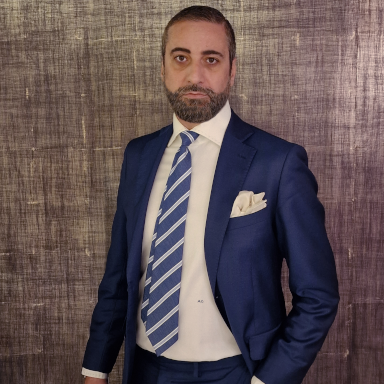
 H.G. Antonio Cecere, CEO of Ciceres Consulting and Cecere Monaco, is President of Geneva Diamond Exchange, and Vice President of Monaco Diamond Exchange, non-profit associations watchdogs of the conflict diamonds trade to prevent their entry into the mainstream markets.
In 2016, Cecere received the Honorary Diploma from the International Police Association in the Principality of Monaco for his ethical contribution and in 2006 he was awarded in the United Kingdom by Her Royal Highness Princess Royal for services rendered to the industry.
Antonio Cecere's consulting activities include advising large corporations in multiple sectors, like Lamborghini and Bentley Motors, Microsoft and HSBC; his experience of over two decades includes repositioning jewellery brands of Swarovski Group and Richemont Group. He was a Professor at the International University of Monaco and a lecturer at Bicocca University in Milan.
Here, in an Exclusive Interview with Rough&Polished, Antonio Cecere explains how ethical sourcing changed in the last decade and how it expanded to the industrial sector that revolves around mining.
Some excerpts:
Today, how important is the ethical footprint of the suppliers of products and services involved in mineral extraction?
The world of mining is rather complex and there are many moving parts that need to be in place to activate a mine that can take as long as ten years to open. This is valid for diamonds as much as it is for most minerals across countries rich in natural resources. Most projects start with a geological report based on which the decision-making process starts and partners are selected.
Financing is the consequent step; Anti Money Laundering (AML) due diligence on the investors is essential to ensure that the funds originated from clean sources; central banks and governments are most likely involved at this stage. Subsequently, extraction specialists are selected and industrial components are sourced.
To what extent is ethical sourcing applied to mining? What goes into the process of selecting the right suppliers and industrial components?
I am involved in various mining projects in Africa where dredging is an essential part of the process and general practice in mining. Selecting the right partners even for components is essential not only from a technical perspective but as an ethical priority, too.
Let me give a real-life example, Deriplast Group headed by Mario Cirino Pomicino is the supplier of the dredging equipment and HDPE pipes necessary for the advancement of these projects. They were selected not only for the excellence of their products; today that is simply not enough. We know that they source their polyethene palettes responsibly from known traceable sources, that they are a sustainable company that uses green energy during production, they offset their CO2 emission and actively contribute to reforestation; they make a social contribution to rebuilding a local economy. This is a specialized company part of the European market leader in pipes production System Group, originally founded by visionary Alvaro Boscarini.
All this is to explain that selecting the right partners today it is not simply about the most competitive prices, it is surely about excellence in production, accountability, and after-sale service, but concurrently we look at the ethical footprint and their commitment to sustainability.
It is about knowing a company's history, their corporate philosophy and embracing its values through the supply chain. If we start selecting the right component, it sends a strong signal to the whole process and it cascades down to human resources and workers' conditions, to set the standards for contributing to local economies, education and welfare.
Would you say that ethical sourcing does not start with conflict-free diamond trading and KPCS, but well before that the minerals are extracted?
Yes, ethical sourcing starts from the first pipe, the first float, and the very first employee. It’s a mindset. Social responsibility and environmental sustainability must be at the forefront of every choice we make. Even a pipe can make a difference, so the message is: let’s all start choosing the right pipes.
Consumers today reward this mindset and choose their products accordingly, Responsible Jewellery Council and Diamonds Standards Organizations are testaments to this. This behaviour is not limited to individuals; governments today subscribe to this change in attitude. I am a board advisor to Paladeri, a highly innovative company at the forefront of climate change that offers solutions to the management of rainwater, from lamination and preservation to controlled dispersion. When I describe it as an innovative company, I do not limit this to its products, but its state of mind. A highly socially responsible company that supports local communities, offsets their CO2 emission, is powered by solar panels, it is an equal opportunity employer.
All these factors became catalysts alongside their excellence in production and innovation to attract the interest of the United Arab Emirates Ministry of Industry & Advanced Technology as well as their counterparts in Europe. This is a perfect example to explain that today excellence is not about a product alone, it is about understanding your environmental impact, and how you can contribute to society. This attitude is valid for the diamond mining industry, the polished diamond sector, and the jewellery manufacturing segment equally.
How difficult is it to convey ethical corporate behaviour in remote countries rich in natural resources, but often an object of corruption and wealth disparity?
It is a challenge worth the struggle; when I asked Dumani Mandela, grandson of the late Nelson Mandela, to join our board at Geneva Diamond Exchange it was to send a strong message to our interlocutors in the African continent that we stood for uncompromised social values, and that we are committed to building stable societies by ensuring that the corporate world, as much as the industrial and diamond sectors, all play their part responsibly.
Aruna Gaitonde, Editor in Chief of the Asian Bureau, Rough&Polished
