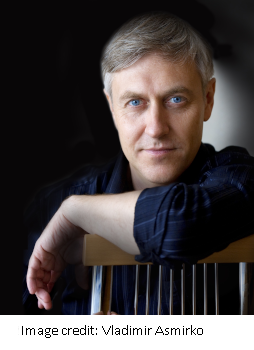
 Viktor Tuzlukov is a recognized master in the art cutting of top-quality gemstones, an honored worker of gemstone cutting art, and a member of the US Faceters Guild.
He is on the award panel at the international jewellery design and cutting excellence competition in Hong Kong.
He is the founder of the Russian Faceters Guild (2012) and among the winners at the international faceting competitions in gemstone cutting in the USA, England, Spain, and Australia.
His works have been displayed at the leading museums of the world like the Historical Museum in Moscow, the Smithsonian Museum in Washington, the Museum of Natural History in Los Angeles, the Louvre, and the Vatican Museums.
The name of Viktor Tuzlukov as a diamond cutter received an entry in the Guinness Book of Records three times; the leading gemological laboratory, the Gemological Institute of America (GIA), indicates his name in the certificate for gemstones. The synthetic stones he faceted received worldwide recognition and are purchased by the world’s leading collectors.
Viktor Tuzlukov told Rough&Polished about the secrets of his excellence in faceting and the philosophical significance of the one-of-the-kind collections he created.
What attracts you most about faceting?
You are probably waiting for me to say that “It’s so wonderful when a sparkling miracle is made from a shapeless piece of stone!”. This is great, but I’ll tell you something else.
Firstly, faceting allows me to express my author’s message. And secondly, when I took to faceting, this segment had a huge potential for development. I see it now, but at that time, I felt that cut and polished gemstones could look better. And they cannot become featureless due to a terrible term “jewellery insert”, but quite independently declare themselves as an amazingly faceted GEMSTONE.

Image credit: Dmitry Stolyarevich
"Heart and Essence" - cubic zirconia, represents India in the World Heritage collection.
How did it happen that you went into cutting and polishing business?
Quite by chance: my friend, a jeweller, went to his friend, a cutter, and took me along with him. I looked at cutting and tried to cut myself - it worked out well. But seriously speaking, while walking along the village roads I picked up pebbles in my early childhood. There was something about them that attracted me. And now, having many years of experience, I always keep in my heart the image of a boy walking along the road and picking up pebbles, collecting them to breathe life into them and give them to other people. “A time to cast away stones, and a time to gather stones together (Tempus spargendi lapides et tempus eos colligendi),” Ecclesiastes said.
This is a patient work requiring a lot of efforts and patience. What is more important to you - the faceting process or its result?
It does not require so much physical strength - I sometimes joke that I am not strong in body - I have never lifted a stone more than three thousand carats in my life. This work definitely requires patience. But I’d rather quote the words of my teacher at the marine school saying, “The formula of a real navigator is accuracy plus accuracy, plus attention squared, and plus self-control cubed”. Replace the word ‘navigator’ with a ‘gemstone cutter’ and you can get the formula that is true as well.
The faceting process and its result are inseparable for me. I think that one more component should be added - an idea, then, we will get the trinity of a source, goal and going towards your goal, which is the cornerstone of real creativity. This triad is inextricably connected, and each of its elements carries the others. If an idea comes, we immediately have some thoughts how to work on its implementation and the expect a certain result; when work is in progress, we constantly keep in mind the initial idea and see how it will be implemented. Finally, when we hold a finished cut and polished gemstone in our hands, we see the idea - the message - in it and remember how the polished gemstone was created. So, my answer to your question is that they are equally important.

Image credit: Dmitry Stolyarevich
"Many facets of genius" - cubic zirconia, created after a drawing by Filippo Bruneleschi, represents Italy in the "World Heritage" collection.
You have achieved very high level in your mastery of faceting and made eye-catching art from your craft. What does your occupation give to you - earnings, a fame or a life purpose?
Of course, it gives everything - that is my life. Another question is what the goal is, and what is just a by-product or a means to achieve this goal.
Let me remind you of an old Indian parable. Three workers carrying heavy stones were asked what they were doing. The first responded, “Don’t you see? I am carrying stones.” The second said, “I am earning a living for my family.” And the third exclaimed, “I am building the great Taj Mahal!” In my case, money is not the goal. This is just a recognition of the beauty revealed through my works. Being famous is not the goal either. You come to fame when people like what you create. Well, faceting is not a life purpose - it can only help to understand it better and gives the key to its understanding. But you have to turn this key seven times on your own, and this can only be a solo work.
You still have time to teach. How is the training going?
This activity now comes down to short courses of 7 to 10 days, individually or in small groups of up to five persons. Actually, this is a basic course when a student has no idea about faceting at all, or about a certain cutting in particular. I do not train professional cutters and polishers who will then sit at a factory cutting standard gemstones to get mass-produced goods. I work with lovers of faceting. To continue the previous topic, I try to find the future builders of the Taj Mahal among those who come to me. I don’t always succeed, but when I find them, I’m happy. My course goes deeper than just using a machine and a magnifying glass - it’s about perfection. We express it through faceting.

Image credit: Dmitry Stolyarevich
"From the Void" - fiery citrine, opens the "World Heritage" collection dedicated to China.
Your works presented to spiritual leaders - the Dalai Lama, the Pope of Rome, the Patriarch of Moscow - have become famous. What inspired you?
The longest and most difficult work was on the gemstone for Dalai Lama, it was called “Initiation”. I have long been infatuated with the idea of creating a Buddhist mandala in a faceted gemstone, but it was not clear how to do it. About 13 years ago, I came across books describing the Kalachakra mandala, containing 722 “elements”, Deities. It took almost two years to work on the design of this gemstone. It contains 722 facets, each corresponding to a Deity of the mandala. The order of the facets, their grouping, even the sizes - everything matters in this most complex gemstone both in terms of technique and deep symbolism. For some reason, it seemed natural that this work should be a gift to the spiritual leader of Buddhism as gratitude and recognition of his sincere service to people.
After that, the idea of a gemstone called “Blessing” arose, where the origins, essence and the embodiment of the Orthodox faith were also symbolically expressed by its facets. These includes prophets, apostles, Orthodox saints and great martyrs, as well as the Ten Commandments, and the Seven Sacraments of the church, and much more ... This gemstone was also a gift to the spiritual leader of the Russian Orthodox Christianity.
The next stone, “Eucharist”, was full of Catholic symbolism, it was a gift to Pope Francis. But the main thing in this idea was that if we put these three gemstones side by side, it is clear that they are almost the same, with minor differences. After all, the essence of spiritual teachings and religions is the same, the difference is in the interpretation of symbols, in the use of different images for a better understanding of the spiritual teachings.
What do you consider your biggest achievement?
Time will tell what was significant and what was not. Of course, I would like to remember some moments - for example, the first attempt to express a philosophical and artistic idea in the “Philosopher’s Stones” collection, or the recently completed fundamental project “World Heritage”, the gemstones of which have already been exhibited on three continents - in Germany, Thailand, the United States, and in Moscow - at the Gokhran (State Precious Metals and Gems Repository of Russia). I would also like to remember the presentations at major international conferences, articles in major gemological journals…
But the greatest achievement in my life has probably become the very my life, and I try to make the most of what is God-given to me.

Image credit: Dmitry Stolyarevich
"Flower of Eternity" - citrine, created according to a drawing by Leonardo da Vinci and listed in the Guinness Book of Records as the most faceted quartz.
What are you most proud of and what do you regret?
At one time, St. John the Forerunner said, “But after me, one will come who is more powerful than I am.” It is very important for a master to see that his students have surpassed him in some way, which means that he has contributed to the development of his art, and his skill will continue to live and develop. I was lucky to win the International Individual Faceting Championship in Australia in 2010, the unofficial world championship. I set a world record with 299.17 points out of 300, and the record had not been surpassed for 10 years. Everything changed in 2020 when Liao Man Lin, a student of my Taiwanese friend Daniel set a new competition absolute record with 300 points! This filled my heart with pride, because Daniel also considers himself to be my student, although he was not formally my student, he just adopted my attitude towards gemstones and perfectionism. Probably, this is what I am most proud of - that my students, even in the second generation, have gone further than me.
And what do I regret?... Rarely, but it happens that a student cannot withstand the stress of intensive studies and stops training. This is sad because the line of succession in teaching ends. But each person chooses his/her own way - whether it is a longer or a shorter one, but this is the choice of a person, and it is worthy of respect.
What are you working on now, what are your plans for the future?
The “World Heritage” collection has just been completed. Two copies of the collection have already been sold and we need to make some more to display them at exhibitions. There are some ideas for the future, but it’s too early to talk about them. Perhaps, the next project will be somehow connected with the Fabergé name. Only time will tell.
Galina Semyonova for Rough&Polished
