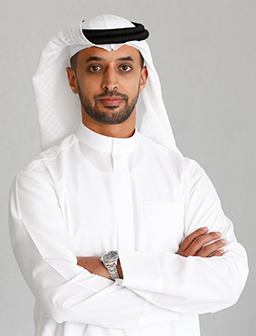
Ahmed Bin Sulayem certainly needs no introduction being widely popular globally as one of the leaders of modern Dubai. As the Executive Chairman and Chief Executive Officer of DMCC, Ahmed Bin Sulayem has and continues to play a key role in establishing and positioning DMCC as a major international commodities hub for trade.
He joined DMCC in 2001 as a director, prior to the Dubai Government Authority’s official launch in 2002, and his responsibilities included overseeing the organisation’s operations. Today, he is the Executive Chairman and Chief Executive Officer of DMCC, as well as the Chairman of the Dubai Gold and Commodities Exchange (DGCX) and the Dubai Diamond Exchange (DDE).
He has driven DMCC’s growth from a start-up of 28 member companies in 2003 to the world’s leading free zone in 2022 with over 23,000 member companies from 180 countries, employing over 79,000 people. He has also overseen the exponential growth of the DMCC Free Zone master development in Jumeirah Lakes Towers (JLT), a 200-hectare business and residential community in Dubai of over 100,000 people living and working in 87 towers. Mr Bin Sulayem also oversees the development of DMCC’s latest real estate project, the much-anticipated Uptown Dubai district.
The Kimberley Process officially appointed the United Arab Emirates as the first and only Arab country to Chair the Kimberley Process in November 2015. Shortly after, the UAE Ministry of Economy officially appointed Mr Bin Sulayem as the UAE’s Chair of the Kimberley Process for 2016. Mr Bin Sulayem was reappointed Chair of the Kimberley Process for a historic second time, a position to be assumed in 2024.
Here, in an Exclusive Interview with Rough & Polished, Ahmed Bin Sulayam spells out his thoughts for the future of DMCC but also sees KP will undergo a radical change in the years to come...
Some excerpts:
In the last 20-plus years, DMCC has expanded its wings far and wide, turning Dubai into a thriving trade and business hub. Can you run through the journey from 2002 to date for those who haven’t followed your story?
DMCC was established in 2002 with the mandate of shifting trade to and through Dubai. And since our days as a start-up with a handful of member companies, we have grown to become a district of 23,000 businesses operating across every sector and industry.
To this day, our goal remains to attract FDI to the emirate and position Dubai as a global hub for trade. We do this through two main focus areas.
Firstly, providing a district for any type of business to set up and expand internationally. This includes facilitating a streamlined digital set-up process and offering ecosystems for high-growth areas such as Web3 and gaming.
And secondly, by offering bespoke trade facilities and services that bolster the flow of commodities around the world. Examples of this are our Dubai Diamond Exchange, which is the largest diamond tender facility in the world, and the DMCC Coffee Centre, which provides cost-effective trade solutions for the coffee industry.
What this has resulted in is DMCC breaking record after record for the number of new companies joining our district each quarter and each year. Most recently, we registered 708 new businesses in the first quarter of 2023, beating last year’s record, and in 2022 we welcomed 3,049 members, our best year since inception.
What impact have you seen from opening representative offices in countries around the world? Is the latest office in Mumbai going to focus on any particular aspect to benefit both countries?
DMCC’s representative offices act as a crucial bridge between companies in the respective countries and our business district. We are firm believers that there are almost limitless opportunities for any type of business in Dubai, and these representative offices greatly increase the ease of setting up a business at DMCC.
Since opening representative offices in Israel and China, we have seen a significant increase in the businesses set up at DMCC from each market respectively. We have witnessed an almost 25% increase in Chinese members joining in the past 12 months. While we have seen the same figure for Israeli companies since only the start of the year. These are major milestones and key drivers of jobs and FDI to the wider Dubai economy.
With India being one of our key markets, particularly in the wake of the UAE-India CEPA, there is no better time to follow this proven approach and better facilitate the international expansion of Indian businesses through DMCC. Our office in Mumbai will offer its services to any kind of Indian businesses, but of course, we anticipate large demand from key sectors including diamonds, gold, tea, and other agri commodities.
Through DMCC, Dubai has become one of the largest diamond trade platforms in the world. What is DMCC doing to continue this growth? What new initiatives can we expect to see?
Dubai’s growth has been truly revolutionary and today the leading diamond organisations and companies of the world have made Dubai their home. This includes the International Gemological Institute (IGI), HRD Antwerp, and – most recently – the Gemological Institute of America (GIA).
The recipe for Dubai’s success in the diamond industry is really a simple one. We provide everything that diamond companies need to trade efficiently, with confidence, and with the widest range of buyers and sellers. Additionally, our geographical location means that we connect some of the industry’s largest stakeholders with ease, and through government support such as the reverse charge mechanism on VAT for diamonds, we have built a flourishing industry.
This strategy is proving remarkably effective, allowing the UAE to post steady growth in the rough diamond trade in 2022 – a segment that the UAE is already the world leader in – and a huge 42% rise in the trade of polished diamonds. Given this growth, the UAE, and particularly Dubai, represents one of the world’s largest diamond trade hubs.
As we continue to support this industry as a priority, this growth will only accelerate as Dubai becomes the undisputed number one trade hub for rough and polished diamonds globally.
What is Dubai doing to attract more coloured gemstone trade?
Our experience with diamonds is a real boon as we look to provide increased value to the coloured gemstone trade as well.
In terms of mining, production, and consumer base, there are many similarities between the diamond and coloured gemstone markets, meaning we are perfectly placed to add a tremendous amount of value to the industry and build Dubai into one of the largest trade hubs for coloured gemstones too.
The first step we took was in 2019 when we unveiled a new DDE that had white crystal windows, a rarity in Dubai so that we could facilitate tenders and auctions of coloured stones without buyers and sellers being worried about how light from tinted windows would impact the value of their stones. Since then, we have been on a continuous journey of improving how we support coloured gemstone businesses.
This has proven to be highly successful, with some of our latest auctions and tenders at the DDE being held by the likes of the Belmont Group, Bonas & Co., Fura Gems and Grizzley Mining Company. We also welcomed the International Coloured Gemstone Association (ICA) to Dubai this year, one of the top industry bodies for the global coloured gemstone industry comprising over 500 gem industry leaders.
DMCC is hosting the world’s first industry event dedicated to lab-grown diamonds. What is DMCC’s viewpoint on LGDs, and what is the purpose for hosting such an event?
Lab-grown diamonds are a fascinating and disruptive new technology that will have a significant impact on many sectors and not just precious stones.
There are many ways to see the value proposition of LGD, DMCC sees tremendous potential for Dubai to be the global hub for the trade of LGD, so long as they are properly categorised and separated from natural diamonds.
As consumer interest in LGD grows, DMCC and Dubai are well-positioned to facilitate meaningful discussions on where this new product sits within the global diamond industry. We believe that openly discussing and promoting lab-grown diamonds will benefit the industry as a whole, offering more options rather than taking market share away from natural diamonds. And this thought process is exactly why we will be hosting our Lab-Grown Diamond Symposium later this year.
How successful has Dubai's working relationship with the KP been?
Dubai is home to the UAE’s two Kimberley Process offices, making the emirate the only entry point for rough diamonds. These offices play a central role in ensuring that conflict diamonds do not enter the emirate, providing reassurance to all diamantaires in Dubai and allowing them to trade with confidence.
DMCC has a particularly close relationship with the KP. Our Director of Precious Metals and Commodities Maryam Al Hashemi is also the UAE Kimberley Process Director. In this role, she is instrumental in ensuring that the KP operates efficiently in Dubai, in turn allowing an efficient flow of diamonds through the emirate.
Additionally, I had the honour of chairing the KP in 2016 and I am currently acting as vice chair ahead of my chairmanship in 2024. The KP is an initiative that is close to my heart, representing the industry’s premier defence against the illicit diamond trade. Since 2003, the KP has done a remarkable job in stemming 99.8% of the trade of conflict diamonds and promoting ethical practices. In Dubai, we are fully committed to ensuring that this number increases further so that we can confidently say that 100% of diamonds traded around the world have had a positive impact on the communities involved in all parts of the supply chain.
Please give us a brief update on the issues discussed at the Zimbabwe KP Meeting.
We heard many empowering stories of industry growth and the positive impact that our work is having on communities around the globe. As always, we discussed the progress made on each of the KP’s critical workstreams and put our minds together to target areas where we can improve further.
Looking to the future, the landscape in which we operate will undoubtedly shift and change, as it always does. But I have no doubt that, under Zimbabwe’s leadership for the remainder of this year and the UAE’s leadership in 2024, we will all work together to accelerate our ambitions and deliver real-world change.
Because it is undeniable the impact that the KP has had on communities around the world. What spurs me on is knowing that the KP has so much more to bring to society in the coming years. As the World Diamond Council President, Feriel Zerouki, said at what was her first major KP meeting, we must activate our diversity of perspectives and experiences to achieve our goals.
Aruna Gaitonde, Editor in Chief of the Asian Bureau, Rough & Polished
