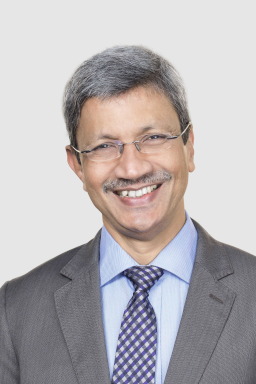
Somasundaram PR (Som) joined the World Gold Council in January 2013. Based in Mumbai, Som is responsible for leading the World Gold Council's activities across the Indian gold market.
Som has over 27 years of experience across diverse industries including the FMCG and banking sectors. Prior to joining the World Gold Council, Som was the Chief Executive Officer of a regional private bank and earlier to that, he was with Standard Chartered Bank in India for over eight years in various senior roles as a member of the Management Committee.
Previously, Som had spent over 13 years with Hindustan Unilever (HUL) in a variety of roles in financial management, logistics and M&A. He is a qualified Chartered and Cost Accountant.
Here, in an exclusive Interview with Rough&Polished, Som helps you understand the Indian Gold Sector and looks forward for it to grow into a more powerful and sustainable gold market.
Some excerpts...
As predicted by industry analysts, gold prices went significantly higher in India during 2023. What was the demand situation during 2023? What would be the major drivers of gold demand in 2024? Any headwinds you perceive in gold prices in 2024?
In 2023, the demand for gold in India witnessed a subtle shift though I wouldn’t read it as trend setting. Jewellery demand experienced a decrease, falling to 362.7 tonnes in Jan-Sept 2023 from 380.7 tonnes same period last year, reflecting a 4.72% decline. However, investment demand showed a slight uptick, reaching 118.4 tonnes compared to the previous year's 117.1 tonnes, indicating a 1.11% growth. When prices rise sharply, investment intent becomes explicit, and people tend to buy gold with lower labour charges – which is why bars and coins attract more savings than jewellery in such times. With first nine months demand at 481.2t, our estimate for full year gold demand is in the range of 700-750t, marginally lower than last year demand of 774t.
Looking ahead to 2024, the demand for gold in India is anticipated to remain robust as gold continues to evince keen interest and economic growth, a key driver of demand, is expected to be strong. A variety of factors, viz., positive economic sentiment, uncertainties related to higher inflation and geopolitical developments keep gold prices volatile and high, perhaps slightly above consumer comfort in the short term, though consumer expectations seem to have absorbed the price levels of Rs 60,000/per 10g.
The WGC initiated a process for self-regulation sometime in 2022 in India. What is the status currently? If not already, then when is the SRO likely to be set up? How do you see SRO bring about a vital change the gold market in India?
In co-ordination with the industry, we are making significant progress in establishing a Self-Regulatory Organisation (SRO) for India's gold market. It can change the face of the industry in the next few years and make it truly competitive. We hope to be able to launch it with wider industry support in 2024.
Initiated in 2022 to address industry challenges, the SRO aims to be an independent and professionally governed entity, fostering trust through voluntary membership committed to elevated standards. Its primary focus lies in cultivating a culture of trust, advocating industry-specific codes of conduct, and endorsing responsible practices. The SRO, once operational, with foster trust, enhance market credibility, ensuring regulatory compliance, and facilitate sustainable growth of industry. The SRO initiative demonstrates a commitment to excellence, ethical business practices and sustainable development of the industry.
How far has the digital gold project moved on in India? How successful has the project been? With Indians having hoarded physical gold forever, one wonders if digital gold has demand? Your opinion.
From my perspective, the progress of the digital gold project in India is notable in terms of adoption and acceptance and presents a significant opportunity to address many policy and trade challenges. The absence of a regulatory framework that can promote orderly growth and safeguard consumer interest is a big gap, though. This also means banks and regulated institutions are not engaged in tapping the opportunity to consolidate the sizeable amount of savings that flows into gold.
However, what we know from a couple of start-ups and new ventures in digital gold space is that the concept of digital gold is gradually gaining traction among investors, offering a convenient and secure alternative to traditional forms of gold investment. The infrastructure and best practices have been tested and await adoption into regulations. An estimated 80 million customers have bought and sold digital gold in India in 2019 (double the number of demat accounts in the country then). Interestingly, over half the investors in digital gold in India are from smaller towns. In 2019, there were 2.5 million active customers in digital gold in India trading around 4–5 tonnes of digital gold (3% of annual gold retail investment). Current industry estimates suggest the digital gold industry to be ~ INR 5,000 crores annually with ~7 to 8 tonnes in annual trading volume, 120+ million customers have bought digital gold so far with approximately ~ 40 million customers holding digital gold currently.
Assessing the success of the project, it is important to acknowledge that digital gold is still in the process of establishing itself in the Indian market. The demand for digital gold is still low if compared to the deeply ingrained cultural affinity for physical gold among Indians. The shift towards digital forms of investment, is a gradual process, and its success will depend on factors like awareness, wide-acceptance, regulatory support, and evolving investor preferences.
In a market where physical gold has been a longstanding tradition, the emergence of digital gold indicates a willingness among investors to explore modern avenues. While the demand for digital gold may not surpass that of physical gold immediately, but it has long-term potential. As technology and awareness continue to progress, the digital gold is likely to see increased success in catering to a diverse range of investors looking for accessible and efficient ways to invest in gold as an asset. Digital gold underpinned by appropriate regulations, strong good delivery system and some incentives, can increase recycling of vast amounts of gold in a transparent manner – which remains a dream.
Globally, including in India, artisanal mining has been in a deplorable situation till date. How can the artisanal operators' gold be brought into the ecosystem to be included as part of responsible sourcing. What steps have been taken by WGC in this matter?
Responsible sourcing in artisanal and small-scale gold mining (ASGM) is a global concern. Acknowledging the challenges faced by artisanal operators, we are actively engaged in initiatives to integrate their gold into responsible sourcing practices. Our focus centres on fostering dialogue and collaboration among large-scale mining companies, governments, industry groups, civil society, and responsible artisanal miners to address safety, social, and environmental concerns linked to ASGM.
We had released a report though extensive study last year exploring effective models for managing interactions between ASGM and large-scale mining. This report highlights progress made by our member companies in promoting the formalisation of responsible ASGM entities and enhancing their developmental impacts. Actions range from capacity-building and technical support to promoting mercury-free technologies, diverting responsibly produced ASGM from illicit markets, and co-operative mine closure. Our study also emphasises the need for aligned incentives and regulatory frameworks to integrate artisanal operators' gold responsibly. Our report concludes that a key to progress is for governments to formalise responsible ASGM entities, giving them legal status and reducing their vulnerability to predatory middlemen, corruption or organised crime. The report urges the case for greater co-operation and dialogue between stakeholders to address the negative impacts of ASGM.
As an investment vehicle, Gold has always stood on top in the Indian mindset. Do you think the same stands good as of today, especially with other financial products becoming more attractive?
It does, more than ever in the last 10 years, the trend beginning with covid. Our research indicates, gold remains the top choice (after bank deposits) for Indian investors despite emergence of other financial products like equities and mutual funds, driven by a strong cultural and economic affinity. The depreciation of the Indian rupee vs. USD further amplifies gold's appeal.
Recent trends highlight gold's resilience, with a 20% YoY increase volume growth for investment in Q3. Gold's dual role as a consumer good and investment asset adds to its allure, providing effective diversification in times of uncertainty and geopolitical turmoil. It is also important to note that even with sophisticated financial markets, countries like Germany and US have higher per capita consumption levels of gold. So, with economic prosperity, India should be fully prepared to nurture a transparent healthy gold market with several mainstreamed gold-based fin-tec products that co-exists with a rapidly expanding financial market.
The government's 'India International Bullion Exchange' was expected to put a stop or at least reduce illicit trading in gold. But not much change is seen till date. And, what’s the current status with the government’s national gold policy? Your comments?
The establishment of an efficient and transparent bullion trading platform is a strategic undertaking, necessitating active industry participation, adaptability, and regulatory fine-tuning.
IIBX is a transformative move, an Indian initiative for the global bullion market that is undergoing structural changes, it has a larger objective that will take time to gather force. It is already successful if we carefully review how the regulatory framework has evolved and with what speed and efficiency products are being launched. Multiple duties remain an issue for IIBX to serve as a gateway to imports but the idea of IIBX is larger than just imports.
However, efforts to reduce illicit trading are ongoing, with a focus on promoting legitimate channels and integrating stakeholders into the formal gold market. And the IIBX will surely be an important catalyst in bringing about this change in curbing illicit gold trading over time. IIBX will be a key infrastructure in the global scenario once few more reforms particularly around recycling and taxation of gold in India are completed.
If I may ask ... with the news 'World Gold Council India CEO to step down' making news recently, the Indian gold industry wants to know if it will see you associated with the sector in another "Avatar”? Your answer Sir?
I have been extremely fortunate to have been leading World Gold Council’s activities in India over the last 10 years and will serve in my current role at the World Gold Council till early next year. At the moment, there are no plans. My association all these years with the industry and its truly incredible people will be unforgettable, so if there are any developments, they will be the first to know.
Aruna Gaitonde, Editor in Chief of the Asian Bureau, Rough & Polished
