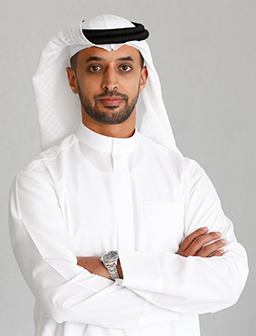
 Ahmed Bin Sulayem certainly needs no introduction being widely popular globally as one of the leaders of modern Dubai. As the Executive Chairman and Chief Executive Officer of DMCC, Ahmed Bin Sulayem has and continues to play a key role in establishing and positioning DMCC as a major international commodities hub for trade. Now, Mr Bin Sulayem has been reappointed Chair of the Kimberley Process for a historic second time in the year 2024.
He joined DMCC in 2001 as a director, prior to the Dubai Government Authority’s official launch in 2002, and his responsibilities included overseeing the organisation’s operations. Today, he is the Executive Chairman and Chief Executive Officer of DMCC, as well as the Chairman of the Dubai Gold and Commodities Exchange (DGCX) and the Dubai Diamond Exchange (DDE).
He has driven DMCC’s growth from a start-up of 28 member companies in 2003 to the world’s leading free zone in 2022 with over 23,000 member companies from 180 countries, employing over 79,000 people. He has also overseen the exponential growth of the DMCC Free Zone master development in Jumeirah Lakes Towers (JLT), a 200-hectare business and residential community in Dubai of over 100,000 people living and working in 87 towers. Mr Bin Sulayem also oversees the development of DMCC’s latest real estate project, the much-anticipated Uptown Dubai district.
The Kimberley Process officially appointed the United Arab Emirates as the first and only Arab country to Chair the Kimberley Process in November 2015. Shortly after, the UAE Ministry of Economy officially appointed Mr Bin Sulayem as the UAE’s Chair of the Kimberley Process for 2016. Now, the global diamond industry looks towards Ahmed Bin Sulayem as KP Chair, to bring order to the global diamond industry with his extraordinary dynamism and shrewd acumen.
Here, in an Exclusive Interview with Rough & Polished, Ahmed Bin Sulayam sees KP undergoing a radical change in the years to come.
Some excerpts…
Congratulations Sir, on being elected Chairman of Kimberley Process (KP) for 2024. What vital issues have you prioritised to accomplish during your tenure as KP Chair; and also complete those that remain as backlog from 2016, if any?
The role of the KP continues to retain its significance as a united front against conflict diamonds from entering the supply chain, however, it still faces several key challenges.
As stated during the KP’s plenary in Botswana, 2024 will be the “Year of Delivery”. This will include ensuring any delayed initiatives are successfully delivered, and that the review and reform cycle comes to fruition. It will also ensure the permanent secretariat, which was proposed by the UAE in 2016, becomes fully operational in Botswana. We will also oversee the future-proofing of the KP’s operation structure, which will include transforming our existing paper-based KPCS certificates onto blockchain to eliminate forgery and counterfeits.
There will be more details to come, but central to our objectives is to foster greater collaboration among our members by making sure we collectively solidify the KP’s ability to operate autonomously and with greater efficiency.
The 'blood/conflict diamond' definition has been debated over the years with no conclusion/s in sight. With the prevalent vague and unending discussions, the global diamond industry seems to have given up on it. Can we expect a distinct differentiation this time around?
As stated, 2024 will be the “Year of Delivery.” As a result, the KP is conducting an audit of its process including a clearer definition of the Ad Hoc Committee of Review and Reform. We are looking forward to the AHCRR plenary coming to Dubai with recommendations that the KP family can all agree to.
In 2016, Stephane Fischler, the then acting president of the World Diamond Council said: “The UAE’s year-long chairmanship of the Kimberley Process will have a lasting impact in the struggle against the trade in blood diamonds.”
One of the key proposals we made, which was highly welcomed, was to use expert diamond valuation methods to help curb conflict in the diamond trade. We suggested training accredited government inspectors in the skills of a commercial rough diamond valuer to make it harder for unscrupulous dealers to claim extra stones that came from a certified diamond.
Today we remain resolute in our commitment to responsible and sustainable sourcing, and will continue to devise policies that support this goal and ultimately protect the legitimate diamond trade.
Some readers are surprised at the news that Dubai Diamond Exchange (DDE) and a China-based manufacturer of low color grade Chemical Vapour Deposition (CVD) diamonds are hosting the Lab-Grown-Rough diamond Sale in Dubai? Does this Sale contradict what you stand for as KP Chair? Your opinion?
There is an illusory narrative which seeks to pit natural and lab-grown diamonds against each other, which serves no one’s interest outside of stoking invisible competition.
Firstly, the KP was established to stem the illicit trade of natural diamonds used to fund conflicts. As such, there is no link, nor conflict of interest, between lab-grown diamonds and the KP.
Secondly, we are going through a period of unprecedented industrial change where lab-grown diamonds will show their true value in areas beyond jewellery, and into sectors such as machinery, medicine, and the semiconductor market. For anyone interested, please read my latest blog, which goes into greater detail on the subject, as published in Gulf News.
When it comes to trading, maintaining the integrity of the sales process is crucial, which is why LGD tenders take place exclusively on the DDE trading floor when both seller and buyer can clearly adhere to the disclosure, detection, and differentiation process. We have hosted several LGD tenders through the DDE with strict rules around LGD sales which include no mixing of LGD and natural. This includes commitments from winners to clearly disclose and correctly identify the finished product as lab-grown or natural in line with industry-approved terminology.
For the readers who have come in late, can you throw some light on the 'difference of opinion' between 'KP Civil Society Coalition's (KPCSC)' and the UAE KP-Chair in 2016? And why was this particular incident perceived as a grave disregard and lack of respect for the critical role that the coalition of non-profit organizations (NGOs) plays?
It’s important to acknowledge that the wider success of the KP has been thanks to its tripartite structure, which includes the direct involvement of industry, civil society, and government. As a body that consistently seeks to find common ground and resolution for the betterment of the industry, our differences of opinion have given way to a mutual respect, as well as more tangible actions such as the establishment of a common fund, which has brought a stop to funding from special interest groups.
Today, we are stronger than ever, and the role of NGOs is still very much a cornerstone of our KP family, as comprehensively covered in Aurelie Dussenne’s master thesis with the Harvard Library.
The next year will yield some very important meetings, and it is my expectation that all stakeholders will arrive with the same problem-solving attitude which has already yielded so much positive change around the world.
G7 Russian diamond scheme may cause probable devastation to the global diamond industry on the whole. What steps will be taken by KP Chair in this regard?
Every sovereign country has the right and freedom to impose their own rules and criteria for what and with whom it trades. The key is to ensure we are mindful of how these restrictions work and who could ultimately be impacted when collective nations impose their own rules and agenda.
I chose to speak up recently when I saw that these rules were clearly aimed at changing trade routes for the commercial benefit of a few, and at the expense of African sovereign states. I am a firm believer in free trade and considering that African diamond-producing counties make up 60 per cent of global output, we must carefully consider the wider trade impact on the industry we are protecting, while ensuring producer nations get a fair return for their natural resources.
What are some of the important dates for the KP and for Dubai next year?
As we look forward to 2024 and another year of accelerated progress, I can announce some important dates to put in the diary. The KP’s 2024 Intersessional Meeting will be held in Dubai from 13-17 May, which will be followed by the Plenary Meeting between the 11-15 November. The plenary session will also mark the crescendo of “Dubai Diamond Week” – yet another important moment for the industry, with the entire diamond world descending on Dubai to attend DMCC’s Dubai Diamond Conference on 11 November and JGT Dubai on 12-14 November.
Aruna Gaitonde, Editor in Chief of the Asian Bureau, Rough & Polished
