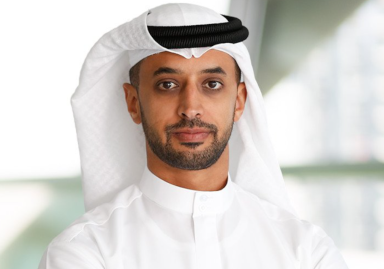
 Natural diamonds stand as timeless testaments to human aspiration, economic resilience, and technological innovation in an era where fleeting trends dominate, according to the Dubai Multi-Commodity Centre (DMCC) executive chairperson and chief executive Ahmed Bin Sulayem.
He opines that from empowering the livelihoods of millions in Africa and India to anchoring Dubai’s meteoric rise as the global diamond capital, their impact transcends mere adornment.
As naysayers question the worth of natural diamonds, the data speaks unequivocally.
In Botswana, for example, diamonds account for 80% of its exports and a third of its fiscal revenue, making a significant contribution to the nation's GDP and development.
In India, where about 90% of the world’s diamonds are cut and polished, the industry employs hundreds of thousands of skilled individuals in the bustling cities of Surat and Mumbai, providing economic stability and opportunity for entire communities.
Sulayem said this demonstrates that diamonds fuel nations, symbolise enduring love, and drive cutting-edge advancements.
Below are excerpts from the opinion editorial he penned last week.
What is known about the rise of Dubai as a global diamond hub?
Aside from the Dubai Diamond Exchange, the UAE and Dubai are deeply embedded in the diamond industry's very fabric, not only in terms of trade but also in monitoring, development, certification, and discussion. Chairing the Kimberley Process for a second time, the UAE leads positive change in the UN-mandated organisation that continues to be the only successful effort to stem the flow of conflict diamonds. As a business hub, DMCC is home to the 68-storey Almas Tower, the world's tallest diamond tower, a record it has held for the past 16 years. It also continues to boast unmatched, dedicated infrastructure, while remaining consistently overbooked by an extensive range of industry stakeholders. DMCC is also the base for a wide variety of major diamond businesses including IGI, and the Gemological Institute of America (GIA), the latter of which occupies two floors in Uptown Tower. As a destination for congregation and debate, DMCC continues to host a broad range of events including the LGD Symposium and KP Plenary later this year, while the Dubai Diamond Conference, which returns for a seventh time in 2026, consistently draws industry leaders such as De Beers' CEO Al Cook and Zimbabwe's Winston Chitando, Minister of Mines and Mining Development. DMCC is also a leading destination for other industry authorities, including but not limited to the World Diamond Council and the World Federation of Diamond Bourses.
His Highness Sheikh Hamdan bin Mohammed bin Rashid Al Maktoum, Crown Prince of Dubai was [recently] given a tour of the Dubai Diamond Exchange (DDE), the largest diamond tender facility in the world, which recently surpassed the milestone of one billion carats traded over the past five years at a value of $153.7 billion. In acknowledging Dubai’s ascendency from almost no trade to the world’s diamond capital in just under two decades, His Highness later remarked that the exchange was one of his favourite points in the tour – a powerful acknowledgement of Dubai’s meteoric rise as the undisputed nexus of the global diamond industry. As an industry that has uniquely achieved more than almost any other commodity in terms of financial contribution, built environment and exclusivity, questions surrounding the future value of diamonds are common, however, on this particular day I found myself being questioned by a senior member of the entourage about whether diamonds had any intrinsic value at all. Such a statement, uttered in the world’s tallest diamond tower in one of the industry’s three global centres is not only ironic, but poorly timed…
Why do natural diamonds hold such significant cultural and economic value?
Diamonds are considered one of the most valuable and sought-after commodities in the world, with their value stemming from a combination of natural rarity, physical qualities, and enduring desirability. Diamonds remain, and indeed still dominate, as potent aspirational symbols of love, success, and legacy. Their cultural status is undeniable, cemented in the glittering allure of Hollywood, the bold statements of pop culture, the cutting edge of global fashion, and, most enduringly, in the cherished marriage traditions spanning continents and cultures. The very act of gifting a diamond is an acknowledgement of something precious and deeply meaningful – a sentiment that transcends mere material worth.
Recent data only reinforces this enduring demand. The Natural Diamond Council's reports consistently highlight the resilience and continued growth in key markets, driven by renewed consumer appreciation for their unique story and rarity. As David Kellie, CEO of the Natural Diamond Council, states, "No other stone holds the emotional currency of a diamond. It remains one of the few timeless assets that are bought with the heart but backed by real value."
Why is the diamond trade vital for developing economies?
Nations such as Botswana, Namibia, Angola, the Democratic Republic of Congo (DRC), and Zimbabwe rely heavily on diamond revenues. These critical resources fund essential infrastructure, establish and maintain schools, and provide vital healthcare services, literally transforming nascent economies and uplifting populations. Specifically, in Botswana, diamonds represent 80% of its exports and account for a third of its fiscal revenue, significantly contributing to the nation's GDP and development. Consider India, where approximately 90% cent of the world’s diamonds are cut and polished. This massive undertaking employs hundreds of thousands of skilled individuals in the bustling cities of Surat and Mumbai, providing economic stability and opportunity for entire communities. To claim diamonds are worthless is to erase the economic contribution of entire nations and to undermine the livelihoods of millions across India and Africa.
Beyond the direct economic impact of mining and cutting, the downstream segment of the diamond industry – encompassing jewellery manufacturing, design, and retail – extends its influence to countless more individuals globally. From master artisans to dedicated sales professionals and logistics specialists, the industry supports a vast and intricate network of skilled labour and entrepreneurship. It is in this final stage where the diamond's journey culminates in consumer purchase, sustaining a global ecosystem that thrives on aspiration, artistry, and robust supply chain management - and at the heart of it, Dubai.
How do diamonds contribute to technological advancement?
Looking to the future, and beyond their aesthetic and symbolic appeal, diamonds are increasingly being recognised as critical minerals that will enable next-generation technologies. Their unparalleled hardness, thermal conductivity, and unique electrical properties make them indispensable in applications ranging from advanced computing and quantum technology to medical devices and sustainable energy solutions – and while lab-grown diamonds will more likely take a practical role in this field due to cost efficiency, the distinct, functional value of natural diamonds remains unchanged.
What’s next for the diamond industry?
In continuation of its global success as the global centre for rough, having overtaken Antwerp several years ago, Dubai is also actively vying for the top spot in polished diamond trading, with recent milestones including Rapaport’s 50,000 carat auction, Dhamani’s unveiling its exclusive collection of Dubai Cut Diamonds, and the display of multi-million-dollar stones by global powerhouses like Sotheby’s.
Mathew Nyaungwa, Editor-In-Chief, Rough & Polished
