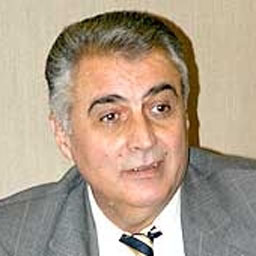
 Vice President of the Russian Association of Diamond Manufacturers (RADM) Ararat Evoyan told about the work performed by the Association and the problems encountered by diamond manufacturers in Russia in his interview to Rough&Polished correspondent Vladimir Teslenko.
What companies take part in the Russian Association of Diamond Manufacturers?
The Association includes about 30 pace-setting enterprises in the Russian Federation making up 90% of production capacity in the country.
What kind of tasks is pursued by the Association?
Our tasks include facilitating civilized, full-fledged conditions for the diamond cutting business; comprehending industry problems; informing authorities about industry problems; generating draft decisions at the legislative and administrative levels; and rendering support to domestic diamond manufacturers.
How are Russian diamond cutters working now, when demand for polished diamonds seems to go down? How much busy are the cutting facilities of the factories making part of the RADM – for instance those of Smolensk-based Kristall, Ruiz Diamonds, Mosalmaz and others?
Large factories, such as Kristall in Smolensk, continue their operation. Some of the smaller enterprises in Smolensk, Moscow and Yakutia lapsed into a dormant state. The best of all are those targeted at the domestic market. The operating factories have a short order list and their production schedule is curtailed. For example, Smolensk-based Kristall has enough rough diamonds and valid plans till the end of February. The important task is to retain production capacity. It’s an easy thing to stop and mothball machine tools, but the problem with diamond cutters is that if a person will be pushed out of the industry for several months he will not return. This is why the majority of workers not engaged in production have been set off on paid leaves according to the labor law. One can say these workers are in a stand-by mode now, but they have an opportunity to work temporarily elsewhere and earn some more money at their own discretion.
Diamond cutters have often complained about the tough taxation system stressing their operating assets were washed out due to low profitability of their business and high taxes. What is the situation in this field now, including the VAT?
The VAT is the major headache. The diamond cutting industry with its annual turnover about $1 billion is 95% targeted at export. The VAT refund for exported lots of polished diamonds is taking a lot of efforts. On the average, associated paperwork takes 9 months. And even then it is difficult to get the legitimate money because tax authorities are often short of funds. This year, it is a number-one task for the RADM to convince the government to cancel the VAT for diamond rough. If this won’t be possible to achieve, foreign investors (Mehta, Tache, Leviev and others) will leave the industry for ever going for instance to India or China, which may bring about a 50-percent decrease of production facilities and crimple competitiveness benign for the industry.
Is there any turn for the better in crediting diamond cutting factories by banks? What is the role of your Association in this process?
Due to the high cost of rough only cheap credits make sense (at a rate of no more than first annual percent figures). The rates reaching even 10 percent per annum are not economically plausible. The current 20 percent per annum preclude even from thinking about getting credited. On the whole, from the mid-1990s the RADM has been offering major banks to cooperate on special terms taking into account the specifity of diamond production and a high level of guarantees to pay back credits. We point to banks of Antwerp, Tel-Aviv and Mumbai as a model. However, there is not a single Russian bank which would take interest in cooperating with diamond cutting factories.
Gohran is now buying rough diamonds on the domestic market. Are there any diamond manufacturers taking part in this process, as for instance Kristall of Smolensk, and do they face some special conditions?
Yes, in the 4th quarter Gohran bought considerable quantities of rough under the state assignment from all the diamond mining companies (ALROSA, Uralalmaz, Nizhne-Lenskoye). Besides, it bought polished diamonds from Smolensk-based Kristall. (According to the mass media, approximately for the amount of 1 billion roubles. – Note of Rough&Polished.) These measures are meant to decrease market tension. All the diamantaires in the Russian Federation appreciate such expert steps made by the industry supervisor, Finance Minister and First Deputy Prime Minister Alexei Kudrin. These are expert operations also from the commercial point of view. For example, the diamonds polished in Smolensk went up in price 15% in the month they were in Gohran due to the rouble-dollar rate movement (it is customary to denominate rough and polished diamonds in U.S. dollars). In one or two years, after the crisis will be over and demand for diamond products will go up, Gohran will break even and, in experts’ estimates, make a handsome profit for the national budget.
Among major inhibitory factors on the Russian jewelry market there is the absence of clear-cut legislative regulations conducive to further development of the shady jewelry market in modern Russia. What is done by your Association in this respect?
We have achieved introduction of a national standard for polished diamonds. The document contains a clear description of quality parameters. This allows scotching low-quality products (the so-called Indian goods), which are often disguised as having the ideal Russian cut for consumers.
You are a member of the International Diamond Manufacturers Association. What are the problems you are dealing with there and what advantages does it give to the Russian rough and polished diamond industry?
There are worries on the world diamond market that Russia is making jewelry-quality lab diamonds adding synthetic fakes to parcels of natural stones. We are dissuading our foreign counterparts that there is any technical possibility to produce diamond counterfeits on a large scale at all and besides we explain the strict system of supervision in the Russian Federation over diamond goods, meaning particularly the national standard for polished diamonds and rough diamond control regulations within the Kimberley Process. Of no less importance is the practice of correct and ethical ways in the diamond business.
Two years have passed since export quotas for rough diamonds were cancelled. Is it now easier to export diamonds? Are there any advantages for Russian diamond cutting companies in this respect?
There is no tension in this respect at all. According to the law, diamond cutting factories have the right to export up to 15% of rough diamonds bought on the domestic market. However, in practice they take out only 5% to 7% of rough diamonds, mainly those which cannot bring profit if cut in the Russian Federation.
How would your Association describe the future of the polished diamond market by the middle and end of 2009? In a more distant future?
As for forecasts, there are two dates which are significant for the global wholesale diamond market: the Easter and the exhibition in Las Vegas in the beginning of June. The first case gives you an outlook for the current year. Las Vegas displays the requirements of the U.S. market, the major consumer of jewelry containing polished diamonds. Speaking of a more distant future, diamond cutters are convinced in a long-term success of the diamond business, which has been stable in the course of two thousand years and survived quite a few financial crises, natural disasters and world wars.
