 Gomelskoye PO Kristall, a government-owned production amalgamation based in the City of Gomel and established in 1972, is the largest jewelry center in the Republic of Belarus and one of the biggest diamond manufacturers in Europe. Its major area of business is manufacturing and selling “excellent” and “very good” diamonds and jewelry, as well as fulfilling government orders for manufacturing official state decorations and turning out diamond tools, synthetic diamond powder and paste. The company engages more than 1000 workers, engineers, employees and managers.
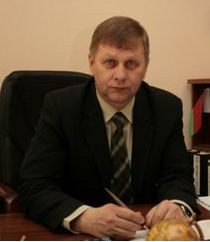
Anatoly Golisev, General Manager of Kristall, found time to answer the questions of Rough&Polished.
In what way did the global financial crisis affect Gomelskoye PO Kristall?
The situation which currently exists on the market is a sort of challenge to the enterprise and its management. We believe that we are able to weather out this crisis since we have wide experience in operating under crisis conditions starting from the break-up of the USSR and we have always found plausible solutions. In the early 90s of the past century the company management understanding that being engaged in diamond cutting only it would be difficult to stay afloat in a free market environment started to diversify production. Kristall of Gomel was the first among the diamond cutting factories in the CIS to launch jewelry production lines. It was also decided to start producing synthetic diamond powder and diamond-powder-based tools. Today our jewelry products meet about 25% of demand in the Republic of Belarus, while our diamond tools are used virtually at every machine-building plant in the Republic of Belarus covering over 80% of their needs. We have organized export of diamond tools. For instance, our snagging wheels are used to process diamonds at Kristall of Smolensk and Brillianty ALROSA. We are exporting jewelry products to the Russian Federation where they are sold by the Belorussian Trading House.
We are permanently upgrading our production lines to the extent required by the existing and perspective market. Turning rough diamonds into polished diamonds is performed by our company at a high technological level using both standard techniques and modern laser processes including laser aided marking by an optimal pattern, which reduces in-process losses to their minimum reaching the greatest output.
The quality of manufactured products at the enterprise is considered the major competitive advantage. This is why Kristal of Gomel in 2004 certified its quality management system according to the ISO 9001 Standard. There are only two enterprises in the CIS having such certification and we are one of them.
At the present time, I would like to stress that we have avoided a project solution typical of the Soviet period, which could overburden prime cost with needless expenditures. We have completely transferred diamond cutting to new efficient floors and now Kristall of Gomel is the only diamond manufacturer in the CIS which is operating in two shifts. This solution has not been an easy one. Psychologically, it was difficult to accept. It was considered that diamond cutters could not work in two shifts. We were afraid that labor efficiency at night would decrease due to higher strain. However, operating experience showed that we had made a correct decision. People managed to adapt to it. The enterprise was able to cut its costs and their level is only behind our Chinese and Indian counterparts. In this way we have solved main problems under crisis environment – we have preserved our team of professionals and production facilities. We have also set up prerequisites for their efficient use when better times will come.
Has the Belorussian government rendered any support to the enterprise?
The government supports our enterprise permanently and in many ways and not only in crisis. Its support is first of all aimed at creating conditions for higher competitiveness of our products: the government facilitates more simple procedures for moving rough diamonds and jewelry, as well as in the crediting and tax fields.
Is there in Belarus an agency similar to the Russian Gokhran which could buy out diamonds produced by Gomel’s Kristall?
The Republic of Belarus has the State Fund which is formed by the Ministry of Finance, as well as the Fund of Gems, which is formed by the National Bank. According to the Belorussian legislation, purchasing of diamonds by the State Fund from Gomel’s Kristall is not envisaged. The National Bank has fulfilled its obligations related to the country’s budget in 2009 and does not intend to cooperate with our enterprise as far as this problem is concerned.
What kind of rough diamonds is using you enterprise and where does it buy them?
Our major supplier is Russia’s diamond miner ALROSA. At different times, we bought from it from 80% to 100% of our rough diamonds. These are mainly rough diamonds which it is unprofitable to process in Russia. The rest of our needs are covered by stones bought on the markets in Belgium and Israel.
Do you plan to switch over to other diamond sizes due to the crisis?
There is a product range which, as we see it, is demanded by the market and has a long-time perspective. There is a new product which we make – these are diamonds of a more precise type of cutting. Starting from the last year we expanded the assortment of rough bought from ALROSA. We started to cut larger diamonds and make our own diamond jewelry collections. So far we are only beginning to run-in our ideas in trade. Today we can offer to the market jewelry pieces worth from $50,000 to $60-70,000.
Who is the major competitor for Gomel’s Kristall?
The markets for selling polished diamonds made by Gomel’s Kristal are located in different parts of the world. Competition mechanisms mainly depend on the expectations cherished by consumers and have their own regional specifics. Where the price factor is determinant, competitive interests of our enterprise are in sharp confrontation with manufacturers from India and China. Where the quality factor is overwhelming our goods are much more preferable since we have preserved and improved our thirty-six-year-old experience.
Belarus is one of the world’s leaders in manufacturing synthetic diamonds. Does Kristall of Gomel use this kind of rough to make polished diamonds? And in your opinion, do synthetic diamonds have any future on the market?
In Belarus diamonds are synthesized under a government-controlled program. Taking into account the capacities of our diamond cutters sometimes we have orders to cut small parcels of synthetic diamonds. It is noteworthy, that we have introduced organizational patterns which exclude any mixing between synthetic and natural diamonds. As for the future of synthetic diamonds in jewelry business, it is difficult to give an unambiguous answer. We have local experience in this business and it is early to use it as a basis for any roundup conclusions. However, the practice related to other exhaustible raw materials proves that sooner or later the goods which are made of them are completely replaced with their full or partial analogues. The prospected reserves of natural diamonds will permit to satisfy human needs for about twenty years.
In what way do you develop your customer base?
We continue our purposeful efforts to expand our sales markets. In Belarus we are busy developing a retail network of jewelry stores which have already been opened in 11 cities. Be the end of 2010 we intend to have 20-23 own stores under the Divia Brand. Simultaneously, we shall continue our cooperation with outside trade networks and virtually at every jewelry store or jewelry sections of department stores you will be able to find our jewelry products. We shall continue to develop our network of signature sections currently present in 36 outside stores. In a year we open about 10 new sections. They are designed to fit our company style and offer a separate layout of jewelry made by our enterprise.
Due to the crisis some of our foreign partners left but there appeared new ones, with which we have already established stable relations. The traditionally high quality of Belorussian diamonds is a reliable footing for systematized work to develop our customer base.
Rough&Polished, Republic of Belarus, Gomel
