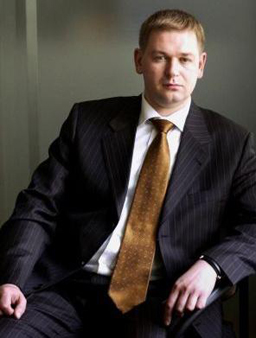
 Nikolai Afanasyev, Deputy General Manager and Sales and Marketing Director of OAO Kristall, a production association based in the City of Smolensk, answered the questions posed by the Rough&Polished correspondent:
How are going Kristall’s sales this year?
The lowest demand for our finished products was registered from December 2008 to February 2009. In this period we used to sell around 10% of our regular sales amount. Starting from March 2009, sales were rising every month and by the summer we reached 50% of the pre-crisis sales level. The market is recovering and there is no doubt about its positive dynamics. However, the growth is rather slow and so far it is very early to speak about full-scale recovery.
What is the current Gokhran’s share among Kristall’s buyers?
Presently, Gokhran accounts for a little less than one half of all sales.
ALROSA has come back to the market – In what way has this influenced the lineup of your rough suppliers?
Under normal conditions we used to purchase 60% of rough diamonds we needed from ALROSA. However, in the first half of this year ALROSA just stopped selling, while we could not afford to cease production so we bought rough on the free market including from DTC. Faced with difficult financial conditions we had to switch over to small-size and cheap rough which we did not cut for about 20 years. During this period the factory did not pay bonuses and curtailed all possible expenses, but we did not stop our operation for a single day and this permitted us to preserve our working capacity. Now the situation is changing and we resumed purchasing from ALROSA and take pains to buy first of all Russian rough. For this we spend all the money we get from our sales to Gokhran.
May be the supply of Russian rough to Kristall were not disrupted if your factory and ALROSA were merged into one holding – once such a possibility was the subject of animated discussion in the press. Wouldn’t it be worth to revive this idea in the current crisis time?
I do not think that today a formal merger may be the main point. It is much more important to generate some ideology permitting the two state-owned companies to support each other and jointly promote their products to the market. This process is now being developed at the level of our companies’ chief executives.
Your company is the leader of the Smolensk Diamonds Association. What is the situation in this association in the current crisis environment?
Today the major part of factories making up the association suspended their operation. All the workers and qualified personnel of these enterprises were offered jobs at Kristall. We did everything necessary to preserve work force and intellectual property of the association.
The Russian Cut is an internationally renowned brand of Smolensk diamond manufacturers. What is its future in your view?
The Russian Cut is a solid brand. But this is a brand existing inside the industry. Jewelry companies buying polished diamonds know that the Russian Cut is associated with excellent goods made of Russian high-quality rough diamonds. However, the end-buyer never gets the feel of this brand since none of world famous jewelry companies would say it uses Russian-cut diamonds. The brand should be raised at the end-buyer level and it should be a jewelry brand which will be a first-hand vehicle for promoting Russian diamonds. This is a long way involving considerable investments. But this is a strategic task which is to be solved by Russian state-owned companies operating on the market of rough and polished diamonds.
Although the Russian market of diamond jewelry is traditionally placed on the outskirts of the world diamond market, do you think that Russian companies may ignore its potential?
From the 1st of October we are going to launch our own jewelry project aimed at the domestic market. We have developed a special classic collection which will be sold as a Kristall Brand via the Internet. Last year from our web-site we sold almost $1 million worth of loose diamonds. Our buyers were individuals and small jewelry companies. The average check was about $1000 per one stone of 0.4 ct on average. Essentially, before the crisis these data gave an opportunity to assess the capacity of the domestic market for jewelry with our stones at approximately $10 million. Now of course this forecast should be seriously corrected, but I believe we can count on $2-$3 million.
How much time will it take to revive polished markets in the countries which are major consumers of diamond jewelry?
If the markets in the United States and Eurozone will reach 70% of the pre-crisis level in two years this will be a great success. China and India are currently demonstrating growing domestic demand but we should not forget that these economies are export oriented and their major importer is the United States where unemployment continues to rise while demand is crimpling. Today Japan may already be discarded from the list of major diamond jewelry consuming countries.
Taking into account such a market slump, how grave is the threat of substituting other symbols of prestige and luxury for diamonds?
All those working on the polished market are in effect continuing to employ the market legacy of De Beers. But this fortune is not endless. The rejection of the cartel way of management in the industry resulted in no one taking care to stimulate the end consumer to buy diamonds. There is not a single jewelry company possessing world famous brands to sell loose diamonds, all of them are selling jewelry. There is no one to invest money into marketing particularly polished diamonds and today the mechanism promoting our goods is virtually shut off with all the good intentions in this field staying at the level of declarations. On this backdrop, competition with other luxury goods intensifies and the crisis serves to make it highly acute. People may even entirely forget what diamonds are. And this is a very big threat to the market.with all the good intentions in this field staying at the level of declarations. On this backdrop, competition with other luxury goods intensifies and the crisis serves to make it highly acute. People may even entirely forget what diamonds are. And this is a very big threat to the market.
What is your view of the summer surge in prices for rough diamonds?
This is a speculative wave caused first of all by the infusion of funds into Indian companies under government guarantees. Unlike our Indian competitors during the crisis we did not stop our production and sales even for a single second and we managed to raise prices for finished goods by 8-10% on average. This is the dynamics reflecting the true state of the polished market. The 25-30-percent price hike for some categories of rough against their minimal levels I can only explain by speculative dealings, so I cannot exclude correction in rough prices in the nearest time, which may turn out to be rather harsh.
What is your attitude towards the idea of investment diamonds?
Diamonds are meant for wear and pleasure. What can be matched with the pleasure of giving your fair one a diamond ring as a gift? As for investing the best way to do it is to educate children.
Sergey Goryainov, Rough&Polished, Smolensk
