 The Prioksky Nonferrous Metals Plant (PNMP), an open public company and federal strategic enterprise, is one of the pace-setting gold refineries in Russia operating on the market of precious metals for more than 20 years. Currently, PNMP has at its disposal unique technical solutions and highly skilled experts that allow the company to process mineral and secondary (waste products coming from jewelry manufacturers, radio-electronic scrap, petrochemical industry catalysts, etc.) raw materials containing precious metals to produce refined gold, silver, platinum, palladium, rhodium, and iridium.
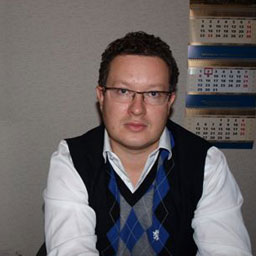
Andrey Zharkov, Commercial Director of PNMP, has found time to answer the questions filed by Rough&Polished.
What is the situation in your industry?
There is tough competition going on among refining factories on the domestic market. At present, in accordance with the Decree of the Russian Federation Government 12 enterprises have the right to refine precious metals, of which 8 have the Good Delivery Status of the London Bullion Market Association and accordingly compete between themselves trying to attract new clients among mining companies. The cumulative processing capacities of only these 8 enterprises are 4-5 times higher than the total output of gold and silver in Russia in the absence of imported ore concentrates. Each of the enterprises due to their specialization or location has competitive advantages. And each of them is trying to use these advantages to its maximum.
However, today one thing appears obvious – the opportunities of refineries to lure away each other’s clients by decreasing prices for their services without inflicting damage to themselves and the quality of such services are virtually spent.
What are the prospects for the industry then?
In my opinion, the least which is ripe to be done is to cut the number of precious metal refineries. I do not know precisely how this will occur, but there are not so many alternatives. For instance, it is possible to merge several enterprises for the purpose of establishing a powerful research-and-production complex which will not only be able to render services in processing primary and secondary precious metals, but also, following the pattern of large-scale western processing companies, to develop techniques for using precious metals and manufacture some products based on them. One other way is to switch over some of the factories to other goods.
What are PNMP’s production plans?
PNMP is developing a program aimed at establishing a modern research-and-production complex. We put every possible effort to make it real. However, everything should come its way in a certain sequence. Our priority is to upgrade our production facilities, namely by way of introducing modern equipment and automatic control systems into the process of silver refining and hydrometallurgical process into gold refining, as well as retooling our ventilating and gas-cleaning systems and treatment facilities, etc.
The above measures will permit to reduce the cycle of processing raw materials, lower the quantity of chemical agents used, electric power consumption, curtail production wastes and emissions into atmosphere, raise labor productivity and quality of finished goods, decrease dumps into the Oka River basin (it is noteworthy, however, that 85% of treated drains come from the municipal services of the Prioksky District of the City of Kasimov).
One important component of our program is production diversification. Its main point is not only in increasing the factory’s economic stability and gaining additional profit, but also in essential replacement of imports by hi-tech products based on precious metals and consumed by Russian enterprises, including military enterprises. Doing this we take into account the experience of diversification of other similar enterprises (for instance, reorientation of Krastsvetmet and the Moscow Special Alloys Plant to jewelry production in the 1990s now appears excessive since difficult sales do not allow them to operate their jewelry facilities with due economic efficiency).
The result of the above program which is part of PNMP’s development concept till 2014 should be first of all bring about considerably reduced operating costs consequently reducing prices for our processing services and, secondly, improved quality of these services and the way we handle our clientele.
What is the situation with introducing innovations at your factory?
It is virtually impossible to revamp complex technological processes and equipment without appropriate scientific and technical capabilities. It is necessary to perform permanent monitoring of all innovative solutions in the field of processing technology for precious and rare metals, power saving and ecological safety, to evaluate them and introduce them into production in due time. In this context, establishing the factory’s own research-and-production base and furnishing it with competent experts and advanced equipment appears to be a pressing problem.
What were your results in 2009?
In 2009, the Prioksky Nonferrous Metals Plant increased processing of precious metals by 24% as compared to the previous year. In 2009, the company received 30 tons of gold, 117 tons of silver, 0.4 tons of platinum and 0.5 tons of palladium for refining.
Based on the results, PNMP paid 46.8 million roubles of VAT to the national budget.
What are your plans for 2010?
In 2010, PNMP plans to increase the amount of precious metals processed. The factory has already concluded contracts for refining more than 40 tons of gold and about 200 tons of silver.
Besides, GPB-MetallInvest (Gazprombank’s subsidiary) and the Prioksky Nonferrous Metals Plant have agreed to pursue a joint project to retool the plant’s shop engaged in processing deactivated catalysts coming from oil reforming which contain platinum and rhenium.
The company is also about to sign a contract with Gokhran on advanced financing offered to gold mining companies under which the Prioksky plant will receive advance payments from Gokhran and then offer the money to gold miners. Having received these funds the latter will in turn be obliged to sell gold to Gokhran after processing. Presumably, during this year advance payments will be enough to cover about 3 tons of gold.
Vladimir Teslenko for Rough&Polished
