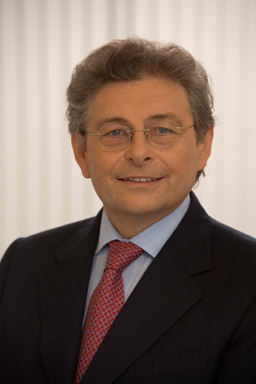
 Freddy Hanard, Chief Executive Officer of the Antwerp World Diamond Centre (AWDC), shared his view of the current state of affairs in the diamond industry in his interview to Rough&Polished.
Now that the rough diamond market seems to be changing to offer more opportunities to buyers what kind of advantages can offer ADWC to keep its clientele?
The advantages of Antwerp are obvious: not only the tangible assets, but also the intangible assets make Antwerp so unique.
Antwerp’s tangible assets are the presence of mining companies in Antwerp – ALROSA and Harry Winston through direct distribution in Antwerp, De Beers through its sightholders, Rio Tinto and BHP Billiton which both have their headquarters in Antwerp – alongside 4 diamond bourses, specialised diamond banks, insurance, transport and security services. The specialised diamond banks offer the right answer to each new commercial reality, thanks to their historical knowledge of the market and of their clients.
Antwerp’s intangible assets underscore its role as international diamond centre: its multiculturalism, stability (political, economic, financial, social) and transparency.
Thanks to this critical mass, any kind of customer is certain to obtain the kind of good he is looking for in Antwerp, both in quantity and in quality. Antwerp is a mature market, which has reinvented itself on a constant basis and offers solutions in a changing environment.
ALROSA’s contracts with three Indian companies may mean a new matrix for the diamond market where manufacturers can deal directly with a diamond miner. Do you think this may bring prices for finished goods lower?
No, it is not exceptional that certain diamond centres seek a direct supply by the diamond producers. We should see this contract between India and ALROSA as a prolongation of the good, historical relationship between both countries. Will this sale worth 450 million USD over three years (meaning 150 mio per year) result in lower prices for finished goods? I do not believe it is the politics of the mining companies and certainly not ALROSA’s to implement a system that would result in a decrease of a product’s price. All the mining companies have made some serious efforts to keep price stability and to offer the consumer complete confidence in the diamond, not only in absolute value, but also in all values diamonds stand for. The mining companies have understood this very well.
Is there any concern in the ADWC about soaring prices for rough diamonds? May it trigger another crisis of excess production?
In the first half of 2009, diamond mining companies either reduced production, cut sales or went on mine maintenance. There was simply no demand, and by not flooding the market with rough, a collapse of diamond prices was avoided.
Towards the end of 2009, we saw a stabilization of the market and a cautious optimism. The producing companies started selling their goods on the market again. But still, a calm market was expected, meaning that prices would remain stable.
In the first months of this year however, we notice a tendency whereby mining companies are acting more cautiously with a natural resource that will not be eternal. This leads to an increase in demand, and this, combined with a lower supply, leads now to a tendency of increasing prices.
Excess production is certainly not to be feared, as we think diamond producers are acting very cautiously, as they did during the past year.
What we should be cautious about is: 1) speculation, which could lead to a price distortion, and 2) with regard to this, banks should remain careful. In this, I have the fullest confidence in the Antwerp diamond banks.
What is the current movement of demand for polished diamonds and diamond jewelry?
The first quarter of 2010, Antwerp saw a tremendous growth: exports of polished diamonds from Belgium to Hong Kong and mainland China represented 727 million USD in the first quarter of this year. This not only makes China and Hong Kong our number one export destination, in comparison to 2009, it’s an astonishing increase of 46% for Hong Kong, and of 86% for mainland China.
Demand for polished diamonds grew both from the United States, the world's most important diamond market, and even more so from Hong Kong, which serves as a gateway to the increasingly important Chinese market.
Hong Kong, the second-largest importer of Belgian polished stones, posted a 76.4 percent rise in carat terms last month, and 248.3 percent higher in financial terms. For the first three months of 2010, Hong Kong recorded a 12 percent rise in volume to 406,514 carats, worth $651.4 million, a rise of 45.8 percent.
When do you think India and China will generate diamond demand capable to offset its slump in the United States?
About 57% of the global diamond demand is still generated by the US (43%) and Europe (14%). These markets were severely hit by the financial crisis, with a 16% slowdown for the US, a 10% for Europe.
Japan, a traditionally strong diamond consumers market, has also been hit by a 10% fall.
Considering the overall economic situation, it’s reasonable to state that the diamond consumption is likely to stagnate in the coming years. On the other hand, the Middle East, India and Asia now account for 38% of the diamond global consumption and this figure is likely to grow.
We are facing two realities: 1) a stagnating economy in the US, Europe and Japan and 2) an economy which is not affected by the notion of ‘crisis’, in the Far East.
There is no doubt that in the coming years, India and China will fuel the global diamond trade. But this will take at least five years. However, we should keep in mind that a 1% decrease in the US demand will not be compensated by a double digit growth in India and China.
In your opinion, what should be done in the field of diamond marketing to boost sales? What is being done in this context by the AWDC?
Diamond category marketing is essential for healthy long-term demand and market share. The common mission of the diamond industry should be threefold. First of all we need to ensure that demand is maintained and actively promoted. Secondly we should focus on future generations and appeal to consumers of all ages and categories. Last but not least, we need to defend and confirm consumer’s confidence in the unique value that any diamond represents.
The Antwerp diamond community is heavily and actively involved in the development of generic diamond promotion. All the key players in this process are present here. The Antwerp World Diamond Center (AWDC) is, through its many contacts, an active promoter of this concept.
Our main focus now is to continue to talk and eliminate all obstacles step by step, creating a solid generic marketing strategy that can battle all the challenges our industry faces, now and in the future. AWDC is very favourable to the idea of an organisation that can coordinate the promotion of our magnificent product because after all, our diamonds can make anyone dream!
What is your view of how the diamond industry is coming out of the crisis?
I should once again go back to the end of 2008. At the Antwerp Diamond Symposium in October 2009, it became very clear how heavily the financial crisis was affecting all economic sectors.
Thanks to the responsible actions of the mining companies, which have released less rough goods on the market, the professionalism of the diamond banks, which remained calm, and the diamond traders and stakeholders who understood the gravity of the situation, a positive change was already apparent in March/April 2009, after 4 very difficult months. This positive tendency was again confirmed after the summer of 2009.
What is your forecast for the global diamond market based on the results of the current year and your vision of market developments in 2011?
We should be careful to draw conclusions in an ongoing concern. One should be careful considering the volatility of the market and the monetary politics that strong countries can conduct. The double digit growth of some emerging markets is positive, but at the same time, emerging markets could be taking extra measures to avoid overheating of the market.
What do you mean in practice by the slogan “China & Antwerp, more than friends” employed by the AWDC for a special media event at the World Exposition in Shanghai?
Our slogan is: Diamonds Love Antwerp. Antwerp wants to share its 550 year’s worth of Antwerp’s Diamond Heritage and Craftsmanship and therefore, AWDC will soon promote its ‘Diamonds Love Antwerp’ brand in China, in cooperation with the Shanghai Diamond Exchange. By buying diamonds branded ‘Diamonds Love Antwerp’, the Chinese will be guaranteed not only the quality of purchased diamonds, but also their ethical value and transparency. China is an important step in the international promotion of our Antwerp diamonds.
Alex Shishlo, Editor of the Rough&Polished European Bureau in Brussels
