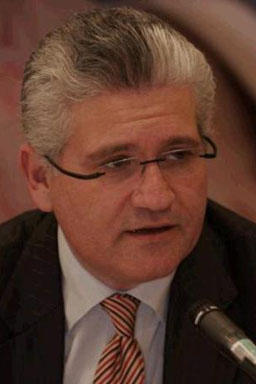
 The Israel Diamond Institute (IDI) is a non-profit organization, whose tasks are to develop vocational training, publish specialized literature, market goods, promote new processing techniques and offer consultations on security issues in the diamond industry. Eli Avidar, Managing Director of IDI, answers the questions filed by Rough&Polished.
In your opinion, what are the major lessons to be learned by diamond marketers from the current crisis?
Rough diamonds should not be bought at any price - diamantaires should not encourage artificial overpricing. Production should be guided by global demand for polished diamonds. Searching for new markets and comprehensive development of traditional markets is an absolute must. All of us are members of the world diamond community, and increasing the level of responsibility in our business should become a necessary element of strategy of each participant. This year IDI starts a new campaign, Responsibility is Good Business – in support of responsibility in business. Balanced approach, good judgment, sure-footed stance, trust and stability – these are directions for further development if we want to keep our market for future generations.
Where does IDI see points of growth for new diamond markets?
From early 2007 we started to speak, sing and dance in Chinese, vigorously promoting polished diamonds China. 2008 was “The Year of India” - we studied opportunities in this country where the consumer market is developing by leaps and bounds. In the result we signed two memorandums of mutual understanding with the Indian Gem and Jewellery Export Promotion Council (November, 2009) and All-India Gems and Jewellery Trade Federation (January, 2010). India’s potential is huge - its middle class (in the European meaning of this term) numbers at least 250 million people, and there are old traditions in consumption of diamonds. South America is an underestimated market. The Israeli diamond industry is actively seeking a foothold in this direction. Probably, the recently established Panama Diamond Exchange (PDE) will play the role of "South American Hong Kong.”
Development of new markets goes in parallel with development of new marketing technologies?
IDI believes that the diamond market should be prompt to react to new opportunities offered by modern information technologies. We have created the Israel diamond industry portal, which turned into a dynamic platform for exchanging contacts and concluding transactions. It is updated daily, and it is actively used by about 7 500 subscribers from 125 countries. It is useful to all participants of the market, and we wish to create an Internet community in which all the industry can get together and exchange ideas, and also directly contact Ramat Gan. The portal has its versions in Hebrew, English, Chinese and Russian and if earlier we worked with sporadic companies from these countries, now 300 Chinese companies buy our goods through this site. IDI has launched marketing campaigns on Facebook, LinkedIn, Twitter, and also video clips specially designed for our diamond companies and posted on You Tube. To support the business of our colleagues in the United States we publish the Reflections – Diamonds Magazine; it is distributed free of charge at more than 10,000 retail stores and its electronic version is very popular.
And how about Mazal U’Braha, the family business, old tried-and-true contacts…
The diamond market has ceased to be traditional, and it is important not to lag behind the times. The world is changing and the industry is changing along. Obviously, it is time for diamantaires to show interest to new technologies – the time is forcing to sell via the Internet. One way or another, electronic commerce would have found its way to the diamond industry.
What do you think of diamonds as an investment instrument?
I continue to share the opinion that diamonds are a good investment. This asset is especially attractive today while prices are still rather low.
Galina Semyonova, Rough&Polished
