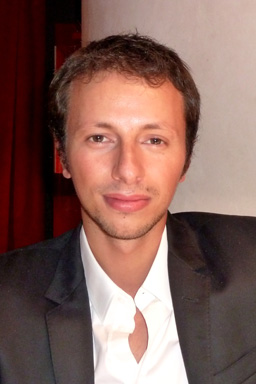
 From his very childhood diligent and purposeful Pasquale Bruni studied old masters' secrets and created his own jewelry pieces. The career of the most famous contemporary jeweler moved from being a jewelry craftsman to become an artist jeweler, from a jewelry stylist to a creator of precious adornments. In 1976, he displayed his jewelry products for the first time and opened a new line in jewelry art - fashion jewelry, establishing a small jewelry workshop, Gioielmoda. In 1997, Pasquale Bruni decided to mark the jewelry pieces he made with his signature and today he is 30 years on the jewelry market.
Pasquale Bruni is the one who uses his own distinctive solutions in polishing gems and their settings to produce unexpected effects by transforming light and accentuating the stone’s beauty. The symbol of Pasquale Bruni is a jewelry match made to fit a real hunter match size and bearing the inscription “Accendemi,” which means "Light me up!" His jewelry pieces set the pace in fashion; you will never confuse them because they are uncommon and impeccable starting from their faultless polished gold to famous inner content. Today Pasquale Bruni is the owner, CEO and creative director in his company joined by his daughter Eugenia heading the art department and his son Daniele coordinating the marketing department. Our correspondent caught up with Daniele at VicenzaOro 2010 in Italy to talk about their art and business.
How did you find this edition of VicenzaOro compared to 2009?
This is actually our first year after a four year interval to take part in this fair because the new management of VicenzaOro has decided to re-design the exhibition so it could represent Italy’s jewelry business. Since we are a one hundred percent Italian company, we thought it was really important for us not to miss this opportunity. We are very happy with the results so far, for our clients both Italian and international are very pleased with this comeback, so I think it was a very good choice.
Do you work in team with diamond-cutting companies or do you have your own cutters among your personnel?
For cutting, we have our own suppliers who provide us with gems. My father has been asked sevaral times to design for big brand companies. We are very used to do our own designs as well.
Is your brand in any way different from others – maybe in some traditions?
Surely, it was recognised since its inception in 1970 and its jewelry style is very different. My father has revolutionized the jewerrlery industry, which was viewed as very classy and traditional. He introduced new designs such as flowers, hearts, moons and stars. These were not common in the jewellery market. Most people in the world recognise him as a designer who made jewellery more joyful and more playful.
In what way did the crisis affect your creative work and business?
From the last year we tried to present a collection which was more like everyday jewellery but mantaining all the manufacturing qualities that our jewellery pieces have. We turned more enterprising which resulted in a very high success during this period when people were more careful in their spending. So our clients and final customers appreciated the effort from our side. This year, prices are still very low in Italy and we still don’t pursue a different startegy compared to the past year.
Do your pricy items sell much worse than before the crisis?
Well, there was a slowdown and noticeable shift of customer interest in price levels but I must say that pricy items actually sold very well in 2009 and this year, so we presented a new collection of high-end jewelry starting from EUR100,000 upwards and we sold them very well.
Gold is the best macroeconomic indicator – what are your forecasts in this respect in view of the world crisis?
Gold prices are going up and for us this is good for our products are luxury products. People had been viewing gold as turning less and less valuable, but now they will start to realize the value of gold.
Do you have any support from the government as far as long-term credits are concerned?
Unfortunately no, we do not have support from the government. The jewellery business in Italy does not have any support from the governmnet at all. We are not a priority on the government’s agenda.
In your view, what are the outlooks for cooperation with India and other Asian countries in the jewelry sector?
India and other Asian countries will play an important role, especially in setting up factories. For example, here in Italy it is now becoming very difficult to find people that are willing to do the job. And since the number of masters is becoming smaller and smaller, you have to pay them more and more, whereas in Asia, especially in India, people are taking their occasion turning this to their advantage. And you will never notice any difference in jewelry made this way. Projects and design will remain Italian, but manufacturing will be outsourced as our country won’t manage to remain competative in this field.
What is the main danger for jewelers today?
The danger is in competion with emerging players. So it is important to stay competetive taking into account that China in its turn is becoming ever stronger in this industry. Italian designers should also concentrate on creativity. Certainly, Asian countries can copy our ideas, but the knowledge should remain here and in no case should be exported.
Do you get additional energy from diamonds? What can you tell about Russian dimonds?
Stones bring energy for sure, and each stone has its own type of energy and I think our brand is going in that direction bringing more awareness to the public that wearing a stone you get some energy. We also do that by words. We have, for example, our collection called “Amore.” By wearing a gem of love, you bring that energy. Gold is also generating beautiful energy. I don’t know about Russian diamonds but I will investigate (laughing).
What kind of jewelry are people buying most of all now?
Our best selling products are jewellery pieces that you can wear everyday; they are fashionable but also easy to wear.
What is your favourite stylish combination with dimonds?
Well I like general stones, colored stones. I also like fancy diamonds as well as semi-precious stones like tanzanite. I think the combination of diamonds and tanzanites is what I like very much. White gold also makes a very good combination with diamonds, but not yellow gold, its plain.
What do you expect from the future season?
We hope diamonds won’t go lower next season and we plan to work a lot with rubies, suphires and emaralds. The next collection will be very colourful. We also consider using fancy diamonds, for we had a lot of black and white dimonds in this year’s collection, Lulu.
What do you think about artificial polished diamonds?
Something natural is always beautiful and easier to sell. If you tell your customer that what you are selling is not natural they get pushed away. Yes, artificial diamonds will have a niche market but people who like nice things will buy natural stones.
What kind of future you see for modern design and jewelry – in new techniques and new ideas?
If one could manage to make low-carat gold maintaining the colour and good design qualities, I think this would be a real future for the jewellery industry.
Veronica Novoselova, Rough&Polished correspondent in Italy
