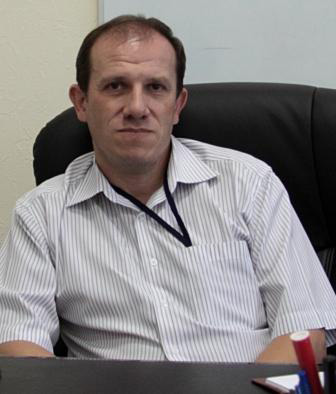
 In 2007, LLJ (Lev Leviev Jewellery) controlled by Lev Leviev acquired the Lucas Jewelry Factory in order to increase its presence in the wholesale jewelry market. Today, all the wholesale dealings in Russia and in the CIS countries are carried out through the company called Lucas-Gold. Michael Trakhtenberg, CEO of Lucas-Gold, answers the questions of our correspondent.
Where does your company concentrate its production?
Lucas-Gold is a business which started 17 years ago in a workshop and then gradually increased the number of its workforce to 400 employees of various professions engaged in jewelry production. When Lev Leviev purchased OAO MYuZ (Moscow Jewelry Factory), it was decided to combine the production facilities having related tasks, similar model series and specifics – thus, two factories were merged together on a single manufacturing site. Now our joint production – that of Lucas and MYuZ - is located in the City of Perm; by the way, recently we opened there a jewelry art school.
In what proportions do you sell your products for export and inside Russia?
Fifteen percent of our company’s products are exported to the CIS countries – Moldova, Kazakhstan, Ukraine and Belarus. The rest is sold in Russia.
How promising are the CIS and Russian markets?
With the establishment of the Customs Union we hope there will open an attractive market in Kazakhstan. Our production facilities are in Perm, and we have the right to export, so that our counterparts from the CIS countries could participate in VAT refunds. And our products manufactured outside Russia - those which we import for sale in the Russian market - become re-export goods. This limits our ability in export transactions. If this issue will be resolved it will make operations on the markets of our former republics more interesting. But so far we are successfully developing the internal Russian market, which accounts for 85-90% of our goods according to our recent data.
Many jewelers complain of the legislation which is harmful to domestic producers. Does this affect you in any way?
We are affected in our re-export operations, because this hinders the trade with the CIS countries. There is a problem related to customs duties and centralization of import operations within TBSS - there is such a monopolization of customs operations, and I do not know how it comes that the Federal Antimonopoly Service here has not paid any attention to this so far... We are not very welcome at banks and insurance companies, which consider jewelry manufacturing as some shady business. Nevertheless, the Russian market is definitely growing. Decriminalization of the jewelry industry facilitates a situation where "white" companies are winning a decent share in the market increasing their presence.
Do you have problems with obtaining raw materials?
Since we make part of the Lev Leviev Group of Companies which runs a full production cycle starting from mining to jewelry manufacturing, we use our own raw materials. Leviev is trading on world diamond exchanges, so if there is a problem with some specific dimensions, which we do not have enough, then we just get them through the Leviev Group, perhaps even purchased on some diamond exchange - we do not know; it may be just droplets of some subcontract. We have several sources of raw materials. We use diamonds of different backgrounds: African and Russian (made in Perm).
What is the proportion between those made in Perm and those brought from Africa?
We use locally made gems exceeding one quarter of a carat in size for our own production purposes. If we need smaller stones below one quarter of a carat and also gems for import then we shall rather use African diamonds. I think the proportion is 40 percent of African gems against 60 of those made locally.
Do you have a diamond-cutting facility?
Diamonds are cut by Ruiz Diamond.
Who is involved in design?
Each of our manufacturing workshops has its own designers. If a successful model appears abroad, and we see that it generates good sales on the Russian market, of course, in order to optimize costs we shall use it in our production. Cetainly, we are all the time changing, probing, following the demand, trying to organize it, to change consumers’ mentality towards what we think is right.
Several years ago, the media wrote about the agreement between Leviev and Bvlgary. How is this partnership developing?
There is such an agreement, and we have other ones with a number of brands well known in the jewelry market and maintaining good partnership with Leviev. For example, the H. Stern network has developed its own art line. Additionally, Leviev has its own brand. All of them are going on successfully.
Does the cooperation with Bvlgary and other brands influence your own production?
We represent a bit different segment. We are operating in a more mass consumption sector, while branded things tend to be the field of interest for MYuZ - they have a chain of retail stores, which are required to have a range of more expensive products in their assortment. They use specialties developed by these brands - for them it is more important. We are more focused on middle and low-cost diamond products. MYuZ-made things are sold under the MYuZ trade mark, while ours are sold as Lucas. Since we are part of the group, sometimes we get things transferred between us as overage - we can turn over to each other some of the stocks so that these could be sold via Lucas or MYuZ. But this is not the classical scheme of work.
What can you say about goods produced by the Leviev brand?
The Leviev brand sells its jewellery widely enough – they have very successful stores in London, Dubai and New York; there is a famous store in Moscow as well. I do not know anything about their turnover - I do not think that such high-end stores will flaunt their turnover. They keep five or six pieces on display, and their salespersons work with each customer individually and confidentially.
Are you satisfied with your trade results at the Junwex Moscow Exhibition?
The exhibition was a success bringing in more clients than we expected. Our sales compared to previous exhibitions went up - apparently, we nicked it with our collections and we are now developing the right line, namely, diamond jewelry, as well as producing jewelry with emeralds and colored gemstones. Clients like it and this is what is important for us. We have always lived pursuing sound cost-efficiency. So far as we have a full-cycle production, i.e. we have no middlemen, trying to earn money on us, and since generally we keep up a right level of prices, we are competitive.
Do you think Russian buyers are changing their attitude towards diamonds?
I think their attitude is slowly changing: in the past it was believed that it was better to buy a low-cost thing with cubic zirconia and save some money on this. But due to the fact that gold prices have exorbitantly increased over the past year and a half, while diamond prices were practically stable (they went up 20%, while gold soared 200%), jewelry goods with “light” diamonds (I'm not talking about large-size gems) have become worth as much as those with cubic zirconia, and any normal and reasonable buyer understands that he has an opportunity to pay almost the same price (+10%) and buy jewelry pieces graced with natural stones, so as I think the mentality of buyers will be changing in this direction further.
Galina Semyonova, Rough&Polished
