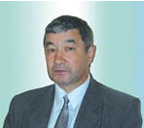
 Victor Beskrovanov is Doctor of Geological and Mineralogical Sciences, Professor of Solid State Physics at the Physics and Technology Institute of the North East State University and Deputy Editor-in-Chief of the “Science and Technology in Yakutia” Magazine.
You headed the Scientific and Technological Diamond Center at the Institute of Physical and Technical Problems of the North affiliated with the Siberian Branch of the Russian Academy of Sciences. Does it still exist and what are you doing now?
Unfortunately, the Centre has sunk into oblivion. This happened due to the untimely death of Academician Vladimir Larionov, who did a lot for the development of diamond research in Yakutia. For several years, I worked as a professor at the Department of Solid State of the North East Physical University.
You have developed an entirely new method for studying diamonds. What is its essence?
The principal difference is that traditional approaches to studying natural diamonds are known in the first place for their narrowly specialized methods and their isolation from each other; secondly, the degree of studying diamonds did not match the importance and significance of their use for practical purposes; and thirdly, there was no comprehensive approach to studying diamonds.
The essence of the ontogenic method is that it logically combines the mineralogical and physical branches of science eliminating many of the difficulties arising from the heterogeneity of diamond crystals. After all, diamonds are heterogeneous and consist of areas whose physical characteristics (the form of growth zones, electrical properties, absorption of infrared and ultraviolet light, luminescence, etc.) widely vary.
The main aspects of this method were described in the two editions of my monograph, "Ontogeny of diamonds" (Moscow, 1992, and Novosibirsk, 2000). The major concept of this method is the perception that all the properties of diamonds are changing in the direction from the center of the crystal to its surface as a consequence of evolution of the diamond crystallization medium from the state of nonequilibrium to the state of equilibrium. The main advantage of the ontogenic approach is that we mark out three quasi-homogeneous spatial areas in a variety of individual diamonds: central, intermediate and peripheral. The properties of different areas are different even in a single diamond crystal, while the properties of similar areas in different crystals are similar. Physical, mechanical and jewelry differences of diamond areas emerge in the process of manufacturing polished diamonds, diamond tools and products.
Using the ontogenic method allowed to shift the focus of diamond research from the study of whole non-uniform crystals to the study of their separate homogeneous parts and to identify new, previously unknown properties of diamonds. Diamonds from different diamond fields have different combinations of ontogenic areas. In the course of its development a single crystal could stop growing. This produced individual stones having only the central area as is the case with small-size diamonds from placers in Ukraine, small-size diamonds from kimberlite pipes, most of the crystals from kimberlite veins, as well as polycrystals, bort, ballas and carbonado. The crystals formed by the central and intermediate areas are represented by placer diamonds found in the Urals, in Brazil, in the northern placers of Yakutia and lamproites of Western Australia. Such crystals predominate in the total mass of kimberlite diamonds. Our investigations revealed that they are also represented by giant diamonds. All the three areas are detected in only some part of diamond crystals from kimberlite pipes, notably from the Mir Diamond Pipe.
The ontogenic method is known for good forecasting properties. It is curious to draw the following analogy. The statistical changes observed in the properties of diamonds from south to north of the Yakut diamond-bearing province are similar to their changes from the surface to the depth of the diamond crystal. It appears that the Siberian Platform accommodating the diamond province is a crystal turned inside-out.
In the Anabar District located in the north-eastern part of Yakutia there are rich diamond placers, but their sources are not found. Diamond mining there is performed by Almazy Anabara. The press reported there were attempts to find kimberlite pipes feeding the placers. Genetic information read by the ontogenic method indicates that there are no such pipes there. There happened a geologic event similar to the one taking place in the Indian Majhgawan Diamond Pipe. Unfortunately, ALROSA is spending millions for exploration, rather than perform a scientific study using the ontogenic method.
Are there now any diamond forums in Yakutia? What problems are discussed there?
Currently, scientific conferences on diamonds in Yakutia are mainly held under the auspices of ALROSA. Their subjects are determined by the scope of the company’s business. They include forecasts and exploration of new deposits, problems of diamond beneficiation, open pits and mines.
What problem do you consider to be the most relevant in the diamond sector: exploration, searching for new deposits or studying physical properties?
I'm inclined in favor of the latter. Despite the growing interest in diamonds displayed by different branches of science and technology, many problems pertaining to their genesis and nature of their unique properties have not yet been solved. We have to admit that the degree of studying diamonds do not match the importance of their use for practical purposes. In recent years material scientists are taking a growing interest towards diamonds. It seems their last hopes are associated with diamonds since the capabilities of other materials are mostly known.
Diamonds are considered to be promising in electronics, aren’t they?
The pace of their success in this area is perhaps most aptly described by the subtitle of one of the relevant articles: "The day of diamond transistors has not yet come, but the dawn has filled the skies." The value of diamonds for electronics is as follows:
Carbon in the periodic table is in the main subgroup of the fourth group formed by semiconductors - germanium, silicon and stannum. Diamonds themselves display semiconducting properties, but only in their very rare variety - diamonds type IIb.
Diamonds have a record thermal conductivity exceeding that of silver and copper 5-7 times within a certain temperature range.
Diamonds have a record resistance to aggressive environments. They are not affected by most active acids and alkalis.
If a nuclear particle penetrates a diamond it emits a flash of light, scintillation, and if it is applied some voltage it gives a current pulse. This opens a possibility of using diamonds as detectors of ionizing radiation.
Diamond is the most transparent material known throughout the optical range. The space probe to Venus had a diamond window.
What is your attitude to the problem of synthetic diamonds?
Synthetic diamonds are now widely used in manufacturing tools and devices and often appear superior by their possibilities over their natural counterparts. If we take their physical and mechanical properties mostly used in modern technology as the main criterion for comparing natural and synthetic diamonds, synthetic diamonds have a number of advantages. These include a higher abrasive ability, the ability of self-sharpening by breaking off particles in the working area, as well as the possibility to have correct faceting on very small crystals. Synthetic crystals less than 200-300 microns are stronger than natural crystals occurring as chips.
Another important feature is the ability to synthesize crystals with predetermined properties. Synthetic diamonds with semiconducting properties have already been produced. Their natural analogues are found very rarely and occur only in the Premier Diamond Pipe in South Africa. In Russia, they are not found.
In recent years, physicians are increasingly attracted by nanodiamonds (5-100 nm in size) obtained by detonating a mixture of explosives. Nanodiamond powders are known for their high surface-to-volume ratio. As a result, over 10% of the total mass of carbon atoms tend to near-surface layers, which contain carbon atoms having valence electrons of different energy states compared with the corresponding characteristics of the atoms in the crystal. Such diamonds are widely used in high-tech industries. In medicine, they are used for targeted delivery of drugs to the affected area of the body.
How do you assess the prospects of diamond resources in Yakutia? Is there any chance to discover new major diamond pipes in the near future and if there is then where?
The total amount of diamonds in natural deposits is in any case finite and sooner or later will be exhausted. Forecasts are disappointing. The reserves of natural diamonds at the current mining rate and growing needs in them for use as precious stones and industrial raw materials will be exhausted. The views of experts on the dates differ, but in various projections, these terms do not exceed half a century, although there are more pessimistic estimates.
But there is no need to nourish any high hopes. Of course, there is a justified expectation that new diamond bearing pipes and placers will be discovered in the already well-known diamond provinces where the Botuobinskaya and Nyurbinskaya diamond pipes have already been found. In late 2007, near Yakutsk there was contoured a new kimberlite field (Hampu-Mayskoye) within which a new kimberlite pipe, Manchary, was revealed.
Today, geological features of the diamond areas are studied in sufficient detail. True, recently there were discovered two diamond-bearing provinces – the lamproite province in Western Australia and the Archangelsk province in Russia. Potentially diamond-bearing are stable parts of tectonic platforms, such as the Russian platform, on which Moscow is located. But on the whole, I think that discovering new diamondiferous provinces is unlikely.
What caused your interest towards diamonds? Do you have a personal attitude to this mineral?
Everyone who had a chance to hold this stone in his hands or at least to see it is sure to have a personal attitude towards it. The best thing about this was said by Academician Alexander Fersman who devoted many years to study diamonds. My whole life and scientific work, he said, was associated with diamonds, from my student thesis and diploma to my doctoral dissertation and monograph.
Galina Semyonova, Rough&Polished
