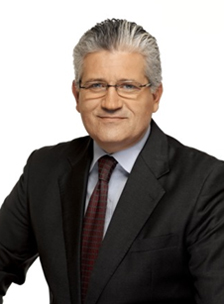
 Eli Avidar, Managing Director of Israel Diamond Institute (IDI), who among other duties is responsible for promoting the Israeli diamond industry in international markets, told Rough & Polished about a new advertising campaign launched by IDI and modern marketing techniques.
You’ve launched the new marketing campaign, “Welcome to Israel,” at Baselworld and continue to develop it in Las Vegas and further. Could you tell us whether it is efficient and what kind of results it is expected to bring?
Our new campaign “Welcome to Israel” seeks to emphasize the advantages of doing business with Israel – at trade shows, online, or of course in personal buying visits to the bourse in Ramat Gan. We want buyers to feel welcome to visit the Israel Diamond Pavilion in Las Vegas, Hong Kong, Mumbai or any other diamond and jewelry shows around the world. We want them to use our portal website in English, Chinese, Russian or Hebrew. And of course we would like to see them in Israel, where we can make them feel most welcome.
For the first time in Las Vegas, IDI raffled off a free round-trip ticket to Israel. This was a highlight of our participation there and was met with a great deal of excitement.
As the IDI Managing Director you have to pay much attention and time to PR, advertising and marketing, especially in terms of new techniques in this field. How do they work in the diamond industry?
I am a great believer in the power of marketing and invest a lot of effort in developing our marketing strategies and translating them into multipronged campaigns. In addition to active international advertising and PR programs, IDI has taken full advantage of the power of the Internet. Our portal site is the most comprehensive website serving the Israeli Diamond Industry, and enables buyers around the world to contact industry members and conduct business. We are the first diamond center to set up a site in Chinese and in Russian. Moreover, we are very active on Facebook, Twitter, You Tube and Linked In, and our Israeli Diamond blog enjoys great popularity. We have also encouraged the Israeli industry to take advantage of all the newest media – including the Internet and social media – and have provided courses and personal training to enable them to do so.
Everyone knows that today a presence on the Internet is essential for marketing diamonds, or anything else for that matter. Our industry, which has always been conservative has become active in these media and is even using e-commerce successfully to sell diamonds and diamond jewelry.
In your opinion, what is the major challenge if we view diamond sales in competition with other luxury products like fashionable electronic gadgets, bags, etc.?
Obviously electronic devices are popular and they have their place, as do designer clothes, bags and other items. But nothing can replace a diamond for its meaning. For generations diamonds have symbolized love and commitment and still do so. There is no danger of diamonds ‘going out of style’. Recent surveys in the United States, for example, show that women still want to receive a diamond ring from their partner. They also want diamond earrings, diamond bracelets and cocktail rings – which they often buy themselves. Women in Europe also want diamonds, and the market in Eastern Europe is growing very nicely. Throughout Asia the practice of buying diamond engagement rings is on the rise and this is opening up a huge market. Also as Asian economies develop, people there are buying more luxury items and brand names, but they are also buying lots more diamonds.
In addition, people have begun to purchase diamonds for investment. We have seen this more and more over the past few years as diamond prices continue to rise, while other investment instruments are lagging behind in yield. So we are very confident that the future looks good for the sale of diamonds around the world.
What is your take on the significance of generic advertising? Who should undertake it – mining companies, manufacturers, someone else or all of them together?
We have often said that the industry as a whole should invest in more marketing and advertising to ensure that demand for diamonds continues to grow. There have been initiatives to come together as an industry and to establish a body to handle marketing and advertising on a major scale. So far, for various reasons, this has not gotten off the ground. It’s clear to me that all of the stakeholders should be advertising, especially the diamond producers. The manufacturers can also advertise if they have proprietary brands, and they can advertise in conjunction with retailers. In the meantime, De Beers is still doing a great amount of advertising and this serves to boost the entire industry, even if they are no longer doing generic advertising. But for the good of the global industry, I believe that we should coordinate our marketing and advertising efforts, and that we should invest greater budgets in these activities.
Alexandr Shaburkin, Rough&Polished
