 Sierra Leone is known as the place where concern over the issue of conflict diamonds was raised forcing the Security Council to adopt resolution 1306 in July 2000 that imposed a ban on the direct or indirect import of rough diamonds from the country not controlled by the government through a certificate of origin regime.
The Kimberley Process Certification System (KPCS) was also formally adopted in 2003 to guard against conflict diamonds entering the legitimate diamond supply chain.
It is now over a decade after the end of the civil war that was fueled by diamonds and Sierra Leone is still struggling to gain ground as a major player in the diamond industry.
Recently, the Bank of Sierra Leone said the country’s diamond exports leaped 25 percent to 41,880 carats in June this year compared with 33,450 carats last May.
It said in an economic review for the month of June that total diamond exports shipments for the first six months of the year were 204,890 carats.
The KP’s latest data also show that Sierra Leone produced 437,516 carats in 2010 worth $106 million.
With the country having exported just over 200 000 carats during the first half of the year, it appears as if its annual production will be again in the region of 400 000 carats.
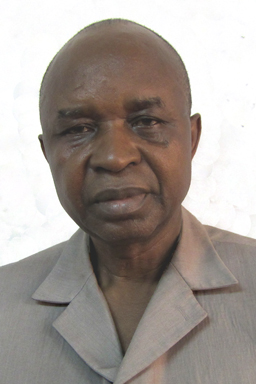
Rough & Polished’s Mathew Nyaungwa caught up with Sierra Leone’s Director of Mines Jonathan Sharkah who admitted that the local diamond industry was still struggling, although measures are being put in place to boost output.
What is Sierra Leone’s projected diamond output for the year?
Our diamond output target for the year is about 400 000 carats.
What about last year, how many carats did your country produce?
It was almost the same with what we are expecting to produce this year. Our diamond production at the moment is almost 75 percent alluvial and 25 percent kimberlitic. We only have one company that is using latest mining technology, and we expect them to quadruple their output to about 30 000 carats per month.
Why is there such a low diamond output in your country?
Well, several miners are still developing their mines. However, we hope the country will produce about 500 000 carats next year and when new mining areas are opened the country will likely produce 1 million carats per annum.
What is the level of appetite for diamond mining in Sierra Leone?
Our problem is that our pipes are very small when compared to Botswana, so the appetite has not been very voracious in a sense but we are still having areas that are opening up, like I said, and most of our deposits are alluvial. People are still looking for small lines. We don’t have very much big pipes, so that is our problem.
How was the Sierra Leone diamond industry affected by the global economic recession, given its fledgling state?
It was very bad. The diamond industry was providing about 25 percent of Gross Domestic Product (GDP), so when demand and prices fell, it was such a bad state. Artisinal miners struggled to sell their mined diamonds during that time.
Since you have mentioned artisanal diamond miners, what is the Sierra Leone government doing to ensure compliance?
That was a big challenge and remains one, but we have mines monitors that go around the country ensuring that everyone is complying with the law.
Mathew Nyaungwa, Rough&Polished
