 Every year the diamond world is offered new and unique technologies bringing the evaluation and measurement systems applied in diamond manufacturing to an ever higher level. Such equipment becomes an integral part of every gemological laboratory or manufacturing factory, and also a daily essential for every diamond dealer or retailer in need of accurate diamond grading.
Recently, the market was stirred by a new system, Sarin's Galaxy scanner, making it possible to skip preliminary treatment of rough stones. The scanner is able to detect inclusions in rough diamonds regardless of their type, size and location operating in an automatic mode.
The new instrument enables manufacturers to assess the eventual polished yield of a rough diamond within minutes facilitating their decision-making and giving a chance to sell stones at the best possible price.
SRN Import is an official and exclusive distributor of Sarin and Dialit producing equipment for the diamond industry. Sarin is the world’s leading supplier of diamond equipment for more than 20 years. Dialit is turning out advanced automated polishing machinery widely known across the world.
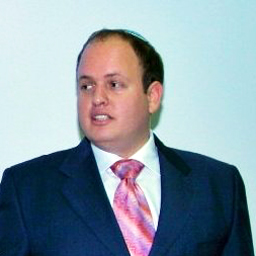
SRN Import was established by Uri Weintraub and Josef Aharonoff. We asked one of the owners, Uri Weintraub, to tell us more about the company and how it works in the Russian market.
Why did you decide to open your company in Moscow?
We are based in Moscow, in the Diamond World Production Complex - most of our clients are here, and we have clients all over Russia and in Armenia, Belorussia, Ukraine, Azerbaijan, etc. The company is working in Russia & CIS for the last 9 years and we basically sell and give all the service for both Sarin and Dialit.
In the beginning of this year, we brought the Galaxy System to Moscow. Galaxy is maybe the biggest revolution in the rough industry ever. It is the first machine that can actually “see” the stone from the inside and to locate and map all the inclusions automatically. We think that today the world of manufacturing has been changed, from the traditional way of working with loupe/microscope manually, to a fully hi-tech world when you plan the stone. There is no need to “break” your head with finding the most profitable option from the rough. We scan the stone using Galaxy and after the process is complete we use our special software for rough, the Advisor to plan the stone. Of course, it can be done manually on the computer or we can offer our client to use additional software, Best Value, which can give him an optimally polished stone, using his price lists and discounts. To make the story short, he can get the most profitable option from the rough. Our practice proved that when clients brought us stones after planning we helped them to get more money from the stones, sometimes 5% more and in some cases even more than 100% from the same stone!
Do you have offices in other countries?
Sarin’s head office is located in Israel but you can find Sarin all over the world where you have diamond centers, including India, Belgium, Africa, the USA, Hong Kong, China, Italy, Thailand, etc.
Do you like Russian clients? Are they not difficult?
The diamond manufacturing industry in Russia isn’t so big unfortunately so I think that we are working with almost all the companies in Russia, and the ones that are not working with us know about us for sure. All the big companies are using our equipment and services.
They have the specialists who are monitoring all the new stuff we have. From time to time they visit our HQ in Israel and get demonstrations and presentations, explanations with our most new and even future products. Our clients in Russia are mostly manufacturers, which understand the power of technology. As for today, I think it’s 95% of the market.
I find the clients in Russia good and educated; we have also Indians, Israelis, Belgians, etc.
Client is a client, which means that when he buys he asks for good product, support and so on. I believe that our clients are happy with us and the best proof is that when you enter a factory in Russia, you will probably find our equipment inside.
It’s a pity that the retail market is not much interested in machines that can improve sales of loose diamonds. They give a possibility to demonstrate a 3D model of the diamond to a customer. Shops all over the world use them very actively now.
How do you see the Russian diamond market today?
I think that it has a bigger potential, but unfortunately, there is no diamond exchange in Russia, so the trading is working differently and it is not regulated under the same standards as in Israel, Belgium, the USA, etc. For example, the tax system is different, so it is harder for the polished traders to work in Russia.
The rough market is much more for export then for the local market. Unfortunately, it’s cheaper to cut diamonds in India or China so international companies are interested in exporting as much as they can. A few years ago, the government forced them to cut diamonds in Russia in order to create working places for Russian cutters, but as for today, I think that most of the rough is sold through tenders for export.
Did you see any changes in the Russian market in the last 5 years?
Sure. The market is getting smaller each year, companies are closing their activities and the ones that are still working are worried with rough supply and the lack of it.
When talking to people in the industry, you can feel that nobody really knows what will be in the future and they live in some kind of a fight to survive.
And what you can say about the Israeli market. How much different is it now?
The Israeli market has been a trading market for many years. There is no really massive manufacturing market like many years ago. Just a buy-and-sell market.
For many years Russia and Israel had close ties within the diamond market. What is the picture today?
Lots of Israelis work in Russia in the diamond business. Many of them are good friends and respectable clients of us. The relations are getting only better and closer with time.
What do you expect from the Russian market?
As you know, the country itself and business here is unpredictable, but we hope things will get better every day, and a civilized market will come here once.
What is to be done for a successful future of the world diamond industry?
Technology should take a much bigger part at all stages of diamond manufacturing and retailing. End-clients are getting smarter and more specific in their demands every day, so all the companies must have up-to-date technology and services.
Veronica Novoselova, Rough&Polished
