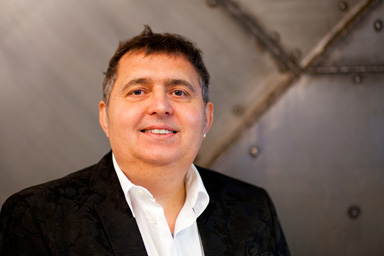
 Rubel & Ménasché has been supplying the jewelry houses of Place Vendôme with high-end small diamond goods for over 50 years. The company’s specialty is extremely well-finished stones, which it offers to top jewelry brands the world over. Taking into account that it is also part of the Dali Diamond Group, a DTC sightholder, our correspondent in Brussels asked its CEO Stephan Wolzok to share his views on the current events in the diamond market.
What are the main today’s news from your company?
The big news is that 2012 is a milestone for us as we started to communicate. First with ads in professional magazines, then banners on their website and finally 3 months ago we launched our web site: www.rubel-menasche.com.
It is not a habit for middlemen of our size to go “public,” but it is time for us to share our know-how. Even though we are not manufacturers (our partners, Dali Diamond, are), we have a strong expertise in supplying high end jewelers.
How did you work before and how do you work now?
Back in times we worked like everyone did, sending lots in parcel to the Jewelers and waiting for a potential return on the consignment. But 15 years ago, Jacques Zaïcik, our President, started a real relationship with them, interesting them to the idea of a more accurate sorting, storage in plastic boxes instead of parcel and providing them with a special bagging.
With a few parcel papers you recreate the whole nomenclature of a piece of jewelry, but each size in a different parcel. This how was born the “kit.”
The kitting helped setters winning time to work perfectly on jewelry pieces instead of finding the right stone in a huge parcel containing all the dimensions required.
Today, we are 40 people dedicated to supply our clients with the best services, backed up with an in-house tailor-made IT system.
And of course, we partnered up with a Sightholder to better service our clients.
The pickier our clients are on their demands, the more we like it. This is what leads us to progress.
Industrialization became our leitmotiv, as we share the same belief with our clients: high standards of quality. Not only regarding our diamonds but the processes too.
Thorough processes and precise craftsmanship, which means investing a lot in human resources and equipment, made us the RJC 5th certified member.
Are there any prospects for the diamond market as a whole?
Today the market seems unbalanced. Rough too high, polished too slow, banks shutting down requests from diamond businesses regarding credit lines, and manufacturers barely making money selling (or even losing some) on the second market. They saw their profit margins on polished shrunk like snow under the sun. Concrete confidence among wholesalers is not in the air.
We can all feel the instability, but it is only short term. The Chinese market in backing up, yes, but it will stabilize. And America is strong. Demand is not down, consumers buy differently, in adequation with their means. Let’s not forget about the upcoming elections and the holidays season.
So we could say short term instability to reach long-term prosperity for the diamond market.
What kind of development trends do you see for the diamond industry and market nowadays?
I think the diamond industry will continue on the same path it started to walk a few years ago: corporate responsibility. And furthermore, building or rebuilding the end consumer’s trust. No need to look for new pipes of kimberlite if there is no demand for diamonds… Establishing a chain of custody, certifying processes and methods from one end to the other, ensuring that diamonds are an engine for development. That surely will be the 1st trend.
Second, to protect their margins from major retailers already sightholder, manufacturers will go on promoting their own branded diamonds. Branded diamonds seem to be a way to spur demand now that consumers are eager for “quality” and “certification”, more than the usual selling concepts such as love and eternity.
And finally there will be a need for generic advertisement as De Beers will now only advertise their own Forevermark brand.
Is it possible to forecast prices?
It would be fooling ourselves to believe we can accurately predict the future. These days we are witnessing high rough and slow polished, leading to gaps of profitability along the Pipeline. How the market will regain its balance is a hard guess. However historic pricing as well as supply & demand forecast in our industry gives more indication.
The Majors seem not to be willing to lower their prices, we can only hope that polished will rise again.
What impact on the market and business is produced by new diamond miners (Zimbabwe, etc.)?
It is hardly measurable yet, but in the long term it seems like there will be fewer mines and increasing demand, even the new producers arising.
What can be said is that finding a mine in Zimbabwe was a mixed blessing. Our industry was hungry for an increase of cheaper material to feed the factories as well as the increasing worldwide demand of pique goods. On the other hand, the political situation in Zimbabwe creates a real challenge for the Kimberly process regarding conflict diamonds. This issue has to be resolved soon for the benefit of all of us.
What are the prospects for the sightholder community as a sales system?
So far De Beers always considered it mutually beneficial to have “long term contracts” with its sightholders. The miner has a commitment from their clients, and the manufacturer can consistently supply its factories and clients. The shareholders of De Beers, Anglo American, explicitly mentioned that diamonds are not a commodity like gold or silver, but a luxury product.
Tenders create fluctuations in pricing and instability and no guarantee of supply for the manufacturer.
It is interesting to note that just BHP who has been tendering all of their diamonds, are now putting their mine up for sale…
How do you feel about the transfer of DTC to Botswana?
Beneficiation is only natural. It is logic for the producing countries to want to maximize local activities. Even though it is a challenge for the country, it is a one-time opportunity to become a real diamond trading hub.
Alex Shishlo, Editor in Chief of the European Bureau, Rough&Polished
