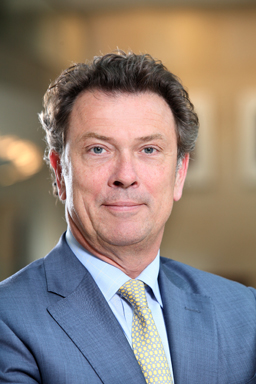
 Erik Jensen, CEO of ABN AMRO International Diamond & Jewelry Group, answered the questions from our correspondent in Belgium.
What is your situation with extending loans to buyers of rough and polished diamonds or diamond cutters?
As ABN AMRO we can look back on 100 years of experience in the diamond business, during which we have been confronted with several ups and downs in the diamond industry, which - according to us - is not different from the present situation.
On a more global scale, we validate that the overall banking landscape has been influenced by the several global factors: as the economic crisis, Basel III and the global liquidity squeeze. Although in first instance these factors can put pressure on the financing cost and/or the credit availability, we are convinced that on a longer term this will lead to a stronger diamond industry with increased transparency and more robust financials.
Does the number of borrowers remain at its previous level?
Given the 'new reality' of the diamond market with decreasing margin and increased pressure on trade and profit, the diamond customers and the diamond industry overall will be driven towards more efficiency and structural changes. As a consequence, increased consolidation and vertical integration will take place and certain market players might even exit the industry.
As such, the 'number of borrowers' has never been a prime concern of our bank. Our focus is to be and remain a trusted financial partner of this diamond industry and we are convinced we can provide added value to our customers and guide them through these times of change.
Whom are you giving more credits - to diamond cutters or to buyers of rough or to jewellers?
Being an international player and having a presence around the globe, including the key 'diamond' centres like Antwerp, Dubai, New York , Botswana, Hong Kong and Mumbai (via RBS), we want to cover the whole value chain, without putting emphasis on any individual activity. Our focus is to service and support our customers in different countries and with different activities. Our customer base can even be found in related sectors as watches and precious metals.
Are there many companies trying to get credits?
The diamond industry is substantially leveraged throughout the whole pipeline. Taking the present market circumstances into consideration, liquidity is becoming scarcer. Overall the diamond industry has experience from the previous crisis in 2008 that reducing purchasing and leaving goods on the table with primary sourcing is also an option in case of increased liquidity need without immediately applying for increased third party financing.
In what way does your bank evaluate collaterals in the form of rough or polished diamonds?
Looking at a different banking landscape by implementing Basel III, considering return on investments in a different way, banks will be challenged to look into the collateral availability.
As to the kind of collateral to be established, one has to take into consideration the local legislation and usages of each country and market. In general, ABN AMRO is not in favour of 'demobilising' inventory of customers since they require their goods in their daily operations, especially when other options are available.
In what way do the fluctuations in prices for rough and polished diamonds affect the bank's risk policy?
Fluctuations in prices for rough and polished diamonds do not affect our risk policy as these fluctuations are inherent to the market.
Alex Shishlo, Editor in Chief of the European Bureau, Rough&Polished
