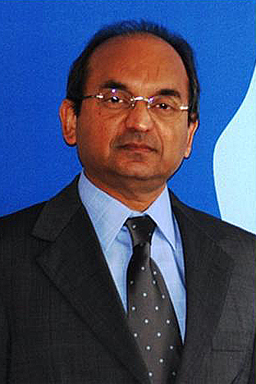
 Dilip Mehta, CEO of Rosy Blue, a long-time DTC sightholder and one of the world’s largest diamond manufacturers having close relationships with all the major mining houses, including De Beers and ALROSA, spoke about his company’s business in the interview he gave to our correspondent in Brussels.
How do you evaluate the current situation in the diamond industry?
Business after over a year of slow down, due to reduced Chinese and Indian demand. Whole markets are adjusting to the new price points and inventory hangover at the retail.
How do you evaluate the marketing policies of Alrosa, De Beers and Rio Tinto?
Unfortunately due to the strong and sometime speculative demand for the rough, all the producers were slow to react to the new realities when the prices started correcting. That said, the producers are constantly engaged with their clients.
"Fair price," what does it mean for you?
Simply explained, the rough prices should reflect the polished prices, which is better barometer rather than rough being sold in the tenders, which reflects more the mood factor than the ground realities.
What kind of goods is preferred by your customers? In which ways do you interact with them (non-recurrent transactions, long-term contracts) and what is your customer mix (different customers, one or two permanent clients, etc.)?
Our company works across the qualities and sizes and every quality has its own market style. By and large the client base remains consistent to about 80%. We look for proper geographical spread.
What are your market channels?
It is mixture of wholesale, jewelry manufacturers and retailers which allows us our inventory management.
What are you relationship with jewelers?
We like to understand the entire distribution channels from wholesale to retail, and make sure we add value to all our clients.
How are you participating in professional organizations and societies?
Since 2005 we are founding member of the Responsible Jewellery Council. Rosy Blue has been actively involved from the start at Board and Committee level.
In 2008 we became member of the UN Global Compact and accordingly we report annually on our sustainability efforts in the diamond and jewellery industry.
I am also very committed to the Diamond Empowerment Fund where I have been appointed advisory board member.
Alex Shishlo, Editor in Chief of the European Bureau, Rough&Polished
