 The discovery of Marange diamonds in 2006 saw the need for Zimbabwe to derive maximum benefits from its gems.
A number of diamond cutters and polishers sprung up in response to Harare’s call to beneficiate its rough diamonds.
However, the sector’s image was blighted in 2010 when it emerged that some “manufactures” were smuggling rough stones out of the country instead of beneficiating them.
So, the focus had been on obtaining quick cash from the auctioning (whether nicodemously or not) of the diamonds, thereby starving the country of a potential source of employment for many a people.
Zimbabwe, according to President Robert Mugabe only polished 0.1 percent of 8.5 million carats of diamonds produced in 2011.
Diamond producers were forced to allocate 10 percent of their annual production to local cutters and polishers.
Stung by such a reality a generation of local entrepreneurs gathered last year to establish the Diamond Beneficiation Association of Zimbabwe, which had been busy lobbying the government to come up with policies that bolster the sector.
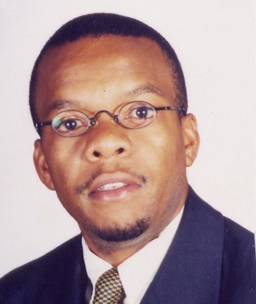
This association is chaired by Richard Mvududu who recently spoke to our African Bureau Editor In Chief Mathew Nyaungwa.
He talked about the challenges facing the fledgling sector and their aspirations among other issues.
Below are the excerpts.
What is the state of diamond beneficiation in Zimbabwe?
The diamond beneficiation in Zimbabwe is still in its infancy. There are a few companies that were registered and licenced to cut and polish diamonds.
The challenges that these companies are facing and others that have already acquired cutting and polishing equipment is the licence fees. The fees are too high such that they actually contribute to the cost of production per carat. The operating costs were $100 per carat.
This makes our product uncompetitive when you compare with international markets like China where they are doing about $15 per carat. In India, we are talking of a production cost of $8-$10 per carat.
So that alone makes our product or exports way expensive.
I understand the fees went up recently, is that so?
Our licencing fee was $20 000 a year but it went up to $100 000 a year. There are, however efforts, that we have been doing by way of engagement with the ministry of mines. We have done a position paper on what we think should be done, and this is really in line with the regional trends.
What was your proposal?
Our proposal was that we should match what Botswana and South Africa are doing. In Botswana they charge you a BWP100 a year for up to 10 years, which is BWP1000, just above $100. That is competitive. If you look at South Africa it does not go beyond R5000 (just above $500) for up to five years.
The tenure is also a problem here, it is just a year. It’s a problem in the sense that you are not in a position to attract meaningful investment, whether it’s local, regional or international.
President Robert Mugabe told the Zimbabwe Diamond Conference last November that the country only managed to polish 0.1 percent of the 2011 diamond output, which I understand was 8.5 million carats. Is that not a bad state?
It is, that’s what the President was referring to and it was in comparison with the 10 percent of the national diamond output that we are supposed to consume annually. So that state of affairs is not acceptable, especially the fact that we are producers, we should be in a position to take advantage of as much beneficiation of our diamonds as opposed to exporting them in raw form.
Should your sector grow, can you say that the 10 percent of the national rough output that you are entitled to will be sustainable?
The government came up with the 10 percent after looking at the regional trends. It is the same case in South Africa. They set up the 10 percent because they know that we don’t have the capacity to consume everything.
Currently, you do not want to say we want to take 100 percent and make a mess out of it. There are capacity issues to deal with. There is workmanship, there is efficient and all that kind of stuff.
So, 10 percent, for a country that wants to beneficiate all of its natural resources as much as it can, is a starting point but it is not enough.
As we grow, I think the law needs to be flexible enough to allow consumption of local players by way of their own efficiency that they would have established and increased from their own systems.
Let’s talk about the quality of diamonds that you are getting from the diamond producers, even though we have established it’s not that much for now.
According to our members who have accessed and participated in these tenders, they are not happy with quality of diamonds they have received from the producers. This 10 percent we are allocated to is of all diamonds coming out of the mines, both industrial and gem quality. Some might assume that our members are failing to consume diamonds available yet the truth will be that they would have rejected the diamonds because they are not of a good quality.
There is need for the producers to pre-sort the diamonds so they can be able to provide the local industry with quality diamonds. Not only sorting they should also be able to clean the diamonds.
Some manufactures have been accused of smuggling diamonds allocated to them for beneficiation. What is your comment on that?
Sometime in 2010-2011 there were such allegations that led to the suspension of diamond cutting and polishing licences by the mines ministry. At that point we had not established our association and we did not have any direct communication with the ministry. So we could not get an official position of what exactly transpired at that particular time. We only read about that in the papers. The best department to give you the facts is the ministry of mines.
Your association consists of how many members?
We have 35 members that are interested in cutting and polishing diamonds.
Are they all licenced to cut and polish diamonds in the country?
We have only seven that have been licenced and 16-18 that had been previously licenced but because of the change of the licencing regime were not able to renew their licences but these are companies that have equipment and are ready to cut and polish diamonds.
Your association was established in 2012. What is it you have achieved to date?
We managed to come together and speak with one voice concerning issues that affect us and that its own advantages. We have come up with a constitution and a code of conduct, which answered the previous problems. We brought sanity within our member companies, as well as engage the parliament portfolio on mining. Under my chairmanship, we have also managed to increase dialogue with the government.
Prior to the discovery of Marange diamond deposits, there was Murowa and River Ranch. Where did the local beneficiating companies get their diamonds from?
Most companies only showed interest in diamond and cutting in 2007 following the discovery of the Marange deposit. Those that were already in operation and involved in diamond jewellery could have accessed their diamonds from South Africa.
What sort of challenges are your members facing?
Pricing of rough diamonds by the Minerals Mining Company of Zimbabwe (MMCZ), the bidding system or procurement procedure is not conducive. We need standards lots. We need to look at the requirements of a polisher and provide their requirements on agreed prices. We want our manufacturers to get diamonds according to their capacity to buy and polish.
Have you lobbied for such a position to the government?
We did and the ministry is yet to come back to us.
Where do you see your association in three years?
We are hoping to have changed the landscape of the local beneficiation sector and also that the government will allow locals to participate in international tenders of diamonds so they are in a position to choose what they want to add value for maximum benefit and trade what they know they are not able to derive maximum benefit through value addition.
We are basically pioneers but we hope that in three years or so, we would have come up with a policy that will guide this sector to [prosperity].
Mathew Nyaungwa, Editor in Chief of the African Bureau, Rough&Polished
