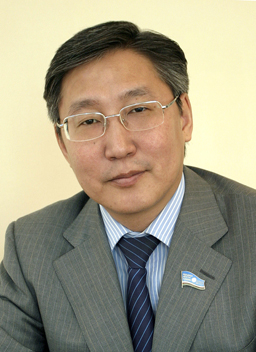
 The Diamond Council under the President of the Republic of Sakha (Yakutia) has been functioning for over ten years. Its current Chairman Nyurgun Timofeev talks about the work and plans of this agency in an exclusive interview to Rough&Polished.
What are the tasks solved by the Diamond Council?
The Diamond Council under the President of the Republic of Sakha (Yakutia) is a collegial body authorized by Yakutia’s law "On State Regulation in the Diamond Industry" to develop and submit proposals shaping the government policy in this area.
The purpose of the Diamond Council is to promote legal, economic and social conditions that contribute to the competitiveness of Yakutia’s diamond industry in the Russian Federation and international markets.
The Diamond Council is empowered by the President of the Republic of Sakha (Yakutia) to tackle the following tasks:
- Prepare drafts of legal documents regulating the activities of diamond cutting companies in the Republic of Sakha (Yakutia), as well as develop suggestions on how to improve the federal regulatory framework governing the activities of the diamond industry in the Russian Federation;
- Develop proposals to improve the state policy governing the industry producing precious stones and precious metals;
- Analyze the efficiency of business entities using rough diamonds;
- Prepare and harmonize proposals to provide rough supplies from ALROSA and other diamond miners to diamond cutting companies operating in Yakutia, including assistance in approving supply contracts between ALROSA and other diamond mining companies and Yakutia’s diamond manufacturers;
- Coordinate the scale of diamond and jewelry manufacturing in team with the local Ministry of Economy and Industrial Policy.
The Diamond Council provides assistance to promote diamond cutting and jewelry business in the Republic of Sakha (Yakutia) in the Russian Federation and international markets.
It adjudicates conflicts and disputes submitted for arbitration by involved parties and diamond industry entities and makes recommendations to resolve them.
The Diamond Council analyzes and discusses the terms and sales of rough diamonds to manufacturers and prepares proposals to the Government of the Republic of Sakha (Yakutia) and ALROSA on sales of rough diamonds to diamond-processing factories located in the territory of the Republic of Sakha (Yakutia), as well as on customers of ALROSA purchasing rough from the Yakutsk Diamond Trading Enterprise (YAPTA), an arm of the United Selling Organization of ALROSA.
What were the results posted by Yakutia’s diamond manufacturers last year?
In 2011, the share of the diamond cutting industry within the entire industrial structure of Yakutia was 3%, whereas in 2012 it was 1.86% due to a drop in demand for diamonds in the world market.
In 2012, Yakutia had 10 operating diamond cutting factories. Of these, two companies - Komdragmetall RS (Ya) and Nyurbinsk Jewelry and Cutting Factory - were in 100% state ownership, while four of them - Choron Diamond, DDK, Sakha Diamond and Sabe – were partially owned by foreign capital.
Yakut diamonds were highly appreciated in the international market.
Yakut diamond cutting companies - EPL Diamond, Yakut Diamond Company and Choron Diamond - are members of the international diamond exchanges in Antwerp and Israel, and according to the Ministry of Industry and Trade, they are the best exporters in the Russian Federation.
In 2012, Yakutia produced U.S. $ 158 million worth of polished diamonds, down 36% to 2011.
Yakut Diamond Company (U.S. $ 57.2 million) is setting pace in diamond manufacturing and has a ramified system of sales. In 2012, the company opened a diamond trading office in Hong Kong and two jewelry showrooms in Moscow.
Sakha Diamond and DDK improved their performance. There are several reasons why they were able to increase their production. These include retooling and modernization, changes in the managerial staff, availability of highly skilled permanent work force and a full-blown distribution system.
The year of 2012 saw an increase in diamond manufacturing: Yakut Diamond Company boosted it from 23% to 36%, DDK - from 8% to 15%, Sakha Diamond - from 0.8% to 5%, which is primarily due to higher purchases of rough diamonds and successful sales of produced polished goods.
The other companies lowered their rate of output growth to the level of 2011.
The decline in the diamond manufacturing dynamics towards the level of polished production in 2011 was caused by:
- The negative conjecture in the world diamond market (more than 60% of Yakut diamonds are sold abroad - in Europe and Asia);
- Increased cost of rough diamonds in 2012 versus to 2011 by 30% due to higher prices for rough diamonds bought from ALROSA, while the cost of polished goods produced by diamond cutting factories remained the same;
- The departure of investing partners from the Yakut market. Companies being short of their own funds to buy rough turned unable to buy it in previous amounts. In 2012, rough purchases of Yakut diamond cutting factories from ALROSA went down by 38% in terms of carats and by 19% in terms of value (U.S. $) compared with 2011.
EPL Diamond, the largest manufacturer of polished diamonds in the Republic of Sakha (Yakutia) has completely switched over to cutting rough diamonds for the needs and development of their own jewelry manufacturing.
Polished diamonds, being export-oriented products, are mainly (60-70%) exported (to Israel, Belgium, Japan, China, United Arab Emirates), while the other part of them is sold in the domestic market for the needs of jewelry factories, as well as through the retail network (certified diamonds). The share of domestic sales in the Republic of Sakha (Yakutia) increased by 2% and reached 8% in 2012.
How many people are employed by diamond cutting factories and how are they training their workforce?
In 2012, the diamond cutting industry saw a decrease in the total number of employees from 486 in 2011 to 419 in 2012.
This is a general trend for all diamond cutting companies except DDK and Sakha Diamond, which boosted their polished production in 2012 and accordingly the number of diamond cutters from 32 to 42 persons (DDK) and from 20 to 27 (Sakha Diamond).
Regular labor force for diamond cutting and jewelry companies in Yakutia is trained by the Ammosov North-Eastern Federal University at the Department of Technology for Precious Metals and Precious Stones, as well by subordinate organizations of the Ministry for Vocational Education, Training and Distribution of the Republic of Sakha (Yakutia), which include Professional Lyceum № 16 of Yakutsk training diamond cutters and the Resource Centre for Development of Vocational Education, an independent agency of the Republic of Sakha (Yakutia) also training diamond cutters.
This approach is called a dual system of education. Graduates find jobs at the factories, which ordered their staff.
At the Resource Centre for Development of Vocational Education students are trained for 6 months at cutting factories and their training program is as close as possible to the real conditions of production, which allows the agency to turn out highly skilled professionals with an assigned labor grade.
For the academic year of 2013-2014, the draft enrolment plan for cutters and jewelers is set at 16-50 students by Professional Lyceum № 16 and 100 students by the Resource Centre.
The educational institutions are training diamond cutters together with the diamond-cutting factories of EPL Diamond and Yakut Diamond Company, which provide their manufacturing facilities for students to undergo practical training and giving them experienced tutors. The mentioned institutions are training workforce at the expense of national budget funds.
Overall, they trained 123 diamond cutters in 2012, including 53 at the Resource Center.
Unfortunately, the labor force stability in companies is very low. Of the 10 students who were trained at Lyceum No. 16 only one remains to work with a company.
Thus, the most beneficial way of training is the dual training - training of future employees directly at manufacturing factories.
The Russian Federation Law on Precious Metals and Precious Stones was amended to liberalize their circulation. How much easier will it make the life for companies operating in Yakutia and engaged in diamond cutting and jewelry manufacturing?
The major factor constraining the growth of polished production in Yakutia and putting Russian diamond manufacturers at a disadvantage towards their foreign counterparts is the imperfect laws and regulations governing the circulation of precious stones, which do not allow Russian diamond manufacturers to use international practices and traditions in the trade and processing of precious stones. The work to liberalize the diamond industry began in 2009 at the suggestion of the Republic of Sakha (Yakutia).
Interaction with federal authorities was carried out within the working group on improving the legal framework governing the diamond industry of the Russian Federation, chaired by Alexander Akhpolov, Director of the Administrative Department of the Russian Federation Ministry of Finance.
The working group included representatives from the Russian Jewelers Guild, Diamond Manufacturers Association of Russia, ALROSA, Smolensk Kristall and the Republic of Sakha (Yakutia).
It received for discussion the proposals filed by the Republic of Sakha (Yakutia) and prepared with the participation of the local Ministry of Industry, Diamond Council under Yakutia’s President, Analytical Center of ALROSA and diamond cutting factories to amend the Russian legislation in the field of subsoil use, diamond cutting, domestic sales of natural rough and polished diamonds, as well as a new draft of Federal Law No. 41-FZ "On Precious Metals and Precious Stones" as of 26.03.1998. The proposals are based on the analytical note "On Problems of Developing the Diamond Industry of Russia", which was previously sent to Vladimir Putin, the then Prime Minister of Russia (dated 24.02.2009 Nos. 01/1-196 and 01/1-199) and to Alexei Kudrin, who at that time was the Deputy Prime Minister and Minister of Finance (No.18-VSH as of 10.01.2008).
It was decided to revise the Federal Law FZ-41 on Precious Metals and Precious Stones in accordance with the above concept.
It was suggested to:
Allow individuals to take part in the circulation of precious stones including semi-precious stones;
Remove the mandatory scrap and waste refining rates, simplify the terms of transportation and storage of valuables. It was also proposed to amend the Criminal Code to include corresponding changes.
Some of these suggestions were taken into account, when the draft law was discussed at the meetings held by Vyacheslav Shtyrov, Deputy Chairman of the Russian Federation Council.
In November 2012, Vyacheslav Shtyrov submitted the bill for approval to the Ministry of Finance.
If you take the final version of the law, it contains no revolutionary changes. Our proposals were not taken into account. The Assay Chamber of Russia was returned its control functions, which means tighter state control.
Could you describe the system of financing and lending to the diamond business and how much efficient it is?
Diamond cutting companies are mainly credited by Almazergienbank operating in Yakutia and also by a branch of Sberbank. Loans are taken both in rubles and foreign currency. The banks do not offer any special terms for lending to the diamond cutting factories in Yakutia. Loans issued in rubles are given at 10.5%-18% and those in foreign currencies at 9%-10%. Given the high cost of loans the Diamond Council has proposed the Government of Sakha (Yakutia) to partially finance the interest rates on credits from the state budget. The authorities also addressed the issue of providing state guarantees for loans to businesses, for which purpose they are creating a pledge fund consisting of property owned by the Republic of Sakha (Yakutia). Presumably, already in 2014 it will be possible to use this mortgage mechanism to help businesses attract credits for further expansion.
As it is known, the time needed for customs clearance of goods shipped by and delivered to diamond cutters and jewelers is very long in Russia compared with other countries, also due to our legislation. What is being done by the Diamond Council in this regard and what has been achieved in this respect?
Part of the proposals submitted by the Republic of Sakha (Yakutia) to liberalize the diamond industry in Russia were taken into consideration in connection with the established customs union between Russia, Belarus and Kazakhstan (in the framework of the Eurasian Economic Community). For example, the period to consider an application for a rough export license from rough handling agents has been set to be 15 working days from the filing date. While exercising state control over precious stones imported into or exported from the customs territory of the Customs Union, the authorities introduced a procedure to check the accuracy of gems classification (instead of sorting), which also reduced delays in filling out shipments.
In addition, import duties for polished goods were reduced from 20% to 15%.
Some time ago it was decided to establish a special economic zone in Yakutia with the participation of the diamond cutting and jewelry industries. When do you think such a zone may really be created?
The decision to establish the Special Economic Zone (SEZ) to produce polished diamonds and jewelry in Yakutsk is being taken at the level of the Russian Federation Government. For our part, we have defined residents of the SEZ and developed a business plan, which was handed over to the Ministry of Economic Development for examination. If there will be a positive decision to establish a special economic zone for diamond and jewelry manufacturing in Yakutsk, diamond and jewelry production will be increased more than two times bringing about up to 2,500 new jobs (if we include auxiliary production 4,000 people may be employed), which will boost tax proceeds 7 times.
Mass media often highlight the situation developed around the VAT on diamond exports, which hinders the performance of companies engaged in this business. What is the situation in this respect in Yakutia?
As for the VAT on rough sold by diamond manufacturing companies, it is really a sore point. In 2011, Yakutia’s Ministry of Industry in team with the Diamond Council prepared a background to introduce amendments to the Tax Code of the Russian Federation to establish a “zero-rated” VAT on rough sales by diamond mining entities in the domestic market. Under the current legislation, mining entities get their VAT refunds only if they sell rough diamonds for export. Elimination of the existing tax imbalance will induce the following positive changes:
1. Mining entities will have a possibility to be reimbursed on VAT taken from domestic diamond sales.
2. Mined and sold rough diamonds will cost less since currently the expenses for VAT reimbursements associated with diamond mining operations are fully incorporated in the cost of diamonds sold in the domestic market. Unfortunately, our proposals were not supported by the Ministry of Finance of Russia.
Starting from 1st January 2010, the authorities put into effect Article 176.1 of the Russian Federation Tax Code, which provides a declarative procedure for VAT refunds from the state budget. The article aims to give taxpayers a possibility to be reimbursed on taxes from the state budget before the end of a desk audit in case the conditions specified in the said article are observed. Some of the businesses use this possibility and indeed the time of their VAT refunds was significantly reduced to 3-4 months. But not all businesses can take advantage of this possibility, because they do not have collaterals to obtain a bank guarantee.
We went the other way. According to the recommendations given by the Diamond Council in 2012, ALROSA allowed Yakutia’s diamond cutting factories to defer VAT payments for a period of 6 months.
In 2013, ALROSA refused to grant VAT deferrals and the Diamond Council is now negotiating this issue.
In what way local diamond manufacturers get their rough supplies?
ALROSA appears to be the main source of rough for diamond cutting factories in Yakutia. Rough diamonds are sold and delivered in Yakutsk by ALROSA’s subsidiary, YAPTA.
Under the new sales policy established by ALROSA, its customers are delivered rough based on their applications. Rough sales take place every month.
ALROSA is selling rough diamonds under long term or one-time contracts. Before signing a contract, companies are required by ALROSA to hand over documents needed to become the diamond miner’s customers. Further, if some company after turning a customer is permanently purchasing rough, it has an opportunity to sign a long term contract that guarantees a possibility to buy rough from ALROSA on a monthly basis, which is necessary for stable operation.
Currently, ALROSA has long-term contracts signed with DDK, EPL Diamond and Yakut Diamond Company. On the recommendation of the Diamond Council long term contracts are to be signed with Sakha Diamond and Komdragmetall RS (Ya). On the recommendation of the Diamond Council last February rough sales were resumed to Choron Diamond, which gave the company a chance to begin production of polished diamonds.
The main problems in providing factories with rough diamonds are associated with a constant rise in prices for rough, the ensuing VAT levied on its purchase and the shortage of sufficient working capital for rough purchases suffered by most factories.
Competition in the field of diamond cutting is high and much depends on the level of technical equipment. What is the situation in this respect at the local polishing facilities?
The Government of the Republic of Sakha (Yakutia) is rendering support not only in training labor force for the diamond cutting industry, but also in re-tooling factories and upgrading the existing production facilities.
Over the last 5 years, the machine pools of the factories established by foreign companies (DDK, Choron Diamond, Diamond Sakha) have been extensively modernized. They installed new cutting and roughing machines (both standard and automatic) and acquired modern equipment for marking, sawing and quality control run by the latest software versions.
Of the Yakut companies, modernization was performed by EPL Diamond and Komdragmetall RS (Ya). They purchased a Sarin laser marking machine and also Diamax and DiaMension 30 optical scanning devices including the Advisor, Diavision Pro and Print software; a DiaMension HD optical scanner together with the Advisor, Diavision Pro and Print software; a DiaMark Z optical scanning and laser diamonds marking machine including the Advi software application.
Upgrading was made only for diamond marking and sawing operations (scanning and laser sawing). The diamond cutting, roughing and sawing machinery pool remained at the previous level (of the 1990s).
DDK and Sakha Diamond appear to be the best equipped in terms of processing tools.
Pursuant to Resolution of the Government of the Republic of Sakha (Yakutia) No. 573 issued on 24.11.2011 "On Technological Audit of the Production Sectors in the Republic of Sakha (Yakutia)" local diamond cutting factories were audited for the availability of machinery and its compliance with the modern requirements.
The audit was aimed to assist in modernizing the equipment and introducing innovative technologies at Yakutia’s production facilities.
The audit was carried out at Komdragmetall RS (Ya) (diamond cutting workshop), EPL Diamond and Sakha Diamond.
The data obtained from these companies were handed over to the State Committee for Science and Innovation Policy of the Republic of Sakha (Yakutia) responsible for carrying out the technological audit to include the above-mentioned enterprises into the innovation program developed by the State Committee to modernize Yakutia’s production facilities.
It is necessary to modernize machinery on a continuous basis as outdated equipment affects the economy of a business increasing production costs, reducing the level of skills and bearing down on production quality and cost.
What is the role played by the Diamond Council in determining polished output?
The most direct. Every year, to plan the amount of polished goods to be produced by the industry and its need in rough diamonds for this purpose diamond manufacturers defend their production programs before the Interdepartmental Commission, which also includes the Chairman and Secretary of the Diamond Council besides the representatives of the Yakut Government. Yakut Diamond Company, EPL Diamond, DDK, Komdragmetall RS (Ya), Kristall-99 and Sakha Diamond defended their production programs for 2013. Proceeding from this, the Ministry of Economy and Industrial Policy of Sakha (Yakutia) defined the volume of diamonds to be produced in 2013 at $173.1 million, up 13% to 2012.
The Diamond Council monitors the monthly performance within the production programs set by diamond manufacturers giving recommendations to eliminate underruns, if they occur. Negotiations are under way with ALROSA not only to provide rough to manufacturers, but also to define its assortment. All this has a positive effect on the growth of diamond production in the republic, creation of new jobs and tax revenues to the treasury.
What are the priorities seen by the Diamond Council in 2013?
The priorities in 2013 are as follows:
1. Yakutia’s manufacturers are to fulfill their 2013 production plans for polished diamonds driving their output to $ 173 million.
2. We shall continue our work with the federal government to accept the legislative initiatives from the Republic of Sakha (Yakutia) to liberalize the legal framework for the diamond industry of the Russian Federation.
In addition, following the assignment of Vladimir Putin given on November 29, 2012 to amend the legislation of the Russian Federation and include processing of raw materials, with the exception of hydrocarbons, in the permitted activities of businesses operating in special economic zones, we shall continue our work to create a special economic zone of industrial type to produce polished diamonds and jewelry in the territory of the Republic of Sakha (Yakutia) and to open a specialized customs post (division) in the City of Yakutsk.
3. We shall also strive to attract investments to the diamond industry.
4. Our task is to facilitate the use of 70% of rough acquired from ALROSA’s YAPTA, which is cost-effective in processing, at Yakutia’s own diamond cutting factories.
Vladimir Malakhov, Rough&Polished
