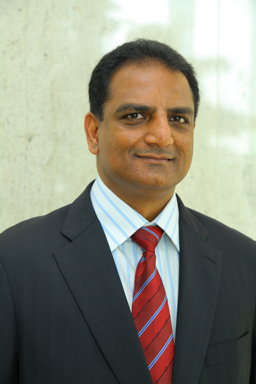
 Mr. Vipul P Shah, CEO & Managing Director of Asian Star Co. Ltd., is a visionary with enriched experience in the diamond industry. He is well traveled and has thorough knowledge of current business trends prevailing worldwide as well as deep insight of future needs of the diamond market. His expertise in financial matters remains undisputed.
He has been instrumental in establishing his Company’s jewellery business and global distribution network, currently one of the best in the industry. Under his guidance, Asian Star Co. Ltd. has attained the status of being one of India’s leading diamantaires.
He has also been an active spokesperson and an ardent supporter of all activities to promote the Indian Diamond Industry. He has been the Convener of the Banking, Insurance and Taxation Committee (BITC) of GJEPC. He is also a Member of the Committee of Administration since the last two years and has been taking active part in various matters of GJEPC.
Here, Mr. Vipul Shah, Chairman of the Gem & Jewellery Export Promotion Council, India, shares his views about the Indian gem and jewellery industry and other related matters.
Despite the global slowdown, rough supply shortage and many other hurdles, India’s G&J industry has performed well last fiscal. What’s your overview for the fiscal 2013-14?
The outlook for 2013-14 is positive with an estimated growth of 12 to 15 percent in the overall gems and jewellery exports in the current fiscal. The US and Japanese jewellery markets will bounce back with an estimated 5% growth while China will remain stable at 10% growth. Other proposals in the offing for the year 2013-14 include regulatory measures such as introduction of consignment imports of diamonds, start of rough diamond tenders and auctions in India, formation of a committee for looking into lending norms for banks to the diamond and jewellery sector as well as commissioning of a study on ECIB covers by ECGC to banks.
What are the challenges faced by the industry currently? What steps should be taken to remain stable as well as grow further?
Challenges being faced by the industry are as follows:
- The non-availability of gold to exporters as the RBI has put restriction on banks on importing and supplying gold on consignment basis
- Imposition of tolerance level for duty free re-import of diamonds sent to accredited laboratories for certification and grading
- The difficulty arisen with regards to Circular No.59 dated May 06, 2011 of RBI limiting the Supplier’s Credit to 90 days is also affecting both imports and exports of diamonds from the sector
- Hike in import duty on gold and non-revision of drawback rates for gold and silver is also hampering the industry
- Non issuance of notification on allowance of consignment import of diamonds is depriving the industry players to avail the benefits of this measure which was announced in June 2012
The Council has proposed the following steps to the Government of India for the growth of the industry:
- Urgent intervention of the Government of India to ensure the availability of gold to the export community
- Removal of condition of tolerance level for diamonds being sent to overseas accredited laboratories for certification/grading
- Clarification by RBI that Circular No.59 dated May 06, 2011 is only applicable for transactions wherein finance is extended by way of buyer’s credit/ supplier credit and there is interest element involved
- Revision of duty drawback rates for both gold and silver
Your views on overseas markets at present, considering that slowdown still persists in many countries around the world.
The global economy is looking up and so is the gem and jewellery industry. The slowdown in the USA and Europe has made Indian exporters explore new avenues which are rapidly emerging as potential markets. The demand from countries such as Russia, Brazil, the Far East is growing strongly. These are the evolving markets which provide good scope for business expansion to Indian G & J exporters.
While industry members appreciate Council’s numerous promotional efforts, any new initiatives in the offing to promote Indian G&J industry overseas?
Council in its endeavor to promote Indian G & J industry conducts various promotional activities at the international level. Apart from hosting the India Pavilion at major International Trade Fairs we also conduct International Buyer-Seller Meets not only for diamonds but also for colored gemstones and jewellery. We recently concluded successfully the India-China Buyer-Seller Meet in Jaipur. Our Indo-Australia Jewellery Conclave is another step towards tapping new markets for India. The India International Jewellery Week is the Council’s unique initiative to showcase Indian prowess in designing and producing world class exquisite jewellery to the global market thereby reinstating India’s position as the global jewellery hub. We make continuous efforts to generate enough demand for Indian gems and jewellery in established and emerging markets which would in turn benefit our members.
IIJW has been a success in Mumbai and Delhi. Are there any plans to take it to other cities too? Will unknown designers be promoted in the coming shows?
After having completed three successful editions in Mumbai, IIJW was launched in New Delhi for the first time in April this year. The show was organized to provide retailers, manufacturers and designers from Northern India with their own exclusive platform to showcase their collection. It was aimed to bring the show closer to the elite Delhi society.
The main objective of IIJW has always been to promote and provide strong platform to jewellery designers including budding designers. We have a slot every day during the show exclusively to showcase budding designers’ pieces. Apart from that, we also encourage participation of institutes like GIA and IGI whose students display their exemplary skills and fresh ideas in jewellery designing.
Will the ‘Indo-Australia Jewellery conclave' be a precedent, given that Australia is a small market and which other untapped markets are being looked at by the Council?
The Indo-Australia Jewellery Conclave is an exclusive business summit to be held with a view to bring together eminent members of the gem and jewellery industries of India and Australia. The conclave aims to bring key business decision-makers from the best of the Australian Jewellery retail sector to meet with their Indian jewellery manufacturing peers in an effort to develop better understanding at a cultural, business and professional level. As mentioned earlier, we as an EPC are continuously in process of tapping new markets and strengthening our hold in the developed markets for Indian exporters.
It seems banks have become extra cautious and tight-fisted when financing clients of late. What is the industry’s equation now with lending banks?
In its endeavor for better interaction and understanding between the trade and the banking sector, the Council organized a banking summit on ‘Emerging Trends in Financing of the Indian Diamond & Jewellery Sector’ on 3rd April, 2013 in Mumbai with the senior officials of RBI and leading banks which are providing finance to the gem and jewellery industry, along with the heads of credit institutions and the chief executives, directors and financial officers of the top exporters of the Indian diamond industry. Most of the bankers who attended the seminar stressed upon the need to expand exposure in the diamond jewellery sector while at the same time following prudent risk management norms.
The main aim of the seminar was to build confidence amongst the lender and the client, the banking industry and the financial institution and the gems and jewellery industry at large so that the work which has seen India reach the world leader status in diamonds and jewellery continue unhindered with a few black sheep take advantage of the loopholes, if any.
Blame it on the global slowdown/stretching of receivables etc... But default to lending banks is making adverse news and thus spoiling image of the industry. Your comments, please.
Indian bankers’ trust in India’s diamond sector has been badly shaken by the certain debt dispute in recent times. There is an ill-feeling among them that banks are left with bad debts at the end.
The image of India’s entire diamond industry was at stake because of the ‘wrong-doings’ of some handful of defaulters. Recent price fluctuations, global uncertainties and few credit events have hurt the industry and created a disconnect between the industry and its bankers.
The Council took an initiative to ‘heal injuries’ inflicted by such defaulters on banking sector and re-establish its faith in India’s diamond industry by organizing a banking symposium on “Emerging Trends in Financing of Indian Diamond and Jewellery Sector” in Mumbai.
Indian industry has weathered many a storm, but this current ‘rough drought’ seems to be alarming. What plans do you think India should have to source rough to feed its huge manufacturing facilities?
The Council has long been requesting the Government of India to raise and discuss the issue of availability of raw materials during the Inter-Governmental Meeting with various countries especially with African nations for the direct procurement of rough diamonds.
The Ministry of Commerce and Industry had constituted a task group for the diamond sector to suggest measures to increase the diamond trade and to make India an international trading hub for rough diamonds. One of the recommendations for the direct procurement of rough diamonds was as below:
Government of India can help in securing direct supplies from smaller African producing nations by
- Establishing direct relationships with countries through trade missions involving bodies like the GJEPC
- Creating a mechanism, like China, to invest into mining blocks
- Securing direct rough allocations through trade treaties and barter
- Procuring direct run of mine product where possible
What is India’s status with Zimbabwe in terms of rough sourcing or other business deals?
Indian firms are interested in a long term buying agreement for direct sourcing of rough diamonds from Zimbabwe in the wake of resolution of the pending issue in KPCS. At present there is no direct import of rough diamonds into India from Zimbabwe as dollar transactions with regard to purchasing rough diamonds from Zimbabwe has been banned under the OFAC-US sanction. However, the diamonds are imported through the trading centers as India has the expertise to cut and polish Zimbabwe diamonds. All the roughs from Zimbabwe are presently being routed through Dubai. This ban on dollar transactions is proving to be a big hindrance in our bilateral trade relationships with Zimbabwe.
What is India’s present arrangement for rough supply with Russian mining companies? Any new deals signed for continuous supply in view of future needs?
The Council has always been requesting the Ministry to take up the issue of direct procurement of roughs from the Alrosa Diamond Mining Company, Russia and requesting them to enter into long term supply contracts with more Indian firms to increase the supply of rough to the manufacturing units in India.
In the year 2011-12, India had imported rough diamonds worth US$ 688 million from Russia which was the 74% of total imports from other mining/rough producing countries by India. Most of the rough diamond import was through the long term contracts and auctions by Alrosa.
Prices are said to be going haywire in all consumer markets worldwide because of China’s entry. How is India equipped to face this situation?
Both India and China produce similar kinds of goods in terms of their export basket to the consumer markets. China has highly skilled labor and a comparative advantage in the assembly stage of technology. India has to improve its manufacturing prowess.
We believe that the price of Chinese products in near future will be more realistic as IPR (intellectual property rights) is enforced. Also though China has maintained the price of its goods as static to capture large share in world volumes but it is sooner or later going to face the rising cost of raw materials.
It is time the Government of India needs to examine its own policies. All fallacies do not lie with the manufacturing sector.
1. Indian manufacturers do not get adequate infrastructure.
2. They have to pay high level of taxes.
Providing facilities for aforesaid issues will strengthen the Indian products in the international market. We personally believe that in 2050 the trade relations between India and China will be the most important economic relationship in the world and these countries will drive the growth of the entire world leaving far behind the Giant four.
Your take on lab grown diamonds vs. natural diamonds. Will consumer confidence take a beating if the large amounts of lab grown that are pushed into the market lead to misuse by unscrupulous jewellers?
The Council is not against the business of lab grown diamonds in the international market. Our only concern is that proper nomenclature and declaration should be done at the time of selling the same to the consumer to build and retain their confidence in the diamond industry. We strongly feel that there should be zero tolerance if anyone tries to pass a synthetic diamond as a natural one. The Council in associations with other trade bodies has formed a Monitoring Committee for Natural Diamonds which is empowered to act as a watchdog and take appropriate action against those knowingly passing undisclosed lab-made diamonds.
The Indian domestic market is doing pretty well. Your views, please.
In the last few years, on the other hand, the Indian domestic market has shown very promising signs, evident from the stupendous growth and increase in penetration of the brands and organized retail across the categories. I believe that the Indian market holds even brighter potential for the gems and jewellery sector.
The domestic industry can be put on accelerated growth path provided the industry, the government and other stakeholders plan and act on the initiatives required by the transforming market. In the process, the industry shall continue to generate large amounts of foreign exchange and employment to the Indian socio-economic fabric.
How do you rate the debut Show of IGJF (India Gem & Jewellery Fair) in Delhi in April this year? Is there room for changes in the format? And when/where will the next Show be held?
Council organized its first business-to-consumer event, India Gems & Jewellery Fair (IGJF) in New Delhi in association with ITPO in April. It aimed at bringing the jewellery trade, which comprises of retailers, retail chains, and jewellery brands from across the country directly in contact with the end consumer, in a bid to boost the jewellery business in the country.
The response that the show received has been very encouraging. It was through this show that consumers could explore different kinds of gems & jewellery at one venue. It was an ideal platform for Northern retailers to exhibit their products as Delhi is a very promising market. We are in process of gathering feedback from the exhibitors & suitable changes, if any will made to the show to make it more convenient for consumers & rewarding for the participants. We plan to organize the show next year during same time as done in this year. However, we are yet to finalise the dates.
Aruna Gaitonde, Rough&Polished, Mumbai
