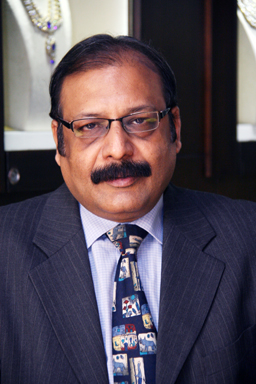
 Gitanjali Group is the only fully integrated jewelry company in the world that operates in all segments of the value chain - from the extraction of diamonds to their cutting and polishing, jewelry making and brand development of gold and diamond goods. The Group, being also a huge online retailer, commands more than 3,000 sales outlets worldwide. Sanjeev Agarwal, CEO, Gitanjali Export Corporation Ltd., gave this exclusive interview to Rough&Polished.
Please tell us a little bit about the role Gitanjali Exports Corporation plays in Gitanjali Group. What kind of business activities does your company conduct?
Gitanjali Exports Corporation is a wholly owned subsidiary of Gitanjali Group and is primarily engaged in business activity in the export sector for both diamonds and jewellery, particularly the former which is the traditional business of the group. It has a steady flow of rough supplies from all the major mining companies including DTC, ALROSA, Rio Tinto and BHP Billiton, and sells polished directly as well as to other jewellery manufacturing operations of the Group.
Last October Gitanjali received the Niryat Shree Gold Award for Top Exporter in Gems & Jewellery Sector. What has been Gitanjali Exports Corporation's contribution to it?
We received the award from FIEO for being the largest exporter in the diamond/jewellery category for the FY 12. Total turnover of Gitanjali Group in FY 2012 (April 1, 2011 to March 31, 2012) was INR 12,500 crore (US $2.5 bn) with Gitanjali Exports contributing INR 1,833 crore (US $370 mln).
In 2011 Gitanjali launched the first Gold and Diamond ATM in the world. Has this business been successful so far?
Gitanjali is constantly at the forefront of innovation and successfully launched the world's first Gold & Diamond ATM thus giving one more retail channel for consumers to purchase our products. The ATM concept has been very well received particularly in locations like temples, luxury malls, airports etc. We expect the business to grow significantly in the next few years.
In your opinion, what is the current trend in prices for rough and polished diamonds in your region?
For the diamond industry price trends are normally determined by global factors. We see a combination of strong demand from emerging markets compensating for the slowdown in some of the traditional markets, ensuring that prices will remain strong for the next few years. Demand for diamonds from India and China is expected to grow significantly with increase in GDP and income levels. Similarly with most of the existing mines seeing a plateauing of production and no major new mines having been discovered, shortages of rough will keep prices of the raw material high.
Is it possible to forecast prices for rough or polished diamonds?
While micro level forecasting may be difficult, broad price trends can and have been successfully identified. Studies by business consultancies like Bain & Co (published in association with the Antwerp World Diamond Centre) and KPMG (published in association with The Gem & Jewellery Export Promotion Council) have clearly identified that the movement of rough and polished prices will be in an upward trajectory over the medium and long term. Any short term price corrections may be due to immediate or local factors and will not affect the long term view.
How do you feel about the growing diamond market in China? Is China (including Hong Kong) a competitor or ally for India when it comes to production and distribution of polished diamonds and diamond jewelry?
Global studies by reputed consultancies like Bain & Co and KPMG have clearly established that India and China are the key markets of the future. These two countries together will soon equal and even outstrip demand for diamonds in the US. When it comes to manufacturing of diamonds, it is also clear that the cutting costs in Chinese factories are somewhat higher than in India, but the quality is very good. Close collaboration between India and China can help the diamond industries of both countries consolidate their strengths.
How is the relocation of the Diamond Trading Company (DTC) to Botswana going to affect your business? Do you support this move?
We have been strong supporters of the concept of beneficiation and investments being made in the diamond producing countries also. We support the shift of DTC's major offices to Botswana as it will help in accelerating the development and other related industries in Botswana.
What was your volume of export of cut and polished diamonds in 2012? Can you give us an estimate of how much it is going to grow this year?
In FY'12 (April 1, 2011 to March 31, 2012), the revenue from this category was INR 5455 crs (US $1.09 bn). We have been seeing a CAGR of about 20% over the last three years in export of cut and polished diamonds and believe that we will broadly see growth in the same proportion this year as well.
As far as I understand, diamond engagement rings are still very new to people in India. Do you think that they will eventually become more popular than the traditional gold wedding rings in your country?
Gold is deeply rooted in Indian tradition, especially for weddings and festive occasions, but diamond studded jewellery has become a significant force over the last decade and has also entered the bridal market in a big way. Diamonds are more popular among the elites and upper-middle classes who are exposed to global trends and current fashions and styles. However, they still constitute a relatively small segment of the overall jewellery market.
What are some of the most important goals that you set for your company in the year of 2013?
Gitanjali Group is the only fully integrated jewellery company in the world with presence across the entire value chain from sourcing of rough diamonds to cutting and polishing diamonds, manufacturing jewellery, developing brands of gold and diamonds and also retailing large network of more than 3000 points of sale.
After having developed a strong base and market share in the domestic jewellery market, our focus going forward is to develop a equally strong jewellery franchise in major jewellery markets globally. We have already developed a strong retail presence in the U.S. with 104 stores under Samuel Jewelers Inc. along with fast moving presence in Japan, Middle East, China and SAARC countries.
Olga Patseva, Editor in Chief of the American Bureau, Rough&Polished
