 Gassan Diamonds is one of the most successful examples of family-run diamond companies. It was established by Samuel Gassan in the heart of Amsterdam’s diamond district in 1945, just after the end of Second World War. Since then, Gassan has built a solid reputation for impeccable diamond polishing. Today Gassan is located in a monumental diamond factory built in 1897 along Amsterdam’s canals, with a large parking site in front of the building and a quay at the back for the canal boats.
A tour to Gassan diamonds is a must do for tourists visiting the Netherlands. There are few opportunities in the world to walk inside a fully-operating diamond polishing laboratory. Hundreds of people visit the facilities and observe diamond polishers and goldsmiths producing fine jewellery from raw material. Experienced staff guides visitors through all the processes of the diamond chain, including the possibility to take a closer look to stones of different size, colour, clarity and cut.
Gassan is not a mere touristic attraction, though. Its polishers are among the most skilled in the business and its patented Gassan 121-facets cut renowned all over the world. The company boasts cooperation agreements with top-level jewellery firms, such as Damiani and Pasquale Bruni, and even created its in-house fully equipped lab for diamond grading and certification.
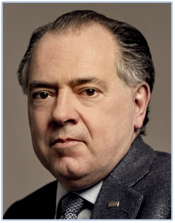
Rough & Polished discussed with Mr Benno Leeser, grandson of Samuel Gassan and president of the company since 1984, about the history of the company, its strategies and the outlook for the diamond business in Europe and Asia.
Could we start with a short presentation of Gassan Diamonds and its history?
Gassan was founded by my grandfather, who worked as a trainee in this building from 1924 to 1936. Then the crisis came and during the crisis people said that you could live without diamonds so he went to sell advertisements. Then in 1942 he went to Switzerland and in 1945 he finally founded Gassan Diamonds. First we had an office in the Amsterdam Diamond Exchange. My grandfather also did business with Scandinavia, Switzerland, Germany and some Americans. Buyers would come to his office and he would sell them a diamond and open a bottle of Champagne. Over the years we made this principle of making customers at ease more professional, and now we also have shops in Amsterdam, at London City Airport and Changi Airport in Singapore.
Gassan was recently named best family business in the Netherlands. How important is tradition in such an historical company?
The research was conducted by KPMG and we were selected against 500 other companies because of our approach to innovation, our ability to turn bad figures into positive figures, our international perspective, because of the way we work as a family and finally the way we interact with bankers and suppliers. We are very proud of this prize, as it gives a really good image of our work.
On the other hand we think that we are successful because our work has always been based on three aspects: quality, quality, quality, optimal service level and being a 100% family owned company.
As you said, the other face of Gassan is innovation: The 121 facets cut is a trademark of Gassan. Could you tell us a bit more about it and about the role innovation plays at Gassan?
Innovation for us is really important. We have Gassan 121 which is patented worldwide. Almost 60% of the diamonds we sell are Gassan 121. A standard brilliant cut diamond has 57 facets and we polish them with an extra 64, which gives it more brilliance.
We also have our own jewellery, designed by my daughter Debora. It’s called Choices by DL. The idea is that you buy one piece of jewellery and, whenever you want, you can change the stone on it. We call it a jewellery wardrobe in a box, as you can adjust your ring, pendant, bracelet or earrings to the clothes you wear, every day.
The diamond business is notoriously secretive, and yet here we are in a factory and museum open to the public. A visit to this place is suggested in many tour guides of Amsterdam...
What we do with tourists is making diamonds open to them; we try to take away the secret from diamonds by providing explanations and education.
We made this more professional during the years and last year was a record one, when we were visited by 370.000 tourists. In the factory we speak 27 different languages, and we receive tourists in their own language. We are open 365 days a year and we start by explaining a little bit about were diamonds come from, the polishing process, and then we give an explanation on how their value is estimated and the 4Cs, carat, colour, clarity, cut.
And do you think you are succeeding in doing that?
I am convinced we are, because the satisfied faces of visitors at the end of the tour and the many pictures they take of this beautiful historical building mean that the trip was worthwhile.
What are the perspectives for branded diamonds in the business? Do people care about them?
What I can say is that if you put a brilliant and a Gassan 121 diamond on the table, people would see the difference because there is more fire in the Gassan 121. Branding is getting more and more important in the world both for jewellers and diamond producers and in my opinion we are doing a beautiful job in promoting our brand.
How important is ethics in the choice of suppliers for Gassan diamonds?
It is unbelievably important. We even state in our invoices that our diamonds are non-conflict.
What are the challenges faced by the industry currently?
The most important challenge is keeping quality high and innovating continuously.
What is your view about the role of Europe as a trade, cutting and polishing centre? Is it doomed to decline?
No, it is not. Of course small companies have problems in polishing small diamonds because labour cost is expensive compared to countries like India or China. But if you are making something unique, like our Gassan 121, you can keep doing profitable business.
What range of carats do you work on?
Gassan 121 usually starts from .30 on.
And finally, what is your view on the growing Asian market?
We have a strong interest in South-East Asia. Changi Airport in Singapore as an example is an important hub, just like Shanghai or Schiphol in the Netherlands. The relations we are entertaining with Asian markets are great and we very much like their mentality.
Matteo Butera, Rough&Polished, from Amsterdam
