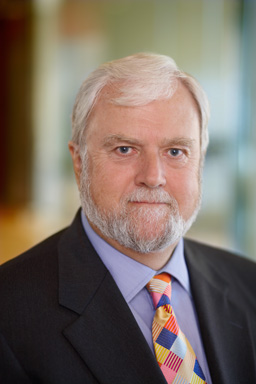
 Robert Gannicott, Chairman & CEO of Dominion Diamond Corporation gave this exclusive interview to Rough&Polished.
When do you think we are going to see the long-predicted gap in supply/demand of diamonds? In the next few years or decades?
It’s hard to predict, but most public studies to date indicate the gap in supply of rough diamonds and the demand for polished diamonds starting soon. In the recent past, we have seen shortages of diamonds in certain categories but even if all the mining projects that hope to come on stream in the next few years actually do so, (and that is by no means certain); the industry hits an inflection point in the supply in about 2017-2018, from when supply in carat terms actually falls moving forward. Of course, many of the world’s major diamond mines are moving towards the end of their productive lives. New discoveries generally take between seven to 10 years to reach production and currently no significant new supply of diamonds is expected to reach world markets over the next 10 years.
What is your current sales and corporate development strategy as a pure-play diamond mining company?
We started immediately initiatives on developing the Jay-Cardinal Pipe, which is one of the largest diamondiferous resources in North America. The Jay pipe is a resource where drilling to date has established 78 million carats of indicated resource and 13 million carats of inferred resource. The Jay-Cardinal Project is the cornerstone of Dominion Diamond Corporation’s strategy for a long-term, sustainable Canadian diamonds business. In itself, the Jay-Cardinal Project has the potential to extend the operating life of the Ekati Diamond Mine in the order of 10 to 20 years beyond the currently scheduled closure in 2019.
The project schedule is designed to provide uninterrupted operation of the Ekati Mine. This is necessary to avoid the mine shutting down – with all of the negative consequences on jobs, spending and support of Northern communities – in 2019 as is currently planned. This means that mining of the Jay and Cardinal open pits needs to be in production by 2019. We look forward to bringing the Jay Pipe engineering and economics up to prefeasibility and, therefore, reserve status level over the coming months. We have recently filed a Project Development report with the Wek’eezhii Land and Water Board as part of the first step in the permitting process.
With regard to rough diamond sales, we are merging the Diavik and Ekati productions together to our client-focused system of 10 sales per year. We've been talking to our clients about the potential for long-term contractual arrangements, based on guaranteeing a minimum supply in terms of carats and pricing the goods according to our current pricing methodology for Diavik. We would also hold tenders at regular intervals to establish market levels.
With the takeover of BHP's diamond interests, Dominion Diamond Corp. now controls the output of two of the world's most valuable diamond mines, Ekati and Diavik. Meantime, reports have it that Canada may yet discover new diamond fields. Do you explore for such an opportunity?
We've had a successful start to our own exploration joint venture program with North Arrow Minerals, situated on a large property to the southwest of Diavik and on trend with the Jay, Cardinal, Misery, Lynx and Diavik kimberlite pipes. The exploration program is on-going but has already identified a series of diamond indicator mineral anomalies in basal till that have no currently known source. It will be year-end before all of the laboratory results are in hand, but we foresee a program of follow-up till sample drilling and some geophysics starting in the early spring. It is still early days for this program, but a good start.
What kind of new acquisitions in the diamond mining sector you think you might be interested in?
We are interested in growth, but not just for the sake of getting more diamonds. We only look at projects where there is a value add to our shareholders. We look at all diamond projects but we are very focused on Canada and the Northwest Territories. This is place that we know, the place we belong, the place we understand.
Being the third biggest producer of rough after Alrosa and De Beers, do you intend to overtake them and to become the number one diamond mining company?
No, while we are the fourth largest producer, we are not the same scale as De Beers nor Alrosa.
Dominion Diamond operates in a fragile ecological environment, and sometimes has to deal with the indigenous population. How do you manage your relations with local authorities in Canada in this respect?
Dominion Diamond’s roots reach back to the original discovery of Canadian diamonds in the 1990’s. We have well-established relationships with local communities and regional aboriginal organizations, and it is our commitment to communicate with these communities regularly.
An official visit of the Dominion Diamond Marketing Corporation to Israel in August has been in the news quite a bit lately boosted by the Israel Diamond Exchange announcement that “Dominion scouts Israel diamond industry for customer base”. Are you seeking to add Israeli firms to your customer list? Can you share what strategic plans you have with Israel?
We have an on-going tender in Antwerp, and have invited 10 to 12 specialist Israeli manufacturers to participate in the tender. Israel has a lot to offer. Some of the very best fancy shape manufacturers are based in Tel-Aviv.
Are you interested in building Dominion’s own diamond brand like De Beers’ Forevermark? Do you plan any other branding initiatives for Dominion Diamond Corporation in the future? By the way, we really like your new red maple leaf logo.
Thank-you for the compliment on our logo.
Dominion runs the CanadaMark diamond program, which is a strategic initiative to guarantee the integrity of the supply chain for Canadian diamonds from mine to retail, and give the end consumer of diamond jewelry confidence in the origin, quality and history of their polished diamond.
A CanadaMark diamond signifies that the polished diamond was mined in Canada, is completely natural (in that it has not been treated in any way with lasers to lighten dark inclusions, fracture-filled to mask inclusions or subjected to high pressure and high temperature (HPHT) in order to “improve” the colour), and meets the Company’s exacting standards for colour, clarity, symmetry and finish.
Every CanadaMark diamond is carefully tracked, starting at the mine site and then, in an unbroken chain, through every stage of cleaning, sorting and polishing. Finished, polished diamonds are given a unique serial number, which is laser engraved on the diamond’s girdle.
As we are a diamond producer, CanadaMark is intended to support other branding programs that are owned and managed by brand retailers and manufactures who are licensees and customers of licensees of the CanadaMark program.
In your opinion, is it likely that rough diamond prices will rise above the peak of 2011 within the next two years driven by growing demand in China and India?
For the moment, we do not foresee the price of rough diamond rising above the peak prices of 2011, as global economies are currently not as buoyant with the exception of the US. The US market does not buy the entire range of the polished market. The top end, which is high-end value, of polished is usually consumed by China, India, Far East, and Europe. Growth in all of these economies is softer than it was in 2011.
In the first half of the year, there was good demand for diamond Jewellery in India and China. Since the devaluation of the Indian Rupee versus the US dollar in the last 5 months, demand in India has softened. We expect that the stabilization of the Indian Rupee, should help to stimulate demand.
With the recent release of quarterly figures by the major Chinese jewelry retailers, it seems the demand for diamond jewelry is improving in Hong Kong and greater China.
How do you evaluate the trends in the diamond market in the short and long terms in general?
We expect rough diamond prices to be flat for the rest of the year, but then pick up again depending on economic conditions in the US, which appear to be improving, and China and India (as stated above).
Olga Patseva, Editor in Chief of the American Bureau, Rough&Polished
