 The Israel Diamond Exchange (IDE) is believed to be created on December 8, 1937. This was the day, when the future state of Israel organized its first commercial business in buying and selling diamonds.
Today, the Israel Diamond Exchange is a commercial complex located in four buildings in the Tel Aviv suburb of Ramat Gan. The diamond exchange complex includes an exhibition and sales area, offices of diamond manufacturers and diamond processing enterprises, the diamond museum of Harry Oppenheimer, jewelry shops, as well as representative offices of banks and post offices.
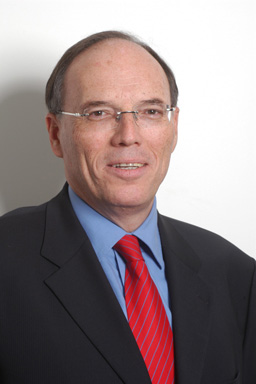
Shmuel Schnitzer, the new IDE President, in an exclusive interview to Rough&Polished shared his vision of today's diamond industry and trade in Israel and described the situation in the world diamond market.
What is the position of Israel’s diamond industry and trade in the world diamond market, and where is Israel heading?
As may you know, I have just begun my term as the new IDE president. My motivation to take the reins of the IDE once again was and remains to try and bring about change in the way the Israel diamond industry and trade operates in the global market.
Israel is one of the world’s leading diamond exporters. It looks back on a short but rich history that includes the creation of an industry in a relatively young state that had – and still has – few resources. While during the past years, we have been blessed with the discovery of impressive marine reserves of natural gas, rough diamonds never have been found – and will not be found – in Israel. Therefore, the Israel diamond industry, which was founded in turbulent times and developed in country that during the past seven decades has survived seven wars, is a mere miracle. Israel is a leader in decision making and manufacturing technology, and has at the same time become a leader in a vast number of niche products that are in high demand in the international jewelry industry. In addition to high quality round stones, we’re the world number one supplier for fancy shapes and precision cuts, servicing a huge, global clientele. We have enjoyed the boost of our Israeli high tech industry and employ a wide variety of IT tools to advance Israeli diamonds in the international market place. Our four-building diamond exchange complex remains the most secure and advanced diamond trading center in the world.
Of course, the economic crisis that hit in 2008 has not bypassed us. But like in earlier instances, caused by war or by the global economy, our industry has shown a remarkable penchant toward innovation. During the late 1990s, when I was serving as IDE president for the first time, we already urged out members not to put all their “eggs in a single basket,” i.e. we encouraged them not to only look at the US market, but also to explore the markets in Asia. Today, close to 40 percent of our polished exports are destined to Asia, and the numbers keeps improving. Naturally, we still very active on the American market as the Israeli manufacturers and traders have built long-term and successful business relationships with partners in the downstream market in North America.
Was there any shift in the trade between Israeli diamond suppliers and Chinese buyers? Many hopes were pinned on China and India. Do you think that is still the case?
Doing business in Asia involves a learning process. And that process can be long an arduous. For us Israeli, it has been a gradual process. We first came to China to find local partners and establish joint venture diamond cutting plants. Nobody does it better than the Chinese and these jv’s have been very successful! Then, we also discovered the Chinese jewelry manufacturing and retail markets, and with that the Chinese people’s huge appetite for diamonds and diamond jewellery.
Often, these processes developed in a parallel fashion. There are several Israeli companies that with the establishment of cutting plants in China, also partnered with local jewelry manufacturers and even established retail jewelry operations on Mainland China.
As to the amount of business that is done, it still keeps growing, also at a time that there is a perceived slump in diamond sales in China. More and more Israeli firms have opened up representative offices at the Shanghai Diamond Exchange in order to cater successfully and effectively to the Chinese market. Still, there are issues that need to be resolved in the realm of taxation and import and export measures, but all in all, things have been looking up in China from the Israeli perspective.
As for India, the prospects for this country are huge. The middle class keeps expanding, and western-type jewelry, and therefore diamonds and diamond jewelry keeps getting more popular. However, at the same time, more than half of the diamond-set jewelry sold in India is traditionally designed jewelry. Also, more than half of jewelry produced in India, is sold in the domestic market. India, the world’s largest democracy, is the promise of growth of our industry in the decades to come.
What steps are being taken by the management of the Israel Diamond Exchange to strengthen its position as a major diamond trade center? Do you think 2014 will be a better year for the diamond industry?
I think the Israeli diamond industry and trade as a whole will need to take a close look at what tools and instruments have been used, what policies set and measures taken, and what decisions have been taken over the past years – and what the results have been. The diamond jewelry market is changing, consumer purchasing methods are changing, and last but not least diamonds and diamond jewelry are losing their sparkle, especially among the younger consumers. Our [marketing] messages to our B2B clients need to show that we are aware of what drives the consumer market and we need to work with them to help them conquer back territory.
As to 2014 – the market is improving, but slowly. I expect that trend to continue, but it will take increased, industry wide and focused marketing efforts to succeed.
Recently, Bumi Traub, President of the Israel Diamond Manufacturers Association, said it was time to bring diamond manufacturing back to Israel. Do you think it is possible?
Yes and No. No – meaning that there is no way we can go back to the model we have used in our traditional factories – small, privately owned cutting plants, some which are still operating. In a country like Israel – where the average wage is above $2,000 -you cannot compete with the wages in Asian countries in producing smaller stones. However, we have so much knowhow and experience that we cannot let dissipate. Therefore, the other half of my answer is: Yes, it is not only possible, we must. I am not fully convinced that Bumi Traub has the complete answer, but I am confident that by pulling together resources, technological knowhow, high tech and automated equipment, and last but not least human capital, we can establish service centers where cutters can work for good wages, produce top quality diamonds that can compete successfully in the market. It will not happen without some governmental assistance, but I said the most important governmental involvement in the regulatory realm in other words, in cutting a lot of red tape for us. Then, it will hinge on joint investment, technology and human capital. Difficult but doable.
After two U.S. and International Diamond Weeks in Israel in March and August of this year the New York Diamond Dealers Club will host a second Israel Diamond Week in Manhattan on November 11 to 14. All this looks like a market on the rise. What is your take of the diamond sales situation before the upcoming festive season?
My predecessor Yair Sahar, together with our esteemed colleague, Reuven Kaufman, president of the Dealers Club of New York, launched this initiative last year and it has brought a lot of action to the trading floors of our bourses. Their point of departure was to bring added value to the members of the exchanges, to create opportunities to do business and to attract new buyers to the trading floor. The idea was to create events that are low cost, both for the members and for the buyers. It is an interesting concept and I will certainly do a thorough review of the past events and how we are going to develop this for future opportunities.
As to the market, I think a recent report by the NRF, the USA’s National Retail Federation, says that for the holiday season, things will slightly improve over the past years. The NRF expects sales in the months of November and December to marginally increase 3.9 percent to $602.1 billion, and that is higher than the 10-year average holiday sales growth of 3.3 percent we have seen during the past decade. Still, we have come to be pleased with small victories but I am convinced that as an industry, we should be doing much better.
Last August, Chaim Even-Zohar said the share of recycled and synthetic diamonds in the market has reached about 10%. Does the Israel Diamond Exchange deal with these goods?
You mention two very different topics. Recycled diamonds are diamonds that have been removed from jewelry pieces and are injected back into the B2B business cycle. There’s nothing wrong with that, and a development of a market that is coming of age. Recycled gold has since long been a factor in the gold market.
With the consistent rise in quality, quantities and sizes of synthetic diamonds produced, these stones are finding their place in the market. There is no need for concern – after all, the coloured gemstone market has coped with this for more than century, and natural sapphire, ruby and emerald are still in demand. The problem, however, is not that synthetic diamonds are an illegitimate products. It is all about the illegimate actions that unscrupulous people are taking with synthetic diamonds. As long as synthetic diamonds are disclosed for what they are, there is no problem. The moment they are misrepresented, we have a problem. It’s not the synthetic diamonds themselves, it’s the people who use them to cheat the folks buying them.
Polished diamond prices are lagging behind prices for other luxury goods. A recent Reuters survey of Louis Vuitton shops in Milan, Paris and London revealed shortages of the 3,500 euro ($4,600) Capucine bags since their launch in June, with long waiting lists. Do you think the recently launched World Diamond Mark Program will finally be able to divert buyers from such waiting lists to diamond stores?
This is a great question and it hits at the heart of the problem. If women feel more empowered by buying a $5,000 handbag than by a purchasing a diamond jewel, this means that we have not been doing our job. It is indeed very worrying to see how a prestigious women’s magazine features a Cartier advertisement. not for a jewel but for a leather bag. Therefore, we need help, help to bring consumers back to romancing the stone. That is a huge undertaking. De Beers has done it successfully for years, by creating industry-wide, generic diamond jewelry campaigns. They stopped doing that years ago, and the field has been left open wide for other luxury players to come in and conquer our space.
It is my hope that the World Diamond Mark programme will lead to greater and wider brand recognition of diamonds as a luxury product and to the increased visibility of diamonds in jewelry shops. Worldwide, generic marketing campaigns for diamond jewelry will help to restore and grow consumer confidence and to enlarge the slice of diamonds in the luxury product consumers’ spending pie.
As you may know, the World Diamond Mark’s (WDM) global objective is to ensure the health and future growth of the diamond and jewellery industry in the luxury market sector. Its three fundamental principles are education of jewellery retailer about diamonds; confidence of the public with an accreditation program; and generic marketing to promote diamonds and diamond jewellery based on the Authorized Diamond Dealer concept. The World Diamond Mark is about is branding of the diamond itself, regardless of the jewellery brand. While individual brands are competing with each other in same jewellery shop, we compete with other luxury items, like bags, fancy spas, shoes, clothes, cars, gadgets, travel, boats, etc. with the purpose to help increase the Authorized Diamond Dealer’s turnover and, therefore, increase the probability of sale of individual jewellery brands.
Alex Shishlo, Editor in Chief of the European Bureau, Rough&Polished
