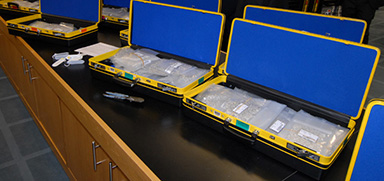
 De Beers said the proposed amendments to the group’s allocations model will involve a new method for determining Global Sightholder Sales’ rough diamond customer-base, with a simplified, compliance and demand-based customer qualification process being introduced.
The group’s head of media relations Lynette Gould told Rough&Polished’s Mathew Nyaungwa in an exclusive interview that non-Sightholder diamond businesses that meet the compliance requirements, but have not demonstrated sufficient demand for primary source De Beers rough diamonds over a reference period, would be eligible to purchase the so-called Ex plan rough diamonds.
Gould was, however, quick to point out that the group was still fully committed to its model of term contract sales to Sightholders.
About 90 percent of De Beers’ total rough diamond availability by value was sold through the Global Sightholder Sales network.
Meanwhile, De Beers said it was expecting continued growth in diamond jewellery demand across its key markets this year, buoyed mainly by the US and China.
Below are the excerpts.
De Beers recorded a 15 percent year-on-year increase in revenue to $3.823 billion in the first half of the year, which ended June 30. What contributed to this strong performance?
The increase was primarily due to solid demand across key markets resulting in strong revenue growth, together with the benefit of favourable exchange rate trends. Rough diamond demand was robust, reflecting a positive outlook for polished diamonds in De Beers’ key markets of the US, China and India. This contrasted with H1 2013, when encouraging growth in the US was not matched in India (where demand was weak). Stronger year-on-year consumer demand between Thanksgiving and Chinese New Year – the key selling season – resulted in higher levels of retailer restocking during the first half of 2014 than in the same period last year.
What is your projection of the diamond market between now and the end of the year?
De Beers expects continued growth in diamond jewellery demand across its key markets in 2014, driven primarily by the US and China. Other markets are also projected to show growth in local currency this year, with final dollar-equivalent demand levels partly dependent on currency fluctuations. In fact we forecast consumer demand growth for diamond jewellery to be around 4.5 percent for 2014. Major analysts, such as Goldman Sachs and RBC Capital Markets, also predict strong and sustained demand growth for diamonds in the next five years.
How confident are you of recording another increase in revenue during the second half of the year?
We have certainly had a strong first half, but it’s typical that our performance is weighted towards the first half. It’s important to remember that the seasonal nature of polished diamond consumption means that De Beers’ annual performance is generally more heavily weighted towards the first half, reflecting normal restocking by midstream diamantaires after the key selling season
De Beers was described in some sections of the media as a “star performer” for Anglo-American during the first six months of the year, contributing $469 million to the diversified mining conglomerate’s underlying earnings of $1.284 billion. What is your comment regarding this performance?
Obviously we are delighted with our performance but we cannot just sit back. We are focused on delivering profit growth for the full year as we head towards the ROCE (return on capital) target of 15 percent by 2016, set by Mark Cutifani for all the Anglo American business units.
De Beers’ production rose 12 percent to 16.046 million carats during the half year, but the group is projected to post flat growth at 32 million carats for the full year. Can you shed more light on this expected development?
Our mines have been producing pretty much at capacity in the first half of this year, so whilst we do have a degree of flexibility, it is largely at the margin. Given the good production performance in the first half, we expect to produce 31-32 million carats this year.
Your group has been under fire for raising diamond prices. Do you have any justification for the increase?
We continue to review our rough diamond prices on a Sight by Sight basis to ensure they reflect the prevailing conditions in the industry.
De Beers introduced a more flexible interaction between its Sightholder and auction sales mechanisms as well as a new category of client called “accredited buyers”. Can you shed more light on these developments?
Ahead of the 2015 – 2018 contractual period for Global Sightholder Sales, De Beers reviewed its distribution model and will be implementing an updated approach from March next year. We remain fully committed to our model of term contract sales to Sightholders - around 90 percent of De Beers’ total rough diamond availability by value is sold through the Global Sightholder Sales network, with the great majority continuing to be sold via the Intention to Offer (ITO) in the new contract period. Proposed amendments to our allocations model will involve a new method for determining Global Sightholder Sales’ rough diamond customer-base, with a simplified, compliance and demand-based customer qualification process being introduced. It will also adopt a more flexible sales approach through which non-Sightholder diamond businesses that meet the compliance requirements (but have not demonstrated sufficient demand for primary source De Beers rough diamonds over a reference period) will be eligible to purchase ‘Ex plan’ rough diamonds from Global Sightholder Sales as Accredited Buyers. Accredited Buyers that demonstrate sufficient demand for De Beers’ primary source rough diamonds over an annual reference period will be eligible to apply for Sightholder status.
Some market analysts say De Beers is trying to widen its pool of demand and thus reducing the prospect of its supply being refused. Do you concur with this thinking?
We believe the changes we are introducing will provide greater flexibility in purchasing opportunities from De Beers. They will enable those expressing strong demand for the rough diamonds we sell to purchase them on a term contract basis as Sightholders, while also offering more opportunities for non-Sightholder diamond businesses to demonstrate their demand for De Beers rough diamonds. The more rigorous financial and existing ethical compliance requirements will also help to reinforce third party confidence in the strength and transparency of Global Sightholder Sales’ customer-base.
Namibia has of late been piling pressure on De Beers to agree to a new sales agreement, which will allow the southern African country to sell some of its diamonds outside the group’s framework. What is your comment regarding this development?
As with any sales negotiations, there are a number of issues under discussion, but it would be inappropriate for De Beers to comment on any specific issues that may or may not be discussed.
The Angolan government said last April that it would approve a new concession to De Beers to explore for diamonds. Is there any progress in this area, if not provide reasons?
Negotiations are progressing with ENDIAMA in Angola for the finalisation of the Mineral Investment Contract and positive comments made by the Angolan Minister of Mines concerning our application are very encouraging.
Mathew Nyaungwa, Editor in Chief of the African Bureau, Rough&Polished
