 Investing in African Mining Indaba, an annual professional conference dedicated to the capitalization and development of mining interests in Africa, will take place in the resort town of Cape Town, in South Africa early next month.
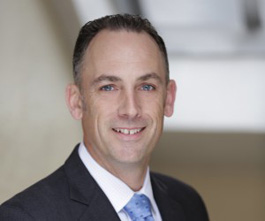
Jonathan Moore, the managing director of Mining Indaba told Rough & Polished’s Mathew Nyaungwa in an exclusive interview last Friday that the acquisition of the organiser of what is arguably the largest African mining event, last July by Euromoney was positive.
He said as a result, there would be some noticeable changes at this year’s event as they seek to re-affirm the core value mission of the Mining Indaba, which was to unite investors, mining companies and African mining ministers to put foreign direct capital to work on the continent.
Meanwhile, Moore said Africa’s mining industry had been facing operational challenges, although positive signs were somewhat now being witnessed.
The Mining Indaba MD said pundits were quite mixed in their various viewpoints regarding the state of Africa’s mining industry this year and beyond.
He said although the plausible way to make a forecast was on a case-by-case basis, he was of the view that there would be greater improvements towards the end of 2015 and hopefully into 2016.
Below are the excerpts.
Can you shed some light on why Mining Indaba was sold to Euromoney last July?
Mining Indaba was owned by a U.S-based media business company, which was private equity backed and they had acquired the Mining Indaba…some years ago. Mining Indaba was the only asset they had which was internationally-based and the only thing they-owned that was in the mining and metal sector, so while and important asset was not strategic to their future. As such the board decided it was an appropriate time to divest. Euromoney, from an ownership perspective is a very appropriate owner, a company that is truly global in scope and synonymous with investing and has a very strong presence in the mining sector. From the Indaba perspective, the acquisition from Euromoney has been very, very positive thing.
What sort of changes can delegates expect this year at the Mining Indaba following this acquisition by Euromoney?
That’s a great question, I’m glad you brought that up because I do really think that there will be some noticeable changes at this year’s event. One of the things the ownership of Euromoney gives us is an opportunity to re-affirm the core value mission of the Mining Indaba, which is to unite investors, mining companies and (African) mining ministers to put foreign direct capital to work on the continent. What you will see is a front and centre position for the investors, we have a number of high level investor-oriented presentations that are on the agenda and we have not previously had that type of focus on our main stage. You will see the quality of what we are doing from a content perspective takes a significant step forward and I think by far this is the strongest agenda that we have put out. From a significant investment in high profile speakers focusing on what made us special in the first place, mining investment. We have also launched a number of things at this year’s show to help investors and mining companies to more easily navigate the event. We have launched the VIP investor programme that will be a way for selected investors to be able to have a different level of experience and engagement at the event. So, those things collectively will have a significant total effect on the event and the participation people will have.
What will be the future of the Mining Indaba going forward?
We have a number of different things that we are investigating and I think probably the most important will be what we do in Cape Town as the core component of what we do going forward. Having said that, the platform that we have built, one that is a mining investment event that takes place in a specific region with focus on mining in that region, is a model that is transferable to other areas. In 2012 we ran an event in Asia, which I think was very well received and unfortunately just came right at the front end of the cyclical downturn. We are now in a position to re-visit our global expansion, to look at Asia and possibly Latin/South America as opportunities for us to create other Mining Indaba events. We will also continue to evaluate if there are opportunities to do smaller, regionally-specific events on the African continent that will feed into the larger event in Cape Town [every] February.
Apart from providing a platform for capitalising mining opportunities throughout the entire continent, what sort of value can investors derive from this year’s indaba?
I think the immediate value that delegates and participants can get from the Mining Indaba is the opportunity to network and engage with stakeholders in the sector. With 7000 people that come to Mining Indaba, the focus of the mining world will be on Cape Town for five days. The opportunity to engage in dialogue and to discuss deals is unprecedented. So that is where the real magic of the indaba happens and what ultimately continues to make it a valuable investment of time and resources for those that come each year.
Can you briefly tell me about the Indaba’s keynote speakers this year?
It’s probably our strongest keynote line-up to date, it’s a group that I think is highly influential, led by former UK Prime Minister Tony Blair, we have Jim O’neil (chairperson Cities Growth Commission), Dambisa Moyo (Global economist), Anita Marangoly George (World Bank Group senior director, energy and extractives global practice). As I have alluded [before] we have a fantastic list of very senior investors [such as] Bob Diamond (Atlas chief executive officer and founding partner), Bradley George, (Investec), Ashish Thakkar, (Mara fund) and Neil Brown (KKR). It’s an incredibly strong line-up that will provide participants an engaging, high-level view of not only what is happening within the economics of Africa and global economics, but specifically within the mining sector and how the two connect and what they mean for mining investment going forward.
Talking of Tony Blair, what value is he going to add to the indaba?
He is interesting on a number of different levels, obviously as a former head of State, he is uniquely qualified to talk about the global context. Beyond that he has been very active on the continent, he understands Africa and is very passionate for its success. Finally, he has been behind the scenes, a power broker and involved in a number of different things, specifically within the mining sector. I think the combination of those three will be powerful for our audience. Obviously Tony Blair is a gifted speaker and orator so I think he will have that combination of a strong message and the ability to deliver it in a way that becomes very compelling for those in the audience.
What is your assessment of the current state of mining (in general) in Africa?
Obviously right now the sector is going through a challenging phase…, we are in the midst of a trend which is not a great one. That said, I do think what we have started to see is efforts that companies have started to undertake to right their balance sheets and to go through and really go aggressively work through the operational challenges…are now starting to bear fruits. Obviously the cycle has to begin to come back a little bit more before we really see an impact of that, but I do think there are some positive signs starting to percolate. I think we will see, through this year’s mining Indaba, an opportunity for investors to find some highly attractive buying opportunities…
What are some of these positive signs you have mentioned?
I think the biggest one is the work that has been done with respect to the companies themselves, cleaning up and getting on track, doing the hard work needed to be done to address some of the spending challenges. The other thing that is interesting in this down cycle versus some of the previous ones is that as the continent has developed and economies have developed their scope to not be solely reliant on commodities. So, the impact of the downward trend on commodities and the mineral sector has not been as dire from the overall [economic] perspective of the continent…
We have of late been seeing power challenges dogging South Africa. What sort of an impact do you think this will have on its mining industry?
…the challenges that we see with Eskom (South Africa’s power utility) are not adding any positives to the equation. That said, the mineral wealth in South Africa is unprecedented and at some point that will start to work its way back though and I think you will see in 2015 and into 2016 some positives, hopefully, coming out of South Africa and some movements in the right direction.
What is the Mining Indaba’s projection of the state of Africa’s mining industry this year and beyond?
It’s a very interesting situation because the pundits of the world are quite mixed in their various view points. I think what we will see for 2015 and likely into 2016 will be a very mixed reality, what I mean by that is that certain commodities will see positive results and others will continue to struggle. More specifically, I think company-to-company you will see varying things and I don’t think it will be some of the more-broader brushes that we have seen in the past where everybody in the a sector is going to have either a positive direction or negative direction. I think it will be company specific. That’s what makes an event like the Mining Indaba, especially valuable in this type of a climate. Delegates will be able to understand the nuances of each company allowing them do best determine which have the opportunity to over-perform and be attractive investments. I do think that for 2015 there will still be some struggles, but am optimistic that the latter potion of the year will see an upward trend and I hope that will continue into 2016.
Mathew Nyaungwa, Editor in Chief of the African Bureau, Rough&Polished
