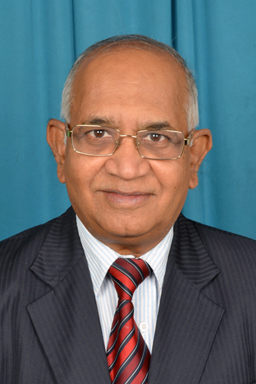
 Dr. T. M. Babu is an exploration geologist with 40 years of worldwide experience investigating diamonds, gold, tin, platinum, copper, and other rare metals in India, Russia, China, Japan, Indonesia, United Kingdom, DR Congo, Sudan and many African countries.
He was associated with the Government of India in the Planning Commission and the Geological Survey of India, United Nations Development Programme (USA), BRGM (France), Wardrop Engineering Inc. (Canada), Kyrgyzstan, Coronation International (UK) and several international organizations.
He has authored many books related to metals and mining and continues to do so till date...
Here, Dr. Babu shares his thoughts with Rough&Polished on his work in geology.
Some excerpts...
Can you tell us about your long years of experience as an exploration geologist and your Programme research work?
I have about 42 years of experience as an exploration geologist, discovering metals and minerals hidden below the earth. I worked in Himalayan regions of North-east India, remote interior parts of Bastar tribal district in Central India, in several places in South India, in Kyrgyzstan, China, Indonesia and many countries in African continent, exploring rare metals, diamonds, gold, platinum, copper-base metals and industrial minerals.
And when did it all begin? Our readers would like to have a peep into your life story.
My professional career began in 1973 exploring industrial minerals in South India. My first main contribution is discovering tin, niobium, tantalum and associated rare strategic metals deposit in remote parts of Bastar tribal district in Chhattisgarh state while working for Geological Survey of India. I got Ph.D-doctorate degree from Nagpur University for research on tin and rare metals in Bastar area. I wrote a book on “Tin in India” published in 1994 and got National Mineral Award from Government of India in 1995. At that time people used to refer me as “Tin Babu”. After that, I investigated platinum in Northeastern Himalayan regions of Arunachal Pradesh and then moved to exploring diamonds, gold, copper, rare metals and minerals in India and many other countries.
Was there any memorable incident in your professional career working in remote areas?
I worked in most inaccessible jungles in the world habituated by primitive tribes where there are no approachable roads and a normal person cannot reach or dare to visit. I used to think I could do something to improve their lives by discovering mineral deposits below their feet. In 2012 when I was camping in an interior place in Democratic Republic of Congo-Africa, on one midnight more than a hundred local tribals ambushed my camp, burnt down all my tents, vehicles, equipment and attempted to kill me. I ran for my life swimming across a river alone on that midnight and hiding in thick forest area. Finally, I was rescued and air lifted and hospitalized for several weeks. If I look back, I pity their innocence, misconception and misunderstanding that I will steal or take away their gold, diamonds and other mineral wealth from their village area.
What is the misunderstanding and misconception of those local tribes in Africa?
The job of exploration geologist is to discover metals and minerals hidden below the earth. The moment he discovers a deposit his job is over in that place and moves to new area. Those tribals thought that I would take away all their mineral wealth. Many people are not aware about existence of geologists who first discover the mineral deposit. After discovery, the decision to mine that mineral rests with local and central government authorities, investors, mining engineers and many others. There is no value for gold or diamonds if they remained buried below the earth. Starting a new mine in an area brings development like roads, electricity and employment to locals for better way of living connecting to the rest of the world.
Currently, where and what are the projects you are working on? Is there a book in the making too?
I am Vice President of African Resources Group Limited exploring gold, diamonds, rare metals and industrial mineral projects in South Sudan, Africa. I returned back to India due to political disturbances and other local problems in my work area. I am working on a comprehensive colourful coffee table book on Gold describing its ancient history, present status of mining, metallurgy, jewellery, marketing and future scope for this versatile metal all around the world.
As we are interested in all aspects of diamond mining, can you elaborate on your first diamond mining project /experience in the line?
My first experience about diamond is exploring Panna Diamond fields of Madhya Pradesh spread over about 4000 sq km area. That area has good potentialities even now. India’s only active working diamond mine at Majhgawan operated by National Mineral Development Corporation (NMDC); Government owned organization is located here. It is unfortunate that recently Supreme Court directed NMDC to close down that mine due to environmental concerns, which will eventually kill the only surviving diamond mine of the country. There is scope to commence many more diamond mines in the country.
What, in your opinion, are the Indian diamond industry’s biggest challenges now?
The biggest challenge in India is to get government permits to explore and mine diamonds, which is taking several years now due to long procedural delays between State and Central government offices and mineral policies. Another challenge is to get government help to procure rough diamonds directly from mining countries of Africa, Russia and other places without passing through mediators like Antwerp-Belgium as being done at present.
With rough diamonds in perpetual shortage in the Indian industry, how important is the need for India to start explorations /mine diamond within the country?
There are immense potentialities in India for diamond mining. The undue delays in getting permits for exploration and mining activities made several investors to walk out of the country. There is a need for creating a Diamond Development Commission to monitor exploration and mining activities of diamonds in India. It is necessary to better understand and work out environmental clearance hurdles for mining. Instead of blanket ban, a better scientific way of mining with minimum damages to the environment could be worked out.
Some projects like Panna, Rio Tinto’s-Bunder have been stalled due to environmental issues. How should the Central Government solve the problems, and see them become operational in the future?
Yes. Environmental issues are most misunderstood matter in India and in some countries. To build your house, you have to dig some place to furnish construction material. There are systematic scientific ways of doing things with minimum damage to the environment. But a blanket ban on construction of house and on supplying construction materials like sand and rocks are not a solution. Similarly, total unilateral ban on mining diamonds or gold or any materials in an area is false, misleading and detrimental to the society in any part of the world.
I understand that you have authored many books on ‘mining’ and related subjects. Please let us know more about your books.
As I said, my first book, ‘Tin in India’ was published in 1994 describing my experience and knowledge I acquired and used for discovering and estimating the largest tin deposit in Bastar district in Central India.
My second book is on “Diamonds in India” published in 1998, the first book ever written which listed out all the diamond bearing areas in India including 74 kimberlites, the mother rocks of diamonds locations and projecting the mining opportunities in India.
I am co-author of book “Mining and Metal Production through Ages” published in 2003 by British Museum, London.
“Platinum in India” is my fourth book published in 2011 by Geological Society of India, Bangalore list out 64 locations of Platinum incidences spread over from Himalayan regions of North India to Andaman Nicobar islands in Indian Ocean.
Your latest book ‘Glorious Indian Diamonds’ is reportedly making waves. A few words about the book please. And is this your first book on diamonds? And any more books in the pipeline?
This is my second book on Diamonds. My first technical book entitled “Diamonds in India” published in 1998 by Geological Society of India deals with all diamond occurrences in India and scope to discover more deposits in India. The present colourful book “Glorious Indian Diamonds” highlights the discovery of diamonds first time in India, which was mentioned in ancient Indian scriptures like Vedas, epics Ramayana, Mahabharata and Kautilya’s Arthashastra. India was the only diamond producing country in the world till 16th century where from Kohinoor, Hope, Orloff and many other historical diamonds mined out and taken out of the country. The decline of mining industry due to political reasons and post-independence mineral policies enacted were discussed. This book attempts to review the past, present and projects future scope describing all aspects...A to Z about diamonds in India. After publication of the book, my friends changed my nickname from “Tin Babu” to “Diamond Babu”. My next book in the series is all aspects about gold in the world.
Aruna Gaitonde, Editor in Chief of the Indian Bureau, Rough&Polished
