 Botswana Diamonds established a joint venture company with the Russian diamond giant, Alrosa, which is currently exploring for diamonds in Orapa, Botswana.
The AIM and Botswana Stock Exchange-listed company provides its database to Alrosa which in turn applies their technology to identify prospective ground.
The Russian diamond company was on the other hand providing its geologists, mineralogists and mobile labs for field work.
This year, the joint venture was focusing on three blocks in the Orapa area and earlier work had identified kimberlitic indicator mineral concentrations.
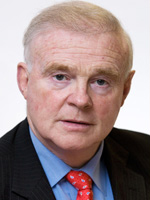
Company executive chairperson John Teeling told Rough & Polished’s Mathew Nyaungwa on the sidelines of the Botswana Resource Sector Conference in Gaborone recently that there are indications that kimberlites might be on blocks 206 and 207.
He said the Russians had also identified an anomaly on block 210, considered prospective for the discovery of kimberlite and could be drilled in September 2015.
Asked whether Botswana Diamonds would sell its interests in Orapa should they find something commercial, as they did with Karowe diamond mine, Teeling said he would like to hold on to something that is commercial.
He, however, conceded that shareholders like instant profits and they would prefer that an explorer sells an asset despite finding high grade diamonds suitable for a commercial operation.
Below are the excerpts.
I understand that Botswana Diamonds and its partner Alrosa are focusing on three blocks in Orapa this year. Can you shed some more light on this?
What we were doing with our partners, Alrosa, is that they went for a big amount of ground and for the last 18 months they have been cutting back gradually and they identified five blocks…last year and they walked down and identified within that, three, which are 206, 207 and 210 and they are all in the Orapa area. Of which they found very good kimberlitic indication, which shows that there are kimberlites somewhere. So what they have done between February and June is that they have focused on those three areas. We had a team in the field, they had a lot of soil sampling, which they evaluated in the field and they then did some geo-physics…On two of the blocks, 206 and 207, while there are some indications that the kimberlites might be on the block they think that the kimberlitic indicator minerals may have travelled from a further distance… However from 210 they have identified an anomaly, very clear anomaly and this is well on the block. It’s a block that was drilled by Petra Diamonds in 2010 but they believed that the hole did not drill the anomaly. They have done other work on that but they need to drill three holes on that. They will test this anomaly and this is a serious test because we have been speaking to you and others that these guys (Alrosa) have a new technology that is going to discover kimbelites…so by the end of the year, we will know. What they expect from the work they have done is at least a kimberlite and that’s pretty good for an exploration company, it’s a first major step. If you find a kimberlite you could be very lucky if it contains diamonds and you could be luckier, still, if it contains very good grade diamonds.
How optimistic are you of finding a diamondiferous kimberlite?
I am about 80 percent optimistic that we will find a kimberlite. I think with the work they (Alrosa) have done, they will be shocked, not disappointed, that there is no kimberlite. My Russian colleagues would think they are very confident…there is a good chance, I would say. ‘Is it commercial?’ A lot of work needs to be done, so at the moment you would have to assume on the laws of probability that there is enough diamonds and if not commercial we go somewhere else, but you could be lucky. That’s the focus of Alrosa for the next six months.
So having brought the Russians to Botswana, are you still satisfied with their work?
Oh they are very good! Firstly, they are multinational and they behave like a multinational rather than a Russian multinational. Multinationals are quite bureaucratic and they are fixed in their ways. They figure out this is how it has to be done. Over the years in different industries we had many joint ventures with different multinationals and they are all the same. They have a procedure, A,B,C,D and you must go A,B,C,D; you can’t go A to C or A to D; you can’t do that. They are different from De Beers, which didn’t have A, B, C, D. They had 1, 2, 3, 4; but you have to go their way. I like what they do and they are very efficient, really efficient and cost effective.
Are you going to commence drilling later this year?
It will take place, I hope, earlier than later because the rains will come and we don’t want to stop the drilling, which makes things more difficult, because the soil gets wet and the roads are more difficult, more problematic in terms of logistics. If we have a way we might try to start in August…what we hope to do is for the Russians to drill three holes…
Do you have any plans to acquire more ground in Orapa?
We have to, because Alrosa’s geologists move very rapidly. They go in, they do the samples, geophysics and they may do more and say yes or no and just move [on]. This is very unusual in Botswana. DeBeers and ourselves, even, hold on the ground forever. These guys (Alrosa) can go through the ground for six months. We have a number of further applications in and we will make follow-ups from now. This is in the North-West of the Orapa Mine (owned by Debswana).
How expensive had been this exploration exercise in Orapa?
Not bad! Not bad by international standards. We are spending $1 million this year, because this is only soil sampling and geophysics, this is not expensive. Drilling is more expensive, the very programme that we are going to do for seven holes will cost about $150 000 including mobilisation and immobilisation. Now if you are successful, the problem is you have to drill a lot of holes next year and then you need more money. We are probably talking about $20-25 000 per hole.
Where have you been getting capital to fund these exercises?
Family, friends and (inaudible). The stock exchange for junior exploration companies is non-existent. For the past four or so years it had been almost impossible to raise money, so share prices have declined, which makes it more impossible…So the people who support you are yourselves, your friends…My group, its only three of us, have put about GBP3 million for the past three years. ‘Is it getting better?’ Yes! ‘Is it getting much better?’ No!
What can you attribute this lack of funding for exploration projects to?
The collapse in 2007/2008, remember the type of money that comes to me is highly speculative, generally from private individuals. I don’t take money from the banks. At this stage I don’t take money from institutions either. They think it’s too risky [to invest in exploration projects]. So the collapse in 2007/2008 wiped out a lot of speculation…we have lost a generation of speculative investors.
Let’s turn to Gope. Can you provide a brief overview of this project?
A group of local men acquired 13 licences in the Brightstone block in the Gope region and they struggled because it was a big work programme and eventually we, Botswana Diamonds joint ventured with them. We did a fair amount of secondary research, in other words, we used all of our databases. We brought the Russians in, they evaluated and we identified five targets and the Russians wanted to focus on Orapa so this was on our own account. So a Botswana company BCL decided they wanted to [be part of] this business and decided they wanted to joint ventured our joint venture. We gave them all the data we had, the indications and our targets we have a free carry up to bankable feasibility studies. We have a 15 percent interest…they have been drilling since April, I have not got results…
So going forward what is the future for Botswana Diamonds?
I think it looks very good…I like what the Russians are doing. I think Alrosa brings fresh views, new eyes and new approaches…I think our chances of success are good… We will embark on a heavy exploration programme that will involve diamond drilling…that should be our short-term target. The mid-term target is to have a commercial operation.
Do you have timelines for this?
First, kimberlite, probably by the end of this year. Have kimberlitic diamonds that might be commercial by the end of 2016. Drilling in 2017 and delineation drilling in 2017/2018 and have a mine built in early 2020s at the very best.
Your long-term plans as a company?
We will probably stay in Botswana, there is no need for us to look for other countries at the moment. The idea is for Botswana Diamonds to be a diamond producer. I would like to be a producer rather than a pure explorer. Am happy being an explorer but the objective is to have diamonds.
Should you find a new mine, do you see yourself selling the mine and start exploring again?
I didn’t see myself selling some of the businesses I had, maybe that’s my weakness, among a number of weaknesses. We sell out too soon. We did not want to sell Karowe and African Diamonds because we knew it was a good mine…Shareholders want you to sell, they like instant profits they don’t want long-term, anything six months is long for many investors. I would like to hold on to something that is commercial, not an easy thing to do because if you find something in 2015 [it will only come into production for about seven years] that is what is called the valley of death. In the meantime you are not producing anything, you have no sexy stories for the shareholders.
So will it be fair if someone says that you are regretting selling Karowe and African Diamonds, which is now Lucara Diamond?
Regret is the wrong word, I do not regret my decisions. ‘Was I wrong to sell it?’ I could not fond it, I regret not holding on to it. That’s a weakness…
Mathew Nyaungwa, Editor in Chief of the African Bureau, Rough&Polished
