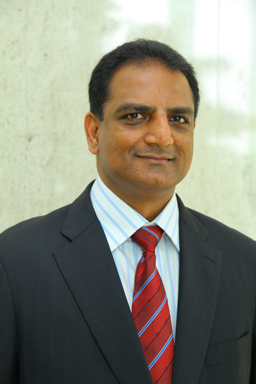
 Vipul Shah, is the CEO & MD of Asian Star Co. Ltd., a market leader in the Indian gem and jewellery industry.
The present gloomy scenario in the global diamond industry is a worrisome factor on everybody’s mind. Not surprising that the Indian Industry is hard hit as well, with multiple challenges to tackle.
However, the Indian diamond industry, which is known for its resilience has weathered many a storm in the past. But, how is it planning to survive this onslaught, which is bigger than anything it has faced till now?
Vipul Shah answers ROUGH&POLISHED here, with great élan.
Some excerpts...
The Indian G&J industry as well as the diamond industry in particular has been seeing a downslide in export performance in last few months. How is the industry weathering out in the second quarter, with the usual lean period in the trade?
The Indian G&J industry has seen a slow growth in last few months, especially in terms of exports. However, we believe this will gradually pick up during the festive season and the outlook will be positive for the domestic retailers. However, we do not anticipate any major growth surge in next few months based on which we can safely predict a stable outlook for the Indian G&J industry.
With the operationalisation of Special Notified Zone from July, and other promotional activities like IIJS 2015 and IIJW slated to be held in August, and recently concluded Indo-US Jewellery Business Conference in USA, VicenzaOro Dubai Show, delegation to Latin America, the industry is expecting the current scenario for India to change soon and see a positive growth curve towards the end of this financial year.
While the Government’s announcement for July 1 commencement of the Special Notified Zone is welcome, how will the SMEs in India benefit with this arrangement? Will Dubai be a serious competitor to India?
The big rough diamond companies can now come to India and offer their diamonds directly to SMEs which itself is a game changer. SMEs will have the option not to buy from secondary suppliers and bid directly from primary suppliers.
India is only starting in this form of trading and this is being done to benefit our trade and not to compete with anybody.
How is the ‘rough’ supply situation at present for the Indian cutting centres? Is the price factor still a cause for concern? Your comments.
As the demand for polished diamonds is not picking up, the rough supply situation is comfortable in India. When it comes to melee diamonds, there is enough supply of rough diamonds.
The largest concern is the price factor as the rough prices are not following the polished prices and this situation cannot continue for a healthy industry. If there is no profit margin, the manufacturers cannot go on operating at a loss with the money borrowed from the banks and other financial institutions. The cost of the money is also growing day by day.
Demand from most of the overseas diamond consuming markets, including USA is reportedly quite low. Will the Indian industry maintain its high production pattern, at the risk of holding polished goods in inventory affecting financial liquidity?
Since the downturn, India has stopped relying only on the US market. It has diversified in other markets like Canada, Russia, Middle East market, etc. The problem is that those markets are also not behaving with the growth trend recently.
The production capability and the establishment cannot be cut-down rapidly and again added when demand peaks up. We will analyze the trends from past years and accordingly adjust so that the polished inventory doesn’t go too high, and it does not affect the financial liquidity of the business. We are keeping a close watch on the situation.
The lab grown diamonds vs. natural mined diamonds is constantly debated, but do you see a solution in the ‘disclosure’ factor coming into force in the future? Or are we looking into a dark hole in this matter? More so, as few cases of ‘mixing’ have been reported in India?
As per my opinion, the unscrupulous people in the industry are very less. In general, the industry players always want to remain in the ethical path only. However, those few bad apples generally get highlighted and bring bad reputation to the industry. Disclosures had happened in the past, are happening and will happen in the future by the general people of the industry.
Based on our experience from last one year or so, it is very difficult sometimes to pinpoint who is the victim and who is the culprit. However, such reporting of cases has decreased as the detection capability of the industry has been revamped by GJEPC, and the DDRC commissioned by the NDMC is playing a great role in to the same, both at Mumbai and Surat. In future, more such missions and DDRC centres will be added in different centers in India.
Also, the detection technology is catching up, and becoming more sophisticated, the customers are becoming more conscious and the government is also inclined to create proper differentiation at the custom’s code level. Hence I am very optimistic on this front that trade will effectively counter the threat.
How do you think the recently formed Diamond Producers Association (DPA) will be able to strengthen the global diamond industry? Will the synthetic (lab grown) diamond issues be addressed too, on a priority basis? Your views.
In fact, this was needed in 2008 only during the downturn, and as we all know it had almost been formed after the meeting in London where the GJEPC representatives were also present. It’s great news that all the producers have agreed to come in a common platform. In my opinion, their first job will be to look after the generic promotion of diamonds as a category. The world is looking forward how the DPA can give leadership in that front so that the diamond prices keep pace with other consumer products and give value to the entire industry.
The synthetic and lab grown diamonds is not the issue. The issue is addressing the differentiation between natural and synthetic diamonds, creating awareness among consumers, upgrading detection technologies and differentiating them at the IT HS code level.
Not only DPA, the entire industry has to deal with it together at every level, especially the industry associations across the world.
With banks becoming cautious and tightening lending norms how is it affecting the industry in general at present? How do you see this panning out in the future?
In fact, banks should do their due diligence with utmost care and caution so that they are not cheated by unscrupulous business people who bring harm to the entire industry by making the finance expensive due to such actions. Also, the money laundering norms becoming stricter, naturally so, more regulations will be coming on the industry. Banks have their own compulsions having to comply with Basel III and IFRS norms. The diamond companies have to be more organized in future and run professionally with transparency to comply with the requirement of the banks. The requirement of collaterals will grow, and so is the commitment in following norms on a regular basis. In my opinion, this will make the industry more professional and organized. However, banks also need to pull their socks up and do not take knee-jerk reactions for every default. Banks should analyze the reason of such default and penalize the responsible individuals, rather than penalizing the entire industry.
Do you expect the upcoming IIJS 2015 to be as successful as in earlier years, given the global slump trending now? Any new initiatives being introduced during the Show?
The industry is going through some tough times. And we hope shows such as IIJS would make a difference and help in generating new businesses, or help in sustaining the current performance of the industry. However, at IIJS this time the focus is on a specific target audience who are relevant to the gem & jewellery industry, and keeping in mind the premium nature of the show, we are working towards getting leading national and international buyers.
Promising to be another productive sourcing edition for industry professionals and retailers, the show boasts of an array of activities like informative education seminars, networking events, country pavilions. This year, the show has expanded to 1100+ exhibitors and 2000+ booths by introducing 200 new booths and 175 new exhibitors out of which 50 companies would be dealing in Studded Jewellery, 70 companies in Plain Gold Jewellery and 50 companies in Loose Stones. By largely maintaining same space for old exhibitors, GJEPC is all set to achieve 25% growth in exhibitors and 11% growth in booths.
Keeping in mind the convenience of buyers, new sections have been introduced so as to segregate the products/services, example Laboratories & Education; Synthetics & Simulants. Also, the original floor plan has been maintained by making temporary modifications in the halls and open spaces within the premises are being converted in temporary halls. These changes have been made to keep the exhibition floor product centric, ease of navigation and improve services & facilities , for instance International Loose Stones and Allied/Laboratories & Education, etc.
Additional Connectivity and Entry Points inside halls to improve inter-connectivity between walls and easy navigation, a new walkway has been put up at the rear side of the walls. In addition, a new entrance has been constructed to ensure that the entry inside the halls is accessible from the open bay area.
In addition, to make it easier for the exhibitors and visitors, the business hours have been extended during evening time. The show timings will now be from 10:00 am to 7:00 pm. A big multi-cuisine cafeteria has been set up next to the halls to cater to the requirements of exhibitors and visitors. The Elite Club including large & medium retailers will undergo a 360-degree makeover and will now comprise of top buyers from tier I, II & III centres on pan India basis. Also, an all-encompassing hospitality package including 2 nights stay will be offered to 500 chosen international buyers from different markets.
Aruna Gaitonde, Editor in Chief of Indian Bureau, Rough & Polished
