By Albert Robinson
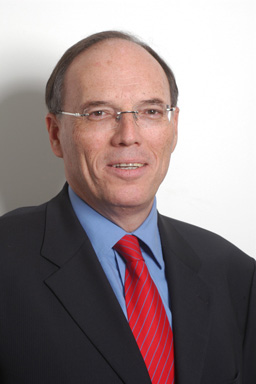 With the situation in the global diamond market tougher than it has been for many years, a new way of thinking is called for, Israel Diamond Exchange (IDE) President Shmuel Schnitzer told Rough & Polished. Schnitzer answered questions on recent initiatives taken by the IDE, and the state of the diamond markets worldwide.
The IDE held a mini trade fair in mid-July. Where did the idea come from, what is your analysis of the event, and where does the IDE take it from here?
This was an idea we had been discussing for some time, for the last two years or so. We felt that although international buyers are coming to the exchange to buy goods, we had to create a dynamic to get Israeli traders talking and doing business with each other.
Unfortunately, exchange members are staying in their offices to do business. They are not, for the most part, going out to speak to people and interacting with other bourse members. As a result, the Trading Hall is not active enough. Although we have been holding two International Diamond Weeks annually, we do not feel that this is enough to bring about increased activity on an ongoing basis in the Hall.
I believe the trade fair was a great success, and its results were far beyond expectations. A total of 60 firms took part, and next time there will be many more. Hundreds of bourse members went to the hall to take part. They did not all do business, but they talked and exchanged information and ideas, and this is very healthy. It helps improve the mood. We feel we should hold these events more frequently, ideally once a month, but at least once every two months.
Together with the International Diamond Weeks, these events are very typical of our mentality here: it is crucial to think out of the box, to go in a different direction. This is the way to create interest and activity. In addition, we do not charge our members a cent to exhibit. Other bourses may charge for their events, but we provide it free as part of our service to members and they appreciate that.
The next big event is the Summer edition of the International Diamond Week at the beginning of September. What can you say about the preparations and what we can expect to see?
This is a dynamic and unique show. We invite members from bourses across the world. This show is also a first in that we have signed agreements with exchanges in New York, Antwerp and Mumbai. It will be the biggest yet; we already see (as of mid-July) that registrations are double the level seen at the same time last year.
The event has caught the imagination of members of the diamond industry from across the world who see that this can be a productive week. We have heard from IDE members who say that in addition to doing business at the show, they are seeing more transactions as they maintain and build relationships after the event.
The timing is also right, coming at the end of the Summer vacations and before the big trade shows in Bangkok, Hong Kong and elsewhere.
Given your business interaction with companies in the United States, Japan, China-Hong Kong and in Europe, as long as comments you hear from IDE members, what are your insights regarding the current state of the markets. Is there any reason for optimism?
I believe the situation will pick up after the Summer vacations. We have seen small De Beers Sights in recent months [due to Sightholders leaving 25 percent or more of goods on the table]. That means that there are not enough goods on the market. Supply is going to be limited.
In addition, we are seeing some improvement in many markets, including Europe, the United States, Japan and even China-Hong Kong. I am optimistic regarding the second half of the year.
The IDE signed a Memorandum of Understanding with Alrosa during the Winter edition of the International Diamond Week last March. What are the concrete actions that have resulted from it?
We, at the IDE, will be meeting with an Alrosa team after the Summer vacations where we will discuss how to implement the understanding. There are many exchanges of information and experiences that we can share. Most importantly, we want to see how we can bring about larger imports of rough Russian diamonds, as well as polished goods.
Israeli manufacturers are eager to have access to first-hand rough. They cannot afford to get the diamonds second, third or fourth hand as that raises the cost too much.
What is the debt situation of the Israeli diamond sector?
On the one hand, it is OK because it is not going up. In fact, it has declined to about $1.35 billion from $1.5 billion several years ago. On the other hand, you cannot leverage a relatively small sum like that into a big and growing industry. We need access to much greater levels of credit. We really need three times that level in order to give the diamond sector a very big boost.
Is that possible? What steps are you taking to secure larger levels of financing?
We continue to hold talks with a range of banks and financial institutions. Our main aim is to get a large Israeli bank involved in diamond sector financing. We are also holding talks with other financial bodies, such as insurance companies and hedge funds.
One of the main subjects that you emphasized during your election campaign for the presidency two years ago was the need for the bourse to reach an overall agreement with the Israeli tax authorities. What is the status of those talks?
Those talks are continuing so I cannot give any details right now. I can say that they are very complex and involved, so it is taking a while to deal with them. Our aim is to achieve an overall agreement that will cover a range of tax issues and that will be valid for years.
