By Albert Robinson
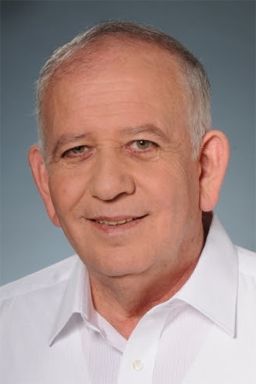 The Israel Diamond Manufacturers Association (IsDMA) brings under its roof a wide range of diamond manufacturers which account for around 95% of the country’s overall polished production. IsDMA is the ultimate representative of the Israel diamond manufacturing industry authorized by its members to speak on behalf of the diamond cutting community. In this interview with Rough & Polished, IsDMA President Kobi Korn describes the current situation in the diamond industry.
What are the main challenges that are affecting the Israeli diamond manufacturing sector?
I do not think it is a secret that my members, as with diamond manufacturers all over the world, are having to deal with very tough problem such as industry financing and tighter credit lines. These are not issues that can be dealt with rapidly, even though manufacturers need quick solutions. They involve a lot of intensive discussions.
How would you characterize the current state of the markets globally?
This year has not been easy, and that followed a difficult 2014. The situation is very quiet globally with buyers only placing orders for their specific requirements. There is clearly a slowdown around the world in the diamond sector that we are all feeling due to the financing problem and reduction in credit. The economic situation is not so clear around the world. The Chinese economy is not growing as fast and the stock market has lost a lot of value for investors so they have lost money which is not good for us.
But in Israel, we have been trying to fire up interest and business. We believe it is the role of the diamond sector organizations – IsDMA, the Israel Diamond Exchange and the Israel Diamond Institute – working together to do this. So far this year, we have had a rough diamond week, the winter International Diamond Week and the summer edition to be held in late August-early September, and a special polished diamond fair specifically for IDE members which was also a great success.
Can you give us some more detail about the scope of the problems affecting the diamond business?
Since 2008, there has been a very big change in the diamond industry in Israel regarding financing. Bank credit fell to $1.4 billion to $1.5 billion from $2.5 billion to $3.0 billion previously. It's not always a good sign that there is a high level of debts, but it is only through such financing that we can boost the domestic diamond trade.
If you look at India, in recent years, credit soared to about $14 billion from $5 billion. This clearly gave very big advantages to the diamond sector there.
"Our aim is to get bank credit levels in Israel back to at least $2.5 billion to $3.0 billion. There is a joint committee of the Israel Diamond Manufacturers Association, the Israel Diamond Exchange (IDE) and the Israel Diamond Institute (IDI) to try and get new banks and financial institutions involved. They want to see more transparency in order to agree to release funds. That is the disease of the diamond sector both here and abroad."
Are there other issues that you are dealing with in the Israeli diamond sector in the financial sphere?
Well, it must be said that the local diamond industry suffered several years ago from an income tax authority trauma after the income tax raids that took place.
We are in talks with the income tax authorities to reach a comprehensive agreement on tax issues as other sectors of the economy enjoy. Of course, the diamond industry is different from other industrial sectors so the negotiations are long and difficult, but we believe there will be an agreement in the end.
And it is very important that we manage to reach an agreement on taxation, because that can also help us receive more credit by showing that the diamond sector is doing its very best to be totally transparent. These issues are all inter-connected, and clearly we have a strong incentive to succeed.
Can you tell us why a new agreement is needed since there was one already in place?
There was an agreement with the income tax authority that ran for more than 30 years, but there have been many changes in financing since that agreement was signed in the 1970s. It became clear that taxation issues that were regarded as OK between the diamond industry and the tax authorities were not suited to the modern era.
Diamond industry heads always stress the need for optimism and that we have been through these problems before and come through them successfully. Do you see reasons to be hopeful?
Indeed, in general terms, we must always see the light at the end of the tunnel. Specifically in Israel, there has been one very big development over the last year that has proved to be highly popular with our domestic industry and is aiding our members very much.
I am referring, of course, to the modern manufacturing center close to the diamond exchange in Ramat Gan. This polishing center is a breath of fresh air for Israeli manufacturers. The IDE, the IDI, and IsDMA came together to create a new manufacturing center which is operating among the most advanced manufacturing equipment and facilities available in the global diamond industry. The center features all the equipment that a modern diamond polishing center needs.
What were the reasons for establishing the center?
The average age of polishing workers was high, and there were not enough young people coming into manufacturing in order to transfer polishing skills to them. We consider it very important that these skills are transferred to a younger generation to ensure that they are not lost.
We hope that in the future there will be plenty of polishing courses for new people coming into the industry and that we may even open new centers if all goes well. For many years we saw that the number of polishers has fallen and that their average age was rising. For many years we have wanted to bring manufacturing back here to Israel.
Is it financially feasible to operate a polishing center in a diamond center where cutting and polishing costs are relatively high, certainly as compared with the Asian hubs?
In India, China and other countries in Asia, they largely concentrate on smaller diamonds where the cost of labor element plays a much greater role. We do not polish small diamonds in Israel, but we do polish larger diamonds where the labor cost becomes less relevant. There are also other factors, such as saving the costs of transport and insurance through not having to send rough diamonds abroad for polishing and then bringing them back to Israel for polishing. In addition, many diamantaires are happy to have close control over the polishing process. All IDE members are free to bring their rough diamonds for polishing. We also have a gemologist to provide expert assistance.
We debated these factors very deeply and realized that there was an opportunity for us to develop a polishing center. We have made a modest investment in the new center. We didn't go over the top. We wanted to see what the response would be and if there was the potential to develop it further. And we believe that the potential is definitely there.
As I mentioned previously, and I mention it again because it is an important factor: we were aided in this project by the fact that there has been full and fruitful cooperation between all the diamond sector organizations. We all come together for the good of the Israeli diamond business overall. We have all set aside the issue of egos and worked together for the good of the industry as a whole. We are all working smoothly and that is something that I have not seen for many years.
