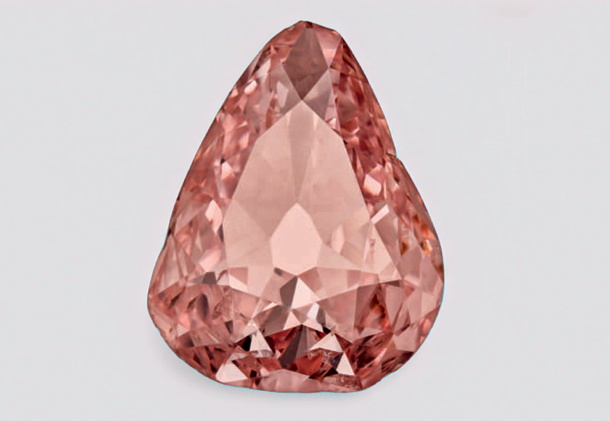
A rare nine-carat pink diamond, stolen from a French château nearly 100 years ago, has been unveiled to the public for the first time.
The pear-cut "Grand Condé" diamond was taken in October 1926 during a nighttime raid on the Château de Chantilly, located 40 kilometers north of Paris.
According to police records, the stone had been hidden inside an apple that had been hollowed out. The diamond was discovered weeks later when a hotel maid took a bite of the fruit.
The exhibition, which will run until January 2027, was organized by the museum in partnership with L'ÉCOLE, School of Jewelry Arts, with the support of Van Cleef & Arpels. The display includes previously unseen archival materials, historical photographs, newspaper clippings, and documents related to the investigation and the recovery of the stone.
An extensive study, combining historical analysis with gemological examination, has brought new facts about the gemstone to light. Researchers determined that its pink hue stems from physical characteristics extremely rare in diamonds, offering fresh insight into the stone's unique properties.
The diamond was first mentioned in an inventory compiled in 1740, following the death of Louis Henri de Bourbon, Prince of Condé; it subsequently became one of the most significant pieces in the Condé collection. Later, the stone entered the collection of Queen Marie-Amélie of the Two Sicilies, who intended it for her grandson, Louis of Orléans. Following his premature death, the jewel passed to his father, Henri of Orléans, Duke of Aumale.
The Duke bequeathed this diamond - along with the entire collection of the Musée Condé - to the Institut de France, which owns the Château de Chantilly.
The exact origin of the diamond remains unknown.
Hélène Tarin, Editor-in-Chief of the Asian Bureau, Rough&Polished
