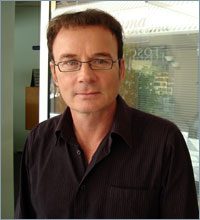
 A few stories were published about dissatisfaction of JASSONA(Jewellers Association of Namiba) toward NDTC(Namibian Diamond Trading Company) during last two months. We asked President of JASSONA Andreas Herrle to comment the situation.
What is the situation in the Namibia diamond market today?
I would say that at this moment it is unclear of what the market is actually doing.
As to the allocation of rough diamonds in Namibia to local cutting companies the situation is also not 100% clear.
Some companies received a large allocation, others who expected to get more, received an insufficient one, for example one company only received to the value of 2 million US dollars, which will only keep them working for two or three months.
Other companies however, who haven’t even started to produce in Namibia, got large allocations.
So I would say that it is certainly not clear of how allocations are done in the Namibian diamond industry.
How can the Government of Namibia influence NDTC to sell more of the diamonds to local jewelers?
It is very difficult for me to answer that question. It all depends on the cooperation between the Government and NDTC.
How can the jewelers themselves influence the situation?
What we can do is ask for certain requirements to be met for Namibian jewelers. For example, we want to be able to sell diamonds sourced, cut and polished in Namibia to tourists and Namibian clients. Which means that companies that are cutting in Namibia must be prepared to sell diamonds and make bigger diamonds available to Namibian jewelers. This has not been the case until now with local companies, with the exception of two or three cutting companies.
Do you believe that your cooperation with NDTC has a great future?
We had talks with NDTC and they seemed to be very positive. Their attitude changed a lot. They were apparently not aware of our situation and are willing to accommodate us. They also want to arrange a meeting between the Namibian Diamond Producers Association, and they even want to get the Namibian Diamond Board to get involved in new developments, like a diamond grading system.
Can you evaluate prospects of the polishing companies in Namibia? Is there a future for them?
I have talked with several companies recently. One of these did get a larger allocation, another didn’t get anything! Both were in Namibia for six month before allocations were made. Even the company with the larger allocation is not satisfied. It’s been said that companies getting rough material worldwide are also complaining of shortage.
The point I need to make is that, in the past, companies were invited to invest in Namibia. But now they do not get the rough they need to recover their investment. The process of allocation needs to be transparent and fair.
What can you say about prospects of polishing companies of our neighboring countries?
I was told recently, and I am not sure in the facts, that in Botswana the guidelines were similar but only sixteen companies were actually allowed into Botswana to develop factories. All companies seem to be satisfied in Botswana.
We feel that this can be done in Namibia as well. It will present a problem if there are too many companies as they will not receive a sufficient supply of rough. They should be warned from the beginning that there are already eleven companies in Namibia that have a good prospect of getting rough. The others would have to stay out because they do not have a chance.
The way it is now is disturbing that some companies received allocations before they even started to manufacture, while others who have cut for years, did not receive enough to survive.
Do you think the newly established polishing companies will be able to handle the competition between each other?
Will they be a strong competitor against the world diamond polishing centers?
And HOW they will be able to do that?
NDTC said that when they are looking for the companies which are going to cut Namibian rough they look at performance in the world market and some of those companies are already performing very well. For 20-25 years they already proved what they can do well in the international market. Smaller companies have also proved through diamond trading that they can do well.
I would say that all the companies in Namibia can handle the competition in international diamond trade. Two of the Newcomer- Companies are headed by local personalities who are connected very well politically. We will have to see if that helps on the international market.
What are the rough material needs of Namibian jewelers?
We do not need rough we need cut and polished diamonds of good quality, and preferably bigger stones between a half and two carats. That is the requirement and that is what the tourists and Namibians want to buy.
What are the trading prospects of Namibian jewelers? Are the sales good? Do you have a vision?
Is there place for improvement?
Those members of Namibian Jewelers Association (JASSONA) who are selling bigger diamonds supplied by the local factories had an increase in their turnover of diamond sales of between 25-50% over the last 1,5 years. That speaks for itself! Several jewelers are starting to sell bigger and more Namibian-cut diamonds. It will be very good for business.
Tourism to Namibia is booming. Many tourists want to buy diamonds in Namibia. And the locals are also aware of the diamond industry.
I believe we have good prospects. I am very positive about that.
Veronica Novoselova, Rough&Polished African bureau editor in Namibia
