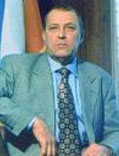
 Eugeny Bychkov is the President of the Center for International Cooperation of Producers and Consumers of Precious Metals. This non-government organization is working in team with the Ministry of Finance of the Russian Federation, the State Depository for Precious Metals of the Russian Federation, the Committee of the Chamber of Commerce and Industry for Precious Stones, the Jewellers’ Guild, the Union of Placer Miners Teams, the Union of Gold Miners, the Nornickel Mining-and-Metallurgical Integrated Works and the “gold segment” of the Russian Banks Association. It is also engaged in investigations to counteract illegal business dealing with precious metals, gems and jewelry.
In 1987-1991, Eugeny Bychkov headed the State Depository for Precious Metals of the USSR and up to 1996 run the State Committee of the Russian Federation on Noble Metals and Precious Stones.
- Today, the shaping of ALROSA’s sales strategy appears to be one of the most pressing problems in this industry. How was the USSR sales system structured and in which direction did it evolve in the post-Soviet time?
- In the Soviet time, everything was organized in a simple way: Yakutalmaz mined diamonds and delivered them to the State Depository for Precious Metals in gross quantities at the price of 11 kopecks per carat. After the Kristall Amalgamation was set up, some part of choice rough, approximately 20% of 6 000 positions according to De Beers classification, was shipped to factories also in gross quantities and there diamonds were processed according to the “Russian cutting method”. The “Russian cut” is a wonderful thing producing actually ideal polished diamonds. However, it is in no way related to economics. The useful output was 32-33% for round diamonds – could that be acceptable? In the end of the 1980s, Valery Rudakov and I signed a document permitting the cutting factories to process up to 30% of diamonds without the “Russian cutting method”. When speaking at a session of the Council of Ministers Prime Minister Ryzhkov said that “diamonds should be used to make money”, we considered this a great victory. Today this may sound strange, but then we had to prove such simple things.
In the USSR time, sometimes there happened things which would look today like a good joke. For instance, we sold gyrocompasses to the Poles. The gyrocompass arrow was mounted on a diamond, so the Poles used to break the instrument extracting the diamond (it was quite good) and sold it. We exported gold plated watches, millions of pieces, to Hon Kong and Singapore. People there put the watches into electroplating baths extracting gold and throwing away the watch mechanisms. We had to address the government asking to forbid 40-60-micron gold plating making it instead 2-4 microns. However, this ruined the whole watch export – nobody wanted to buy, while for us it was important propaganda proving that Soviet watches were bought abroad. Nowadays it looks ridiculous, but then it was politics.
In its main features the decision to set up a diamond cutting industry in the USSR was correct, but it was executed too much the Soviet way – there appeared enormous factories, there was no control over every stone and profitability was the last thing to care for. Besides, Kossygin, who initiated this industry, planned the next step meaning to create an exchange; this decision just came along and the idea was to set up a trading floor between London and Tokyo in a diamond mining country… This could give the USSR a much more vantage ground in the market as compared to what it got in the end. It did not manage to obtain this goal at that time due to too strong resistance.
In 1989, there was set up the first joint venture with the Belgians – Intertrade; at that time this required a special decision by the Politbureau and the project was supervised by Prilukov, Deputy Chairman of the KGB. This country had a highly tremulous attitude towards diamonds and gold and nobody ever wanted to treat them as simple, though expensive goods. However, gradually we turned ourselves to face the market and there appeared more and more diamond cutting and jewelry joint ventures. I helped to set them up, including the first jewelry workshops in Yakutia. Despite all the costs, this process was the only way for the new Russia to integrate into the modern market.
- In discussions, which took place in the press in the mid-1990s, you positioned yourself as a thoroughgoing adherent of developing the Russian diamond cutting industry and as an irreconcilable critic of De Beers…
- De Beers produced their own price-list for every diamond mining country. I had strong reasons to believe that for our country it had lower prices and those were too low for some items. I did not struggle against De Beers – it plays a positive role for diamond miners as a market regulator. I just insisted on getting what we earned and this was all to it.
As far as the Russian cutting industry is concerned, I am profoundly convinced up to this day that this is a fundamentally profitable industry, whose development is artificially restrained due to excessive administration and erroneous solutions in the field of financial and tax legislation.
- Did you have any proofs of low-balling on the part of De Beers?
- I checked this in various ways including proper sales. Once we agreed with a Belgium company to show us what they had bought. I sent there ten experts. They opened the package, evaluated it and upon coming back the team manager told I was right, the price was 23% up as compared to that at which we had sold to De Beers. My people brought a parcel of diamonds to India – 200 stones per carat (it was like granulated sugar) and asked what would be the price. The offered price was twice as much compared to that at which we used to sell these fine stones to De Beers. Of course, we were losing money. This was clear to us and this was known by those to whom we reported.
- Did this entail the Golden Ada case?
- When we found out this swindle, we immediately reported it to the government asking assistance in getting our money back. As soon as the government’s reaction followed, we asked the prosecutor's office to head the operation of the security agencies aimed at rescuing the valuables. However, the action was brought against me. They did not manage to find out who approved the sale of these valuables without any permission of the State Committee of the Russian Federation on Noble Metals and Precious Stones. However, I believe that the Golden Ada management could not do it without top-level assistance. This was a planned action to put me out of the way. The case was soon closed due to amnesty. We brought a case before the American court and won two court hearings, but managed to get back only 40 million dollars. We could rescue the major part of money if were assisted by the prosecutor's office.
- Today, the Soviet experience looks exotic, while many recall the 1990s with a shiver. What concepts should serve the basis for a sales strategy to avoid the well-known mistakes?
- Sales should be transparent and plain as much as possible. Uniform conditions and similar prices for everyone mean by the way that ALROSA should stop its own diamond cutting. Reliability of supplies is one of the major conditions. Cutters should be confident in their supplier – this is an indispensable element to get worthy clientele and to have long-term mutually beneficial contracts. This is a trump card permanently played by De Beers. If you want to keep abreast, make and prove your supplies reliable. Of course, there is a need in further liberalization of the market – diamond cutters should have a possibility to sell any amounts of unproductive rough.
